Halecostomi
Halecostomi is the name of a group of neopterygian fish uniting the halecomorphs and the teleosts, the largest group of extant ray-finned fish.

NOAA · Public Domain · via Wikipedia/Commons. May be a photograph of a specimen, or an artist’s reconstruction — an interpretation of a skeleton, since colour and soft tissue are almost never preserved.
On record
Recorded, not inferred- Sits inside
- ActinopterygiiPBDB
- Motility
- actively mobilePBDB, for Osteichthyes
Time the record covers
At least 244 million years on record.
The record covers at least 247 Mya to 2.58 Mya. No occurrence read is dated outside 251.902 Mya to 11.7 ka.
22 occurrences of Halecostomi on record, most of them in the Late Cretaceous. The Paleobiology Database records this as a living group. Bar height is expected occurrences, not a count: each fossil is spread across the span it is dated to, so a tall narrow bar means tight dating and a low wide one means loose.
When
22 occurrences- Early Triassic23%
- Middle Jurassic5%
- Late Jurassic14%
- Late Cretaceous27%
- Eocene5%
- Oligocene5%
- Miocene14%
- Pliocene5%
- Pleistocene5%
These are dates about fossils, not the animal: the record can only begin after it arose and end before it died out, so either end may reach further. Shares are expected occurrences: a fossil dated to a span is counted partly in each period it straddles. More on what this infers.
Found in
11 formations
- Camadas com peixes Formation · Cassange Group5
- Morrison Formation2
- Port Orford Formation1
- Upper Freshwater Molasse Formation1
- Sundance Formation1
- Tacuarembó Formation1
Loading coastlines…
The named rock units Halecostomi has been recovered from, largest first. Drawn where the rock is now, not where it formed. 6 occurrences have no formation on record, which is common for older literature.
Halecostomi and its relatives
Late CretaceousWhere Halecostomi and its relatives were recorded in the Late Cretaceous.
Found in the same rock
235 taxa- Teleostei9 sites
- Angolaichthys lerichei5 sites
- Teffichthys lutoensis5 sites
- Testudines4 sites
- Abelisauroidea2 sites
- Anura2 sites
- Aphanepygus dorsalis2 sites
- Hulettia2 sites
- Mesoeucrocodylia2 sites
- Proboscidea2 sites
- Raja2 sites
- Schaefferius moutai2 sites
- Abelisauridae1 site
- Aceratherium1 site
- Actinopterygii1 site
- Aigialosaurus bucchichi1 site
- Aipichthys minor1 site
- Aipichthys oblongus1 site
- Aipichthys velifer1 site
- Alnus1 site
- Alnus kefersteinii1 site
- Anguis fragilis1 site
- Anisus confusus1 site
- Antechinus1 site
The Paleobiology Database records 22 sites for Halecostomi, and this reads all of them. The number is how many of those sites it was catalogued from too. The 24 sharing the most are listed.
This is not a list of everything alive at the time. It is only what has come out of the same ground as this animal and been written down.
Entered from
17 references- Triassic Fishes from the Cassange Depression (R. P. De Angola)5
- New occurrences of microvertebrate fossil accumulations in Bauru Group, Late Cretaceous of western São Paulo state, Brazil2
- High abundance of Early Miocene sea cows from Qatar shows repeated evolution of seagrass ecosystem engineers in Eastern Tethys1
- Major bonebeds in mudrocks of the Morrison Formation (Upper Jurassic), northern Colorado Plateau of Utah and Colorado1
- Preliminary note on middle Campanian (late Cretaceous) vertebrates from Darlington County, South Carolina1
- A Late Jurassic fossil assemblage in Gondwana: biostratigraphy and correlations of the Tacuarembo Formation, Parana Basin, Uruguay1
- A new Pliocene sea lion, Proterozetes ulysses (Mammalia: Otariidae) from Oregon, U.S.A.1
- Fruita Paleontological Area (Upper Jurassic, Morrison Formation), western Colorado: an example of terrestrial taphofacies analysis1
- The Herpetofauna (Amphibia: Caudata, Anura; Reptilia: Sclerogiossa) of the Upper Miocene Locality Kohfidisch (Burgenland, Austria)1
- An interesting new fossil dragonfly (Anisoptera: Libellulidae: “Brachydiplacini”) from the Miocene of Germany, with a discussion on the phylogeny of Tetrathemistinae and a fossil list for the locality Heggbach1
- Magnetic Polarity Stratigraphy and Mammalian Fauna of the Late Pliocene (Early Matuyama) Section at Batesford (Victoria), Australia1
- How old are the Fayum primates?1
Each of the 22 occurrences read was entered from one of these publications, ordered by how many each accounts for. This is not a search for papers mentioning the name. 5 further references are not listed. Entries link to doi.org where the Paleobiology Database holds an identifier, and to its own record where it does not. Relayed as the Paleobiology Database holds them, not checked against what they resolve to.
Media and terms
Media content1
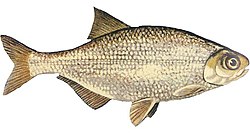
Picture of Halecostomi
- Source
- Wikipedia/Commons
- Credit
- NOAA
- Licence
- Public Domain
- Commercial use
- the licence allows it
No 3D scan of Halecostomi was found in Sketchfab.
Smithsonian Open Access and MorphoSource were not reached for this taxon, so this list is what the others held rather than everything there is.
The description on this site
- Source
- Wikipedia, “Halecostomi”
- Licence
- CC BY-SA 4.0
This is what the site found, which is not the same as what exists.
Keep going
What may have been alongside itActinopterygii through timeFormations of the Late CretaceousThe world it lived on
Occurrence data from the Paleobiology Database, CC BY 4.0. Regan 1903