Harpa
Harpa, common name the "harp snails", is a genus of large predatory sea snails, marine gastropod mollusks in the family Harpidae.

Samuel Chow from Boston, USA · CC BY 2.0 · via Wikipedia/Commons. May be a photograph of a specimen, or an artist’s reconstruction — an interpretation of a skeleton, since colour and soft tissue are almost never preserved.
On record
Recorded, not inferred- Sits inside
- HarpinaePBDB
- Diet
- carnivorePBDB, for Harpidae
- Life habit
- epifaunalPBDB, for Harpidae
- Motility
- actively mobilePBDB, for Harpidae
- Vision
- limitedPBDB, for Gastropoda
Time the record covers
At least 47 million years on record.
The record covers at least 48.07 Mya to 129 ka. No occurrence read is dated outside 56 Mya to 11.7 ka.
52 occurrences of Harpa on record, most of them in the Eocene. The Paleobiology Database records this as a living group. Bar height is expected occurrences, not a count: each fossil is spread across the span it is dated to, so a tall narrow bar means tight dating and a low wide one means loose.
When
52 occurrences- Eocene38%
- Oligocene4%
- Miocene13%
- Pliocene21%
- Pleistocene23%
These are dates about fossils, not the animal: the record can only begin after it arose and end before it died out, so either end may reach further. Shares are expected occurrences: a fossil dated to a span is counted partly in each period it straddles. More on what this infers.
Found in
26 formations
- Moodys Branch Formation · Jackson Group4
- Onzole Formation3
- Agueguexquite Formation3
- Byram Formation2
- Llajas Formation2
- Charco Azul Formation1
Loading coastlines…
The named rock units Harpa has been recovered from, largest first. Drawn where the rock is now, not where it formed. 2 further formations hold fewer occurrences each and are not listed. 17 occurrences have no formation on record, which is common for older literature.
Harpa and its relatives
EoceneWhere Harpa and its relatives were recorded in the Eocene.
Found in the same rock
1,199 taxa- Latirus7 sites
- Conus6 sites
- Terebra5 sites
- Conus sauridens4 sites
- Cypraea4 sites
- Ficus4 sites
- Gemmula4 sites
- Pecten4 sites
- Turricula4 sites
- Vexillum4 sites
- Acteon3 sites
- Calliostoma3 sites
- Calyptraea (Trochita) aperta3 sites
- Cardium3 sites
- Cirsotrema3 sites
- Clavilithes3 sites
- Distorsio3 sites
- Eocypraea inflata3 sites
- Ficopsis remondii3 sites
- Gemmula (Coronia)3 sites
- Hipponix3 sites
- Microdrillia3 sites
- Mitra3 sites
- Oliva3 sites
The Paleobiology Database records 24 sites for Harpa, and this reads all of them. The number is how many of those sites it was catalogued from too. The 24 sharing the most are listed.
This is not a list of everything alive at the time. It is only what has come out of the same ground as this animal and been written down.
Entered from
29 references- New species of Eocithara Fischer, 1883 (Mollusca, Gastropoda, Harpidae) from the Early Paleogene with phylogenetic analysis of the Harpidae6
- The genus Harpa (Mollusca: Gastropoda) in the new world6
- Catalogue of the Paleocene and Eocene mollusca of the southern and eastern United States. Part 1. Pelecypoda, Amphineura, Pteropoda, Scaphopoda and Cephalopoda4
- Early Pliocene gastropods of Cubagua, Venezuela: Taxonomy, palaeobiogeography and ecostratigraphy3
- Skwarko, 19943
- Cenozoic fossil mollusks from Western Pacific Islands; Gastropods (Eratoidae through Harpidae)3
- Resilience of marine invertebrate communities during the early Cenozoic hyperthermals2
- Lower Oligocene Gastropoda, Scaphopoda, and Cephalopoda of the Vicksburg Group in Mississippi2
- Megapaleontology of the Eocene Llajas Formation, Simi Valley, California2
- Die Tertiärschichten auf Java. Nach den Entdecjungen von Fr. Junghuhn2
- Quaternary marine terraces on Sal Island (Cape Verde archipelago)1
- Sedimentology of rocky shorelines: 4. Coarse gravel lithofacies, molluscan biofacies, and the stratigraphic and eustatic records in the type area of the Pleistocene Hulopoe Gravel, Lanai, Hawaii1
Each of the 52 occurrences read was entered from one of these publications, ordered by how many each accounts for. This is not a search for papers mentioning the name. 17 further references are not listed. Entries link to doi.org where the Paleobiology Database holds an identifier, and to its own record where it does not. Relayed as the Paleobiology Database holds them, not checked against what they resolve to.
Media and terms
Media content3

Picture of Harpa
- Source
- Wikipedia/Commons
- Credit
- Samuel Chow from Boston, USA
- Licence
- CC BY 2.0
- Commercial use
- the licence allows it
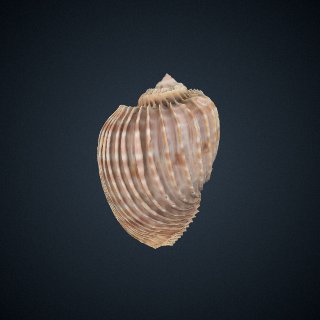
3D scan
- Source
- Smithsonian
- Licence
- CC0 — this site’s default, not the record’s
- Commercial use
- the licence allows it
- Specimen
- Harpa costata
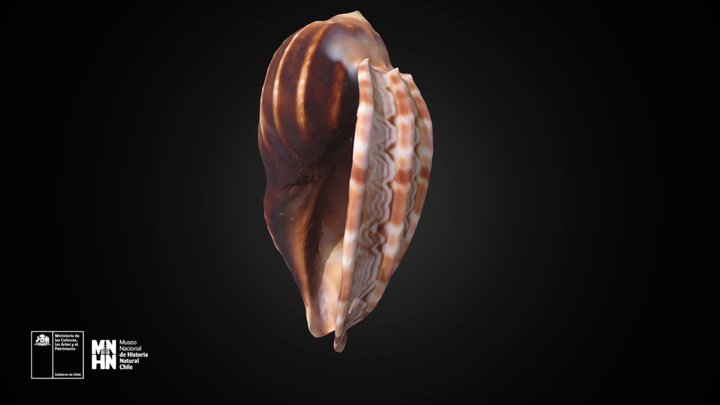
3D model
- Source
- Sketchfab
- Licence
- CC0 Public Domain
- Commercial use
- the licence allows it
The description on this site
- Source
- Wikipedia, “Harpa”
- Licence
- CC BY-SA 4.0
This is what the site found, which is not the same as what exists.
Keep going
What may have been alongside itHarpinae through timeFormations of the EoceneThe world it lived on
Occurrence data from the Paleobiology Database, CC BY 4.0. Röding 1798