Kennalestes gobiensis
Kennalestes is an extinct genus of insectivorous mammal resembling a shrew that was described in 1968. The type species is Kennalestes gobiensis and it was a common mammal in Mongolia during the Cretaceous period, found in both the Bayan Mandahu Formation and Djadochta Formation. It was found in Mongolia during the Campanian, so it may have fallen victim to such predators as Velociraptor, Oviraptor and Archaeornithoides.

Ghedoghedo · CC BY-SA 3.0 · via Wikipedia/Commons. May be a photograph of a specimen, or an artist’s reconstruction — an interpretation of a skeleton, since colour and soft tissue are almost never preserved.
On record
Recorded, not inferred- Sits inside
- KennalestesPBDB
- Diet
- insectivorePBDB, for Kennalestes
- Life habit
- ground dwellingPBDB, for Kennalestes
- Motility
- actively mobilePBDB, for Osteichthyes
- Environment
- terrestrialPBDB, for Kennalestes
Time the record covers
At most 12 million years on record.
Every occurrence read is dated to somewhere between 83.6 Mya and 72.2 Mya, and nothing in the dating separates them, so that window is what the record shows rather than a span.
2 occurrences of Kennalestes gobiensis on record, most of them in the Late Cretaceous. Bar height is expected occurrences, not a count: each fossil is spread across the span it is dated to, so a tall narrow bar means tight dating and a low wide one means loose.
When
2 occurrences- Late Cretaceous100%
These are dates about fossils, not the animal: the record can only begin after it arose and end before it died out, so either end may reach further. Shares are expected occurrences: a fossil dated to a span is counted partly in each period it straddles. More on what this infers.
Found in
1 formation
Loading coastlines…
The named rock units Kennalestes gobiensis has been recovered from, largest first. Drawn where the rock is now, not where it formed.
Kennalestes gobiensis and its relatives
Late CretaceousWhere Kennalestes gobiensis and its relatives were recorded in the Late Cretaceous.
Found in the same rock
47 taxa- Bulganbaatar nemegtbaataroides2 sites
- Globaura venusta2 sites
- Zalambdalestes lechei2 sites
- Adamisaurus magnidentatus1 site
- Allotheria1 site
- Ankylosauridae1 site
- Asioryctes nemegtensis1 site
- Bagaceratops1 site
- Bainguis parvus1 site
- Basilemys1 site
- Carnosauria1 site
- Carusia intermedia1 site
- Catopsbaatar1 site
- Chulsanbaatar vulgaris1 site
- Deltatheridium pretrituberculare1 site
- Estesia mongoliensis1 site
- Eucosmodontidae1 site
- Gilmoreteius1 site
- Gobekko cretacicus1 site
- Gobiderma pulchra1 site
- Gobinatus arenosus1 site
- Gobipteryx minuta1 site
- Hymenosaurus clarki1 site
- Hyotheridium1 site
The Paleobiology Database records 2 sites for Kennalestes gobiensis, and this reads all of them. The number is how many of those sites it was catalogued from too. The 24 sharing the most are listed.
This is not a list of everything alive at the time. It is only what has come out of the same ground as this animal and been written down.
Entered from
2 references- Extraordinary preservation in a new vertebrate assemblage from the Late Cretaceous of Mongolia1
- Preliminary data on the Upper Cretaceous eutherian mammals from Bayn Dzak, Gobi Desert1
Each of the 2 occurrences read was entered from one of these publications, ordered by how many each accounts for. This is not a search for papers mentioning the name. Entries link to doi.org where the Paleobiology Database holds an identifier, and to its own record where it does not. Relayed as the Paleobiology Database holds them, not checked against what they resolve to.
Media and terms
Media content1
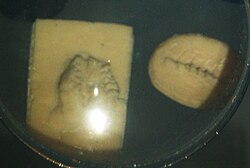
Picture of Kennalestes gobiensis
- Source
- Wikipedia/Commons
- Credit
- Ghedoghedo
- Licence
- CC BY-SA 3.0
- Commercial use
- the licence allows it
No 3D scan of Kennalestes gobiensis was found in Sketchfab.
Smithsonian Open Access and MorphoSource were not reached for this taxon, so this list is what the others held rather than everything there is.
The description on this site
- Source
- Wikipedia, “Kennalestes”
- Licence
- CC BY-SA 4.0
This is what the site found, which is not the same as what exists.
Keep going
What may have been alongside itKennalestes through timeFormations of the Late CretaceousThe world it lived on
Occurrence data from the Paleobiology Database, CC BY 4.0. Kielan-Jaworowska 1968