Koelreuteria
Koelreuteria, also known as chinese lantern tree, is a genus of three species of flowering plants in the family Sapindaceae, native to southern and eastern Asia, as well as the island of Fiji. Many fossil species are also known, suggesting that this genus had a wider range in the past.

Sten Porse · CC BY-SA 3.0 · via Wikipedia/Commons. May be a photograph of a specimen, or an artist’s reconstruction — an interpretation of a skeleton, since colour and soft tissue are almost never preserved.
On record
Recorded, not inferred- Also called
- golden rain treePBDB
- Sits inside
- SapindaceaePBDB
- Diet
- "photoautotroph"PBDB, for Angiospermae
Time the record covers
At least 66 million years on record.
The record covers at least 72.2 Mya to 5.333 Mya. No occurrence read is dated outside 89.8 Mya to 774 ka.
32 occurrences of Koelreuteria on record, most of them in the Eocene. The Paleobiology Database records this as a living group, and the chart stops with its fossils rather than at the present. Bar height is expected occurrences, not a count: each fossil is spread across the span it is dated to, so a tall narrow bar means tight dating and a low wide one means loose.
When
32 occurrences- Late Cretaceous6%
- Eocene44%
- Oligocene15%
- Miocene27%
- Pliocene5%
- Pleistocene1%
These are dates about fossils, not the animal: the record can only begin after it arose and end before it died out, so either end may reach further. Shares are expected occurrences: a fossil dated to a span is counted partly in each period it straddles. More on what this infers.
Found in
11 formations
- Florissant Formation6
- Klondike Mountain Formation3
- Green River Formation3
- Motojuku Formation2
- Comox Formation · Nanaimo Group2
- Shanwang Formation2
Loading coastlines…
The named rock units Koelreuteria has been recovered from, largest first. Drawn where the rock is now, not where it formed. 9 occurrences have no formation on record, which is common for older literature.
Koelreuteria and its relatives
EoceneWhere Koelreuteria and its relatives were recorded in the Eocene.
Found in the same rock
607 taxa- Rhus17 sites
- Quercus16 sites
- Acer15 sites
- Pinus11 sites
- Salix11 sites
- Prunus10 sites
- Alnus9 sites
- Carya9 sites
- Lindera9 sites
- Castanea8 sites
- Cedrela8 sites
- Cercis parvifolia8 sites
- Chamaecyparis8 sites
- Hydrangea8 sites
- Astronium7 sites
- Athyana7 sites
- Cardiospermum7 sites
- Cedrelospermum7 sites
- Crataegus7 sites
- Dipteronia7 sites
- Mahonia7 sites
- Pinus florissanti7 sites
- Populus7 sites
- Robinia7 sites
The Paleobiology Database records 27 sites for Koelreuteria, and this reads all of them. The number is how many of those sites it was catalogued from too. The 24 sharing the most are listed.
This is not a list of everything alive at the time. It is only what has come out of the same ground as this animal and been written down.
Entered from
16 references- Fossil Plants of the Florissant Beds of Colorado7
- A catalogue of Cenozoic megafossil plants in China5
- Fruits of Koelreuteria (Sapindaceae) from the Cenozoic throughout the northern hemisphere: their ecological, evolutionary, and biogeographic implications3
- Late Paleocene-early Eocene climate changes in southwestern Wyoming: Paleobotanical analysis2
- Late Miocene and Pliocene Floras in Central Honshu, Japan2
- Fossil Plants of the Tertiary Beaverhead Basins in Southwestern Montana2
- Flora of the Upper Cretaceous Nanaimo Group of Vancouver Island, British Columbia2
- The early Eocene flora of Horsefly, British Columbia, Canada and its phytogeographic significance1
- Systematic descriptions, in First occurrence of Cedrelospermum (Ulmaceae) in Asia and its biogeographic implications1
- Quantitative reconstruction of the Late Miocene monsoon climates of southwest China: A case study of the Lincang flora from Yunnan Province1
- The McAbee flora of British Columbia and its relation to the Early-Middle Eocene Okanagan Highlands flora of the Pacific Northwest1
- Middle Eocene flora of Huadian, Jilin Province, Northeastern China1
Each of the 32 occurrences read was entered from one of these publications, ordered by how many each accounts for. This is not a search for papers mentioning the name. 4 further references are not listed. Entries link to doi.org where the Paleobiology Database holds an identifier, and to its own record where it does not. Relayed as the Paleobiology Database holds them, not checked against what they resolve to.
Media and terms
Media content2

Picture of Koelreuteria
- Source
- Wikipedia/Commons
- Credit
- Sten Porse
- Licence
- CC BY-SA 3.0
- Commercial use
- the licence allows it
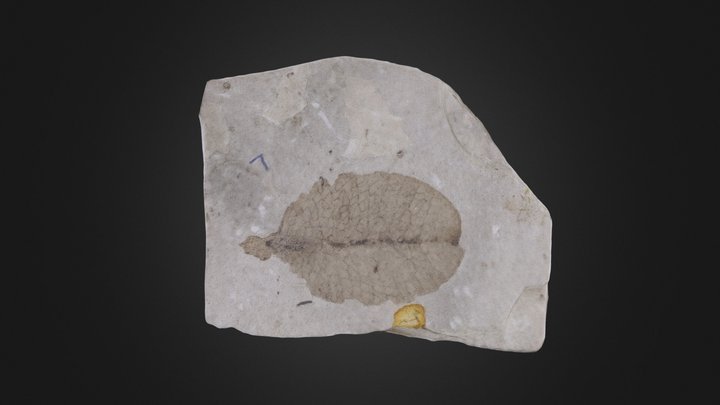
3D model
- Source
- Sketchfab
- Licence
- CC0 Public Domain
- Commercial use
- the licence allows it
Smithsonian Open Access and MorphoSource were not reached for this taxon, so this list is what the others held rather than everything there is.
The description on this site
- Licence
- CC BY-SA 4.0
This is what the site found, which is not the same as what exists.
Keep going
What may have been alongside itSapindaceae through timeFormations of the EoceneThe world it lived on
Occurrence data from the Paleobiology Database, CC BY 4.0. Laxmann 1772