Kritosaurus
Kritosaurus is an incompletely known genus of hadrosaurid (duck-billed) dinosaur. It lived about 74.5-66 million years ago, in the Late Cretaceous of North America. The name means "separated lizard", but is often mistranslated as "noble lizard" in reference to the presumed "Roman nose".

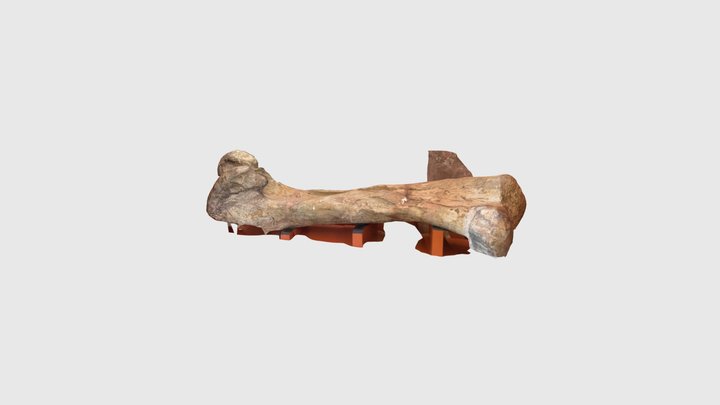
Ryan Somma · CC BY-SA 2.0 · via Wikipedia/Commons. May be a photograph of a specimen, or an artist’s reconstruction — an interpretation of a skeleton, since colour and soft tissue are almost never preserved.
On record
Recorded, not inferred- Sits inside
- KritosauriniPBDB
- Diet
- herbivorePBDB, for Ornithopoda
- Life habit
- ground dwelling, gregariousPBDB, for Ornithischia
- Motility
- actively mobilePBDB, for Ornithischia
- Environment
- terrestrialPBDB, for Ornithischia
- Length
- 8 mWikidata
Time the record covers
At least 11 million years on record.
The record covers at least 83.6 Mya to 72.2 Mya. No occurrence read is dated outside 85.7 Mya to 66 Mya.
25 occurrences of Kritosaurus on record, most of them in the Late Cretaceous. Bar height is expected occurrences, not a count: each fossil is spread across the span it is dated to, so a tall narrow bar means tight dating and a low wide one means loose.
When
25 occurrences- Late Cretaceous100%
These are dates about fossils, not the animal: the record can only begin after it arose and end before it died out, so either end may reach further. Shares are expected occurrences: a fossil dated to a span is counted partly in each period it straddles. More on what this infers.
Found in
7 formations
- Kirtland Formation9
- Fruitland Formation4
- Fruitland/Kirtland Formation4
- Aguja Formation3
- Milk River Formation2
- Javelina Formation · Tornillo Group2
Loading coastlines…
The named rock units Kritosaurus has been recovered from, largest first. Drawn where the rock is now, not where it formed.
Kritosaurus and its relatives
Late CretaceousWhere Kritosaurus and its relatives were recorded in the Late Cretaceous.
Found in the same rock
55 taxa- Hadrosauridae8 sites
- Basilemys3 sites
- Crocodylia3 sites
- Testudines3 sites
- Theropoda3 sites
- Agujaceratops mariscalensis2 sites
- Aspideretes2 sites
- Carnosauria2 sites
- Compsemys2 sites
- Denazinemys nodosa2 sites
- Lacertilia2 sites
- Lepisosteus2 sites
- Pachycephalosauridae2 sites
- Trionychidae2 sites
- Trionyx robustus2 sites
- Tyrannosauridae2 sites
- Acipenser eruciferus1 site
- Adocus1 site
- Alamosaurus sanjuanensis1 site
- Amia fragosa1 site
- Amiidae1 site
- Ankylosauria1 site
- Ankylosaurus1 site
- Aspideretoides1 site
The Paleobiology Database records 23 sites for Kritosaurus, and this reads all of them. The number is how many of those sites it was catalogued from too. The 24 sharing the most are listed.
This is not a list of everything alive at the time. It is only what has come out of the same ground as this animal and been written down.
Entered from
10 references- Stratigraphic distribution of hadrosaurids in the Upper Cretaceous Fruitland, Kirtland, and Ojo Alamo formations, San Juan Basin, New Mexico6
- Paleontological survey, resource assessment, and mitigation plan for the Bisti-Star Lake Area, northwestern New Mexico5
- Hadrosaurian dinosaurs of North America4
- Hadrosaurian Dinosaurs of Big Bend National Park, Brewster County, Texas3
- Hadrosaurian dinosaurs from the Maastrichtian Javelina Formation, Big Bend National Park, Texas2
- Dinosaurs, the age of the Fruitland and Kirtland Formations, and the Cretaceous-Tertiary boundary in the San Juan Basin, New Mexico1
- An aniliid snake and associated vertebrates from the Campanian of New Mexico1
- Fauna of the upper Milk River Beds, southern Alberta1
- Contributions to the geology and paleontology of San Juan County, New Mexico. 2. Vertebrate faunas of the Ojo Alamo, Kirtland and Fruitland Formations1
- The Cretaceous Ojo Alamo beds of New Mexico with description of the new dinosaur genus <i>Kritosaurus</i>1
Each of the 25 occurrences read was entered from one of these publications, ordered by how many each accounts for. This is not a search for papers mentioning the name. Entries link to doi.org where the Paleobiology Database holds an identifier, and to its own record where it does not. Relayed as the Paleobiology Database holds them, not checked against what they resolve to.
Media and terms
Media content2

Picture of Kritosaurus
- Source
- Wikipedia/Commons
- Credit
- Ryan Somma
- Licence
- CC BY-SA 2.0
- Commercial use
- the licence allows it
Smithsonian Open Access and MorphoSource were not reached for this taxon, so this list is what the others held rather than everything there is.
The description on this site
- Source
- Wikipedia, “Kritosaurus”
- Licence
- CC BY-SA 4.0
This is what the site found, which is not the same as what exists.
Keep going
What may have been alongside itKritosaurini through timeFormations of the Late CretaceousThe world it lived on
Occurrence data from the Paleobiology Database, CC BY 4.0. Brown 1910