Lytoceras
Lytoceras is an ammonite genus that was extant during most of the Jurassic and Cretaceous periods, and is the type genus for the family Lytoceratidae. These cephalopods were fast-moving nektonic carnivores.

Ghedoghedo · CC BY-SA 3.0 · via Wikipedia/Commons. May be a photograph of a specimen, or an artist’s reconstruction — an interpretation of a skeleton, since colour and soft tissue are almost never preserved.
On record
Recorded, not inferred- Sits inside
- LytoceratinaePBDB
- Diet
- carnivorePBDB, for Ammonoidea
- Life habit
- nektonicPBDB, for Ammonoidea
- Motility
- fast-movingPBDB, for Ammonoidea
- Vision
- well-developedPBDB, for Cephalopoda
- Environment
- marinePBDB, for Cephalopoda
Time the record covers
At least 79 million years on record.
The record covers at least 192.9 Mya to 113.2 Mya. No occurrence read is dated outside 201.4 Mya to 100.5 Mya.
1,342 occurrences of Lytoceras on record, most of them in the Early Jurassic. Bar height is expected occurrences, not a count: each fossil is spread across the span it is dated to, so a tall narrow bar means tight dating and a low wide one means loose.
When
1,342 occurrencesThese are dates about fossils, not the animal: the record can only begin after it arose and end before it died out, so either end may reach further. Shares are expected occurrences: a fossil dated to a span is counted partly in each period it straddles. More on what this infers.
Found in
89 formations
- Isztimér Formation43
- Tűzkövesárok Limestone Formation36
- El Mergueb Formation · M' Chergua Group32
- Bersek Marl Formation31
- Budden Canyon Formation29
- Bugarone Formation28
Loading coastlines…
The named rock units Lytoceras has been recovered from, largest first. Drawn where the rock is now, not where it formed. 65 further formations hold fewer occurrences each and are not listed. 860 occurrences have no formation on record, which is common for older literature.
Lytoceras and its relatives
Early JurassicWhere Lytoceras and its relatives were recorded in the Early Jurassic.
Found in the same rock
882 taxa- Phylloceras71 sites
- Phyllopachyceras infundibulum40 sites
- Barremites32 sites
- Juraphyllites30 sites
- Fuciniceras25 sites
- Calliphylloceras23 sites
- Phylloceras (Hypophylloceras) ponticuli21 sites
- Partschiceras20 sites
- Anahamulina18 sites
- Neolissoceras18 sites
- Crioceratites17 sites
- Lenticulina15 sites
- Neolissoceras grasianum15 sites
- Olcostephanus15 sites
- Bochianites neocomiensis14 sites
- Paraspiticeras14 sites
- Ammonoidea13 sites
- Euphylloceras thetys13 sites
- Hamulinites13 sites
- Protetragonites13 sites
- Spitidiscus13 sites
- Subpulchellia13 sites
- Anahamulina subcylindrica12 sites
- Calliphylloceras bicicolae12 sites
The Paleobiology Database records 1,062 sites for Lytoceras, and this reads 240 of them. The number is how many of those sites it was catalogued from too. The 24 sharing the most are listed.
This is not a list of everything alive at the time. It is only what has come out of the same ground as this animal and been written down.
Entered from
165 references- L'évolution des ammonites du Valanginien-Hauterivien inférieur du bassin Vocontien et de la plate-form Provençale (sud-est de la France): relations avec la stratigraphie séquentielle et implications biostratigraphiques232
- Les ammonites du Carixien des Causses (France)165
- Les ammonites du Domérien de la montagne du Bakony (Hongrie)105
- Les ammonites du Sinémurien et du Pliensbachien inférieur de la montagne du Bakony (Hongrie)78
- Integrated Lower Cretaceous biostratigraphy of the Bersek Quarry, Gerecse Mountains, Transdanubian Range. Hungary34
- Ammonites sinémuriennes du Haut-Atlas marocain33
- Ammonoid and foraminiferal biostratigraphy from uppermost Valanginian to lowermost Barremian of the Jebel Boulahouajeb section (northern Tunisia)32
- Lower Barremian ammonite biostratigraphy in the Subbetic Domain (Betic Cordillera, southern Spain)31
- Cingolites n. gen., a new lower Toarcian Hildoceratinae (Ammonitina) from the Marchean Apennines (Cingoli, Macerata, Italy)28
- Lower Cretaceous stratigraphic units of Northern California21
- Les ammonites du Pliensbachien du jebel Bou Rharraf (Haut Atlas oriental, Maroc)20
- Geologie de Madagascar I. Les Terrains Sedimentaires20
Each of the 1,342 occurrences read was entered from one of these publications, ordered by how many each accounts for. This is not a search for papers mentioning the name. 153 further references are not listed. Entries link to doi.org where the Paleobiology Database holds an identifier, and to its own record where it does not. Relayed as the Paleobiology Database holds them, not checked against what they resolve to.
Media and terms
Media content2

Picture of Lytoceras
- Source
- Wikipedia/Commons
- Credit
- Ghedoghedo
- Licence
- CC BY-SA 3.0
- Commercial use
- the licence allows it
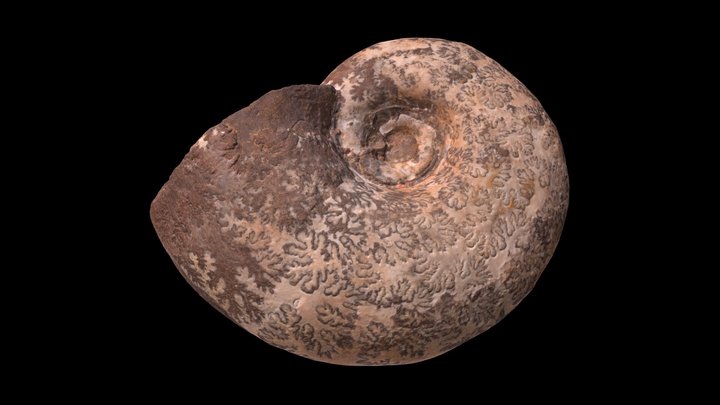
3D model
- Source
- Sketchfab
- Licence
- CC Attribution
- Commercial use
- cannot be read from the licence given — check the record
The description on this site
- Source
- Wikipedia, “Lytoceras”
- Licence
- CC BY-SA 4.0
This is what the site found, which is not the same as what exists.
Keep going
What may have been alongside itLytoceratinae through timeFormations of the Early JurassicThe world it lived on
Occurrence data from the Paleobiology Database, CC BY 4.0. (Suess 1865)