Mammalia
Searched as Mammalia indet.. The Paleobiology Database treats Mammalia as the accepted name.
A mammal is a vertebrate animal of the class Mammalia. Mammals are characterized by the presence of milk-producing mammary glands for feeding their young, a broad neocortex region of the brain, fur or hair, and three middle ear bones. These characteristics distinguish them from reptiles and birds, from which their ancestors diverged in the Carboniferous period over 300 million years ago. Around 6,640 extant species of mammals have been described and divided into 27 orders. The study of mammals is called mammalogy.

ZKevinTheCat · CC BY 4.0 · via Wikipedia/Commons. May be a photograph of a specimen, or an artist’s reconstruction — an interpretation of a skeleton, since colour and soft tissue are almost never preserved.
On record
Recorded, not inferred- Also called
- mammalPBDB
- Sits inside
- MammaliaformesPBDB
- Diet
- insectivorePBDB, for Mammaliaformes
- Life habit
- scansorialPBDB, for Mammaliaformes
- Motility
- actively mobilePBDB, for Osteichthyes
- Environment
- terrestrialPBDB
Time the record covers
At least 211 million years on record.
The record covers at least 211.18 Mya to 11.7 ka. No occurrence read is dated outside 227.3 Mya to 0 Mya.
615 occurrences of Mammalia on record, most of them in the Pleistocene. The Paleobiology Database records this as a living group. Bar height is expected occurrences, not a count: each fossil is spread across the span it is dated to, so a tall narrow bar means tight dating and a low wide one means loose.
When
615 occurrences- Late Triassicunder 1%
- Middle Jurassic2%
- Late Jurassic4%
- Early Cretaceous5%
- Late Cretaceous17%
- Paleocene5%
- Eocene9%
- Oligocene2%
- Miocene14%
- Pliocene11%
- Pleistocene22%
- Holocene7%
These are dates about fossils, not the animal: the record can only begin after it arose and end before it died out, so either end may reach further. Shares are expected occurrences: a fossil dated to a span is counted partly in each period it straddles. More on what this infers.
Found in
163 formations
- Solimões Formation26
- Vaqueros Formation25
- Morrison Formation21
- Koobi Fora Formation · Omo Group20
- Swartkrans Formation · Transvaal Group19
- Hell Creek Formation · Montana Group18
Loading coastlines…
The named rock units Mammalia has been recovered from, largest first. Drawn where the rock is now, not where it formed. 139 further formations hold fewer occurrences each and are not listed. 107 occurrences have no formation on record, which is common for older literature.
Mammalia and its relatives
PleistoceneWhere Mammalia and its relatives were recorded in the Pleistocene.
Found in the same rock
1,779 taxa- Albanerpetontidae20 sites
- Anura15 sites
- Equus14 sites
- Paracimexomys robisoni12 sites
- Theropoda12 sites
- Crocodylia11 sites
- Cimolodon similis10 sites
- Dromaeosauridae10 sites
- Hipparion10 sites
- Melvius10 sites
- Paracimexomys10 sites
- Paronychodon10 sites
- Testudines10 sites
- Albanerpeton nexuosus9 sites
- Cedaromys bestia9 sites
- Lepisosteidae9 sites
- Scincomorpha9 sites
- Astroconodon denisoni8 sites
- Bicuspidon numerosus8 sites
- Cedaromys parvus8 sites
- Cimolomys8 sites
- Dracaena colombiana8 sites
- Equus (Hemionus) hemionus8 sites
- Richardoestesia gilmorei8 sites
The Paleobiology Database records at least 452 sites for Mammalia, and this reads 240 of them. The number is how many of those sites it was catalogued from too. The 24 sharing the most are listed.
This is not a list of everything alive at the time. It is only what has come out of the same ground as this animal and been written down.
Entered from
280 references- Georeferencing fossiliferous localities from Solimões and Acre Basins (Brazil) -what we know so far about Solimões Formation and future perspectives28
- The Vaqueros Formation, Lower Miocene of California. I. Paleontology24
- Will Downs and the Zinda Pir Dome20
- Paleontology of the Judith River Formation (Campanian) of Dinosaur National Park, Alberta, Canada: evidence from vertebrate microfossil locality18
- Exceptional continental record of biotic recovery after the Cretaceous–Paleogene mass extinction16
- Laetoli: a Pliocene Site in Northern Tanzania14
- The bone assemblages from the excavated sites11
- The Late Prehistory of the Eastern Sahel11
- Lothagam: a record of faunal change in the late Miocene of East Africa10
- Vertebrate biostratigraphy of the Hell Creek Formation in southwestern North Dakota and northwestern South Dakota9
- The Vertebrate Taphonomy and Paleoecology of the Olorgesailie Formation (Middle Pleistocene, Kenya)9
- Travertines and Cave Deposits of the Kaap Escarpment of South Africa, and the Type Locality of Australopithecus Africanus Dart9
Each of the 615 occurrences read was entered from one of these publications, ordered by how many each accounts for. This is not a search for papers mentioning the name. 268 further references are not listed. Entries link to doi.org where the Paleobiology Database holds an identifier, and to its own record where it does not. Relayed as the Paleobiology Database holds them, not checked against what they resolve to.
Media and terms
Media content2

Picture of Mammalia
- Source
- Wikipedia/Commons
- Credit
- ZKevinTheCat
- Licence
- CC BY 4.0
- Commercial use
- the licence allows it
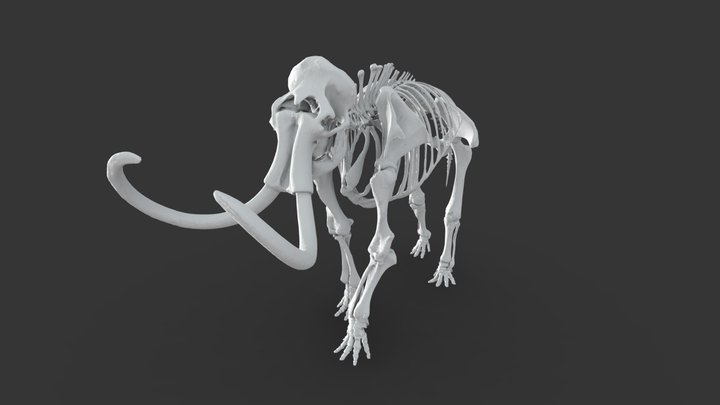
3D model
- Source
- Sketchfab
- Licence
- CC0 Public Domain
- Commercial use
- the licence allows it
Smithsonian Open Access was not reached for this taxon, so this list is what the others held rather than everything there is.
The description on this site
- Source
- Wikipedia, “Mammal”
- Licence
- CC BY-SA 4.0
This is what the site found, which is not the same as what exists.
Keep going
What may have been alongside itMammaliaformes through timeFormations of the PleistoceneThe world it lived on
Occurrence data from the Paleobiology Database, CC BY 4.0. (Linnaeus 1758)