Mammuthus columbi
The Columbian mammoth is an extinct species of mammoth that inhabited North America from southern Canada to Costa Rica during the Pleistocene epoch. The Columbian mammoth descended from Eurasian steppe mammoths that colonized North America during the Early Pleistocene around 1.5–1.3 million years ago, and later experienced hybridisation with the woolly mammoth lineage. The Columbian mammoth was among the last mammoth species, and the pygmy mammoths evolved from them on the Channel Islands of California. The closest extant relative of the Columbian and other mammoths is the Asian elephant.

Jonathan Chen · CC BY-SA 4.0 · via Wikipedia/Commons. May be a photograph of a specimen, or an artist’s reconstruction — an interpretation of a skeleton, since colour and soft tissue are almost never preserved.
On record
Recorded, not inferred- Also called
- Columbian mammothPBDB
- Sits inside
- MammuthusPBDB
- Diet
- grazerPBDB, for Mammuthus
- Life habit
- ground dwellingPBDB, for Elephantidae
- Motility
- actively mobilePBDB, for Osteichthyes
- Environment
- terrestrialPBDB, for Eutheria
- Mass
- 10 tonneWikidata
Time the record covers
At least 1.2 million years on record.
The record covers at least 1.4 Mya to 129 ka. No occurrence read is dated outside 4.7 Mya to 0 Mya.
157 occurrences of Mammuthus columbi on record, most of them in the Pleistocene. Bar height is expected occurrences, not a count: each fossil is spread across the span it is dated to, so a tall narrow bar means tight dating and a low wide one means loose.
When
157 occurrences- Plioceneunder 1%
- Pleistocene99%
These are dates about fossils, not the animal: the record can only begin after it arose and end before it died out, so either end may reach further. Shares are expected occurrences: a fossil dated to a span is counted partly in each period it straddles. More on what this infers.
Found in
20 formations
- Good Creek Formation3
- Kingsdown Formation2
- McPherson Formation2
- Ocotillo Formation2
- "Crooked Creek" Formation1
- La Habra Formation1
Loading coastlines…
The named rock units Mammuthus columbi has been recovered from, largest first. Drawn where the rock is now, not where it formed. 132 occurrences have no formation on record, which is common for older literature.
Mammuthus columbi and its relatives
PleistoceneWhere Mammuthus columbi and its relatives were recorded in the Pleistocene.
Found in the same rock
939 taxa- Equus47 sites
- Camelops30 sites
- Mammut americanum29 sites
- Paramylodon harlani29 sites
- Odocoileus virginianus25 sites
- Canis latrans24 sites
- Holmesina septentrionalis21 sites
- Bison20 sites
- Camelops hesternus19 sites
- Odocoileus19 sites
- Aenocyon dirus17 sites
- Equus conversidens17 sites
- Hemiauchenia16 sites
- Ondatra zibethicus15 sites
- Bison latifrons14 sites
- Geomys bursarius14 sites
- Procyon lotor14 sites
- Lepus12 sites
- Alligator mississippiensis11 sites
- Arctodus simus11 sites
- Equus complicatus11 sites
- Equus mexicanus11 sites
- Megalonyx11 sites
- Meleagris gallopavo11 sites
The Paleobiology Database records 153 sites for Mammuthus columbi, and this reads all of them. The number is how many of those sites it was catalogued from too. The 24 sharing the most are listed.
This is not a list of everything alive at the time. It is only what has come out of the same ground as this animal and been written down.
Entered from
101 references- The fossil elephants of Minnesota12
- Fossil and subfossil mammals from the Quaternary of British Columbia9
- Recent discoveries of fossil vertebrates in the lower peninsula of Michigan8
- A catalogue of late Quaternary Vertebrates from California: Part Two, Mammals5
- Mammoths in Central America: New records from Guatemala4
- Dalquest and Schultz, 19923
- Hintlian, 19753
- Final report covering the period from March 4, 1939 ro September 30, 1941 for the state-wide paleontologic-mineralogic survey in Texas3
- Recent archaeo-palaeontogical findings from Barranca del Muerto site, Santiago Chazumba, Oaxaca, Mexico2
- Pleistocene vertebrates of Silicon Valley (Santa Clara County, California)2
- Actinomycetes pardinensis (Carnivora, Felidae) from the Early Pleistocene of Pantalla (Italy): predatory behavior and ecological role of the giant Plio-Pleistocene cheetah2
- The fossil mammals of Nicaragua2
Each of the 157 occurrences read was entered from one of these publications, ordered by how many each accounts for. This is not a search for papers mentioning the name. 89 further references are not listed. Entries link to doi.org where the Paleobiology Database holds an identifier, and to its own record where it does not. Relayed as the Paleobiology Database holds them, not checked against what they resolve to.
Media and terms
Media content2

Picture of Mammuthus columbi
- Source
- Wikipedia/Commons
- Credit
- Jonathan Chen
- Licence
- CC BY-SA 4.0
- Commercial use
- the licence allows it
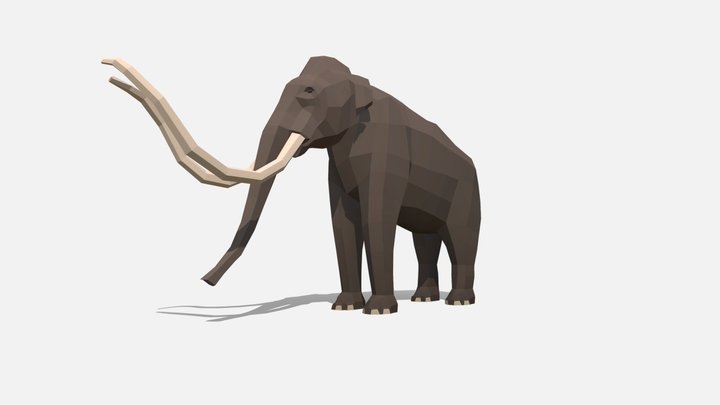
3D model
- Source
- Sketchfab
- Licence
- CC Attribution-NonCommercial-ShareAlike
- Commercial use
- the licence does not allow it
Smithsonian Open Access and MorphoSource were not reached for this taxon, so this list is what the others held rather than everything there is.
The description on this site
- Licence
- CC BY-SA 4.0
This is what the site found, which is not the same as what exists.
Keep going
What may have been alongside itMammuthus through timeFormations of the PleistoceneThe world it lived on
Occurrence data from the Paleobiology Database, CC BY 4.0. (Falconer 1857)