Equus conversidens
Equus conversidens, or the Mexican horse, was a Pleistocene species of horse, now extinct, that inhabited North America.

Ghedoghedo · CC BY-SA 4.0 · via Wikipedia/Commons. May be a photograph of a specimen, or an artist’s reconstruction — an interpretation of a skeleton, since colour and soft tissue are almost never preserved.
On record
Recorded, not inferred- Sits inside
- EquusPBDB
- Diet
- grazerPBDB, for Equus
- Life habit
- ground dwellingPBDB, for Equus
- Motility
- actively mobilePBDB, for Osteichthyes
- Environment
- terrestrialPBDB, for Eutheria
Time the record covers
At least 2.4 million years on record.
The record covers at least 2.58 Mya to 129 ka. No occurrence read is dated outside 4.7 Mya to 0 Mya.
49 occurrences of Equus conversidens on record, most of them in the Pleistocene. Bar height is expected occurrences, not a count: each fossil is spread across the span it is dated to, so a tall narrow bar means tight dating and a low wide one means loose.
When
49 occurrences- Pliocene4%
- Pleistocene95%
- Holoceneunder 1%
These are dates about fossils, not the animal: the record can only begin after it arose and end before it died out, so either end may reach further. Shares are expected occurrences: a fossil dated to a span is counted partly in each period it straddles. More on what this infers.
Found in
9 formations
- Kingsdown Formation2
- Chapala Formation2
- Manix Formation1
- Tacubaya Formation1
- Tule Formation1
- McPherson Formation1
Loading coastlines…
The named rock units Equus conversidens has been recovered from, largest first. Drawn where the rock is now, not where it formed. 38 occurrences have no formation on record, which is common for older literature.
Equus conversidens and its relatives
PleistoceneWhere Equus conversidens and its relatives were recorded in the Pleistocene.
Found in the same rock
566 taxa- Mammuthus columbi17 sites
- Camelops16 sites
- Camelops hesternus13 sites
- Odocoileus13 sites
- Canis latrans12 sites
- Panthera leo atrox9 sites
- Eremotherium laurillardi8 sites
- Geomys bursarius8 sites
- Lepus8 sites
- Paramylodon harlani8 sites
- Spermophilus tridecemlineatus8 sites
- Sylvilagus8 sites
- Aenocyon dirus7 sites
- Bison7 sites
- Equus mexicanus7 sites
- Glyptotherium cylindricum7 sites
- Mammuthus7 sites
- Microtus pennsylvanicus7 sites
- Odocoileus virginianus7 sites
- Taxidea taxus7 sites
- Chaetodipus hispidus6 sites
- Hemiauchenia6 sites
- Holmesina septentrionalis6 sites
- Neotoma6 sites
The Paleobiology Database records 49 sites for Equus conversidens, and this reads all of them. The number is how many of those sites it was catalogued from too. The 24 sharing the most are listed.
This is not a list of everything alive at the time. It is only what has come out of the same ground as this animal and been written down.
Entered from
44 references- Pleistocene ungulates from the Bow River gravels at Cochrane, Alberta3
- Actinomycetes pardinensis (Carnivora, Felidae) from the Early Pleistocene of Pantalla (Italy): predatory behavior and ecological role of the giant Plio-Pleistocene cheetah2
- Dalquest and Schultz, 19922
- Vertebrates of the Last Interglaciation in Canada: A Review, with New Data2
- Synonymies and reidentifications of North American fossil mammals1
- Pleistocene mammals of Montana and their geologic context1
- Irvingtonian Land Mammal Age indicators in the west-central Mojave Desert1
- Add Title1
- The Camp Cady Local Fauna: Paleoenvironment of the Lake Manix Basin1
- Faunal correlation of Pleistocene deposits in Western Canada1
- Late Cenozoic Mammals from Northwestern Mexico1
- Biostratigraphy and paleoecology of Pleistocene deposits (Riddell Member, Floral Formation, Late Rancholabrean), Saskatoon, Canada1
Each of the 49 occurrences read was entered from one of these publications, ordered by how many each accounts for. This is not a search for papers mentioning the name. 32 further references are not listed. Entries link to doi.org where the Paleobiology Database holds an identifier, and to its own record where it does not. Relayed as the Paleobiology Database holds them, not checked against what they resolve to.
Media and terms
Media content2
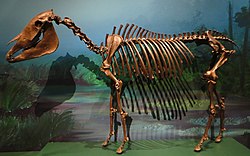
Picture of Equus conversidens
- Source
- Wikipedia/Commons
- Credit
- Ghedoghedo
- Licence
- CC BY-SA 4.0
- Commercial use
- the licence allows it
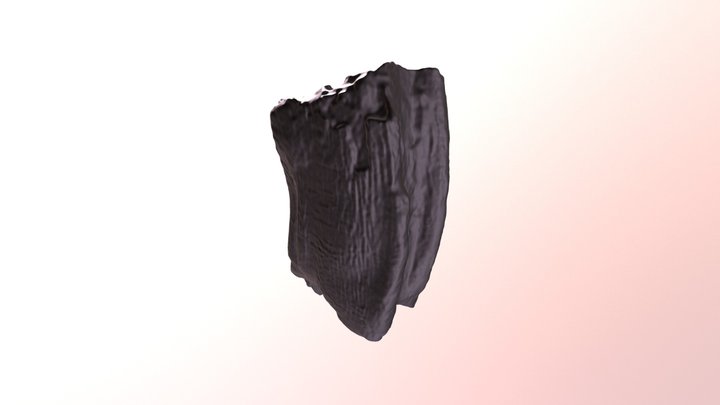
3D model
- Source
- Sketchfab
- Credit
- WesternScienceCenter
- Licence
- CC Attribution-NonCommercial
- Commercial use
- the licence does not allow it
The description on this site
- Licence
- CC BY-SA 4.0
This is what the site found, which is not the same as what exists.
Keep going
What may have been alongside itEquus through timeFormations of the PleistoceneThe world it lived on
Occurrence data from the Paleobiology Database, CC BY 4.0. (Owen 1869)