Megachasma
Megachasma is a genus of mackerel sharks. It is usually considered to be the sole genus in the family Megachasmidae, though suggestion has been made that it may belong in the family Cetorhinidae, of which the Megamouth shark is the sole extant member. Megachasma is known from a single living species, Megachasma pelagios.

CSIRO National Fish Collection · CC BY 3.0 · via Wikipedia/Commons. May be a photograph of a specimen, or an artist’s reconstruction — an interpretation of a skeleton, since colour and soft tissue are almost never preserved.
On record
Recorded, not inferred- Sits inside
- MegachasmidaePBDB
- Diet
- suspension feeder, carnivorePBDB, for Megachasmidae
- Life habit
- nektonicPBDB, for Megachasmidae
- Motility
- fast-movingPBDB, for Megachasmidae
Time the record covers
At least 28 million years on record.
The record covers at least 33.9 Mya to 5.333 Mya. No occurrence read is dated outside 37.71 Mya to 1.8 Mya.
14 occurrences of Megachasma on record, most of them in the Miocene. The Paleobiology Database records this as a living group, and the chart stops with its fossils rather than at the present. Bar height is expected occurrences, not a count: each fossil is spread across the span it is dated to, so a tall narrow bar means tight dating and a low wide one means loose.
When
14 occurrences- Eocene7%
- Oligocene7%
- Miocene63%
- Pliocene22%
- Pleistoceneunder 1%
These are dates about fossils, not the animal: the record can only begin after it arose and end before it died out, so either end may reach further. Shares are expected occurrences: a fossil dated to a span is counted partly in each period it straddles. More on what this infers.
Found in
11 formations
- Jewett Formation2
- Pungo River Formation1
- Yorktown Formation · Chesapeake Group1
- Kattendijk, Lillo Formation1
- Yaquina Formation1
- Nye Formation1
Loading coastlines…
The named rock units Megachasma has been recovered from, largest first. Drawn where the rock is now, not where it formed. 2 occurrences have no formation on record, which is common for older literature.
Megachasma and its relatives
MioceneWhere Megachasma and its relatives were recorded in the Miocene.
Found in the same rock
733 taxa- Alopias vulpinus4 sites
- Carcharodon hastalis4 sites
- Sphyrna zygaena4 sites
- Squatina4 sites
- Aetobatus3 sites
- Carcharhinus brachyurus3 sites
- Carcharhinus leucas3 sites
- Echinorhinus blakei3 sites
- Hemipristis serra3 sites
- Isurus oxyrinchus3 sites
- Negaprion brevirostris3 sites
- Odontaspis ferox3 sites
- Pristiophorus3 sites
- Ziphiidae3 sites
- Alopias superciliosus2 sites
- Aluterus2 sites
- Ardenna gravis2 sites
- Argyrocetus bakersfieldensis2 sites
- Bagre2 sites
- Bolivina2 sites
- Carcharhinus obscurus2 sites
- Carcharhinus perezi2 sites
- Carcharhinus plumbeus2 sites
- Carcharias2 sites
The Paleobiology Database records 13 sites for Megachasma, and this reads all of them. The number is how many of those sites it was catalogued from too. The 24 sharing the most are listed.
This is not a list of everything alive at the time. It is only what has come out of the same ground as this animal and been written down.
Entered from
9 references- A new fossil megamouth shark (Lamniformes, Megachasmidae) from the Oligocene-Miocene of the western United States5
- The Neogene sharks, rays, and bony fishes from Lee Creek Mine, Aurora, North Carolina2
- A megamouth shark (Lamniformes: Megachasmidae) in the Burdigalian of Belgium1
- The early Miocene elasmobranch assemblage from Zamaca (Chilcatay T Formation, Peru)1
- The oldest fossil record of the megamouth shark from the late Eocene of Denmark and comments on the enigmatic megachasmid origin1
- A megachasmid shark tooth (Chondrichthyes, Lamniformes) from the Zanclean (early Pliocene) of San Quirico d’Orcia, central Italy1
- The first Cenozoic record of a fossil megamouth shark (Lamniformes, Megachasmidae) from Asia1
- The presence of Megachasma (Chondricthyes: Lamniformes) in the Neogene of Belgium, first occurence in Europe1
- Fauna de vertebrados y aspectos tafonómicos del "bonebed" (Mioceno tardío) de la Formación Bahía Inglesa1
Each of the 14 occurrences read was entered from one of these publications, ordered by how many each accounts for. This is not a search for papers mentioning the name. Entries link to doi.org where the Paleobiology Database holds an identifier, and to its own record where it does not. Relayed as the Paleobiology Database holds them, not checked against what they resolve to.
Media and terms
Media content2

Picture of Megachasma
- Source
- Wikipedia/Commons
- Credit
- CSIRO National Fish Collection
- Licence
- CC BY 3.0
- Commercial use
- the licence allows it
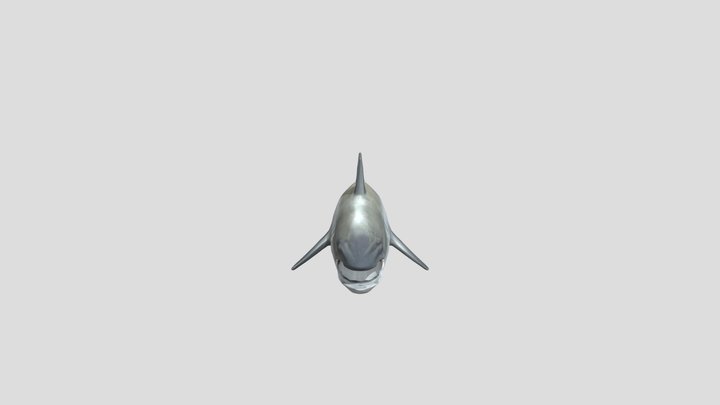
3D model
- Source
- Sketchfab
- Credit
- Rainbow Yoshi Gun
- Licence
- CC Attribution
- Commercial use
- cannot be read from the licence given — check the record
Smithsonian Open Access and MorphoSource were not reached for this taxon, so this list is what the others held rather than everything there is.
The description on this site
- Source
- Wikipedia, “Megachasma”
- Licence
- CC BY-SA 4.0
This is what the site found, which is not the same as what exists.
Keep going
What may have been alongside itMegachasmidae through timeFormations of the MioceneThe world it lived on
Occurrence data from the Paleobiology Database, CC BY 4.0. Taylor et al. 1983