Aluterus
Aluterus is a genus of filefishes. This genus is larger-bodied than many other monacanthids, with Aluterus scriptus being the largest filefish species, reaching 1.1 metres in total length.

Richard Ling from NSW, Australia · CC BY-SA 2.0 · via Wikipedia/Commons. May be a photograph of a specimen, or an artist’s reconstruction — an interpretation of a skeleton, since colour and soft tissue are almost never preserved.
On record
Recorded, not inferred- Also called
- LeatherjacketPBDB
- Sits inside
- MonacanthidaePBDB
- Diet
- carnivorePBDB, for Tetraodontiformes
- Life habit
- nektonicPBDB, for Tetraodontiformes
- Motility
- actively mobilePBDB, for Tetraodontiformes
Time the record covers
At least 12 million years on record.
The record covers at least 13.82 Mya to 1.8 Mya. No occurrence read is dated outside 23.04 Mya to 774 ka.
9 occurrences of Aluterus on record, most of them in the Miocene. The Paleobiology Database records this as a living group, and the chart stops with its fossils rather than at the present. Bar height is expected occurrences, not a count: each fossil is spread across the span it is dated to, so a tall narrow bar means tight dating and a low wide one means loose.
When
9 occurrences- Miocene33%
- Pliocene33%
- Pleistocene33%
These are dates about fossils, not the animal: the record can only begin after it arose and end before it died out, so either end may reach further. Shares are expected occurrences: a fossil dated to a span is counted partly in each period it straddles. More on what this infers.
Found in
7 formations
- Pongo Formation2
- Yorktown Formation · Chesapeake Group1
- Pungo River Formation1
- Calvert Formation · Chesapeake Group1
- Waccamaw Formation1
- Goose Creek Formation1
Loading coastlines…
The named rock units Aluterus has been recovered from, largest first. Drawn where the rock is now, not where it formed. 1 occurrence has no formation on record, which is common for older literature.
Aluterus and its relatives
MioceneWhere Aluterus and its relatives were recorded in the Miocene.
Found in the same rock
695 taxa- Hemipristis serra4 sites
- Squatina4 sites
- Aetobatus3 sites
- Alopias vulpinus3 sites
- Aves3 sites
- Balaenopteridae3 sites
- Carcharhinus leucas3 sites
- Carcharodon carcharias3 sites
- Carcharodon hastalis3 sites
- Delphinidae3 sites
- Nassarius3 sites
- Notorynchus cepedianus3 sites
- Otodus megalodon3 sites
- Physeteridae3 sites
- Pitar3 sites
- Thunnus3 sites
- Xanthochorus xuster3 sites
- Ziphiidae3 sites
- Acipenser2 sites
- Actinoptychus marylandicus2 sites
- Actinoptychus virginicus2 sites
- Alopias2 sites
- Anatidae2 sites
- Ardenna gravis2 sites
The Paleobiology Database records 9 sites for Aluterus, and this reads all of them. The number is how many of those sites it was catalogued from too. The 24 sharing the most are listed.
This is not a list of everything alive at the time. It is only what has come out of the same ground as this animal and been written down.
Entered from
6 references- Lithostratigraphy and Biostratigraphy of Pliocene and Pleistocene Marine Deposits and Age of the highest Marine Terrace from the Sacaco Basin and its Environs (southern Peru)3
- The Neogene sharks, rays, and bony fishes from Lee Creek Mine, Aurora, North Carolina2
- Paleontology of the “Ashley Phosphate Beds” of Charleston: Insights from Northbridge Park, Charleston, South Carolina1
- Youngest record of the extinct walrus Ontocetus emmonsi from the Early Pleistocene of South Carolina and a review of North Atlantic walrus biochronology1
- Fossil-collecting from the middle Miocene Carmel Church Quarry marine ecosystem in Caroline County, Virginia1
- First fossil occurrence of a filefish (Tetraodontiformes; Monacanthidae) in Asia, from the Middle Miocene in Nagano Prefecture, central Japan1
Each of the 9 occurrences read was entered from one of these publications, ordered by how many each accounts for. This is not a search for papers mentioning the name. Entries link to doi.org where the Paleobiology Database holds an identifier, and to its own record where it does not. Relayed as the Paleobiology Database holds them, not checked against what they resolve to.
Media and terms
Media content3

Picture of Aluterus
- Source
- Wikipedia/Commons
- Credit
- Richard Ling from NSW, Australia
- Licence
- CC BY-SA 2.0
- Commercial use
- the licence allows it
CT scan
- Source
- MorphoSource
- Licence
- In Copyright
- Commercial use
- cannot be read from the licence given — check the record
- Specimen
- Aluterus monoceros · UWFC:ADULT COLLECTION:UW 022273
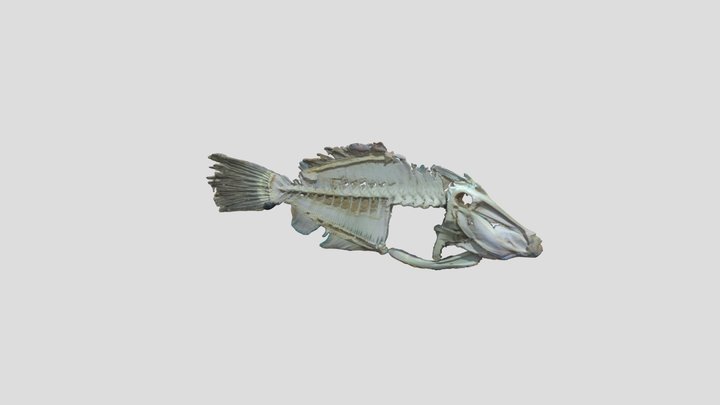
3D model
- Source
- Sketchfab
- Credit
- coleccionesbiol.3d.sig
- Licence
- CC Attribution
- Commercial use
- cannot be read from the licence given — check the record
Smithsonian Open Access was not reached for this taxon, so this list is what the others held rather than everything there is.
The description on this site
- Source
- Wikipedia, “Aluterus”
- Licence
- CC BY-SA 4.0
This is what the site found, which is not the same as what exists.
Keep going
What may have been alongside itMonacanthidae through timeFormations of the MioceneThe world it lived on
Occurrence data from the Paleobiology Database, CC BY 4.0. Cloquet 1816