Mene
The moonfish of the genus Mene, the sole extant genus of the family Menidae, are disk-shaped fish which bear a vague resemblance to gourami, thanks to their lateral compression and thread-like pelvic fins. Today, the genus is represented only by Mene maculata of the Indo-Pacific, where it is a popular food fish, especially in the Philippines, where it is known as bilong-bilong, chabita, hiwas or tahas.

(c) Austin 0201, some rights reserved (CC BY) · CC BY 4.0 · via Wikipedia/Commons. May be a photograph of a specimen, or an artist’s reconstruction — an interpretation of a skeleton, since colour and soft tissue are almost never preserved.
On record
Recorded, not inferred- Sits inside
- MenidaePBDB
- Motility
- actively mobilePBDB, for Osteichthyes
Time the record covers
At least 50 million years on record.
The record covers at least 61.66 Mya to 11.63 Mya. No occurrence read is dated outside 66 Mya to 5.333 Mya.
15 occurrences of Mene on record, most of them in the Eocene. The Paleobiology Database records this as a living group, and the chart stops with its fossils rather than at the present. Bar height is expected occurrences, not a count: each fossil is spread across the span it is dated to, so a tall narrow bar means tight dating and a low wide one means loose.
When
15 occurrencesThese are dates about fossils, not the animal: the record can only begin after it arose and end before it died out, so either end may reach further. Shares are expected occurrences: a fossil dated to a span is counted partly in each period it straddles. More on what this infers.
Found in
5 formations
- Cook Mountain Formation · Claiborne Group2
- Cantaure Formation1
- Miretrain Marl Formation1
- Danata Formation1
- Makrilia Formation1
Loading coastlines…
The named rock units Mene has been recovered from, largest first. Drawn where the rock is now, not where it formed. 9 occurrences have no formation on record, which is common for older literature.
Mene and its relatives
EoceneWhere Mene and its relatives were recorded in the Eocene.
Found in the same rock
519 taxa- Apogon4 sites
- Anenchelum glarisianum2 sites
- Bregmaceros2 sites
- Bregmaceros albyi2 sites
- Capros2 sites
- Chanos2 sites
- Citharus2 sites
- Conger2 sites
- Diaphus2 sites
- Haemulon2 sites
- Parascombrops yanceyi2 sites
- Pythonichthys2 sites
- Sciaena2 sites
- Sphyraena bolcensis2 sites
- Syngnathidae2 sites
- Trachurus2 sites
- ? Malthopsis sp.1 site
- "Batrachoides" trapezoidalis1 site
- "Citharus" varians n. sp.1 site
- "Gentonia" sp.1 site
- "Maffeia" sp.1 site
- Abdobalistum thyrsus1 site
- Abromasta microdon1 site
- Acanthomorphata1 site
The Paleobiology Database records 12 sites for Mene, and this reads all of them. The number is how many of those sites it was catalogued from too. The 24 sharing the most are listed.
This is not a list of everything alive at the time. It is only what has come out of the same ground as this animal and been written down.
Entered from
11 references- Ricerche sui Pesci Fossili di Chiavòn (Strati di Sotzka -- Miocene Inferiore)3
- Middle and late Eocene fish otoliths from the eastern and southern USA2
- The Pesciara-Monte Postale Fossil-Lagerstätte: 2. Fishes and other vertebrates2
- Rise of modern marine fishes captured in an early Paleocene Lagerstätte1
- Fish otoliths from the Lutetian of the Aquitaine Basin (SW France), a breakthrough in the knowledge of the European Eocene ichthyofauna1
- A new species of Mene (Perciformes: Menidae) from the Paleocene of South America, with notes on paleoenvironment and a brief review of menid fishes1
- Giant-toothed White Sharks and Wide-toothed Mako (Lamnidae) from the Venezuela Neogene: Their Role in the Caribbean, Shallow-water Fish Assemblage1
- Additions à l'ichthyofaune tortonienne du bassin de Ierapetra (Crète orientale, Grèce)1
- The list of marine fishes from Cenozoic (Upper Paleocene-Middle Miocene) localities in Southern European Russia and adjacent countries1
- Bemerkungen zur neogenen Fischfauna Kretas und Beschreibung zweier Fundstellen mit miozänen Mollusken, Echiniiden etc., Insel Kreta, Griechenland.1
- Zwei Fischfaunen aus den oligozaenen Menilitschifern von Mähren1
Each of the 15 occurrences read was entered from one of these publications, ordered by how many each accounts for. This is not a search for papers mentioning the name. Entries link to doi.org where the Paleobiology Database holds an identifier, and to its own record where it does not. Relayed as the Paleobiology Database holds them, not checked against what they resolve to.
Media and terms
Media content3

Picture of Mene
- Source
- Wikipedia/Commons
- Credit
- (c) Austin 0201, some rights reserved (CC BY)
- Licence
- CC BY 4.0
- Commercial use
- the licence allows it
CT scan
- Source
- MorphoSource
- Licence
- not stated by the source
- Commercial use
- cannot be read from the licence given — check the record
- Specimen
- Mene maculata · KU:KUI:41593
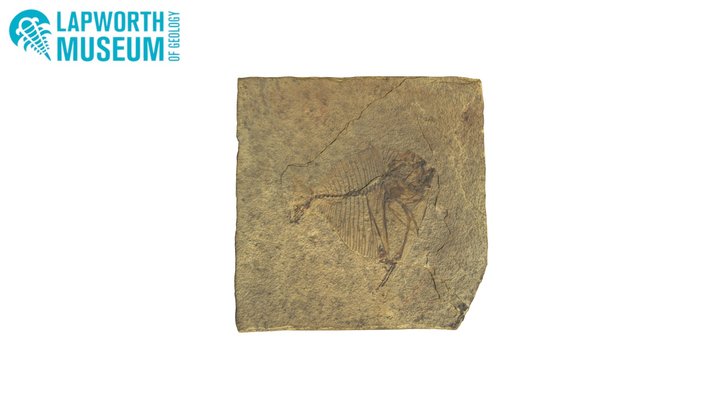
3D model
- Source
- Sketchfab
- Licence
- CC Attribution-NonCommercial
- Commercial use
- the licence does not allow it
The description on this site
- Source
- Wikipedia, “Mene”
- Licence
- CC BY-SA 4.0
This is what the site found, which is not the same as what exists.
Keep going
What may have been alongside itMenidae through timeFormations of the EoceneThe world it lived on
Occurrence data from the Paleobiology Database, CC BY 4.0. Lacépède 1803