Millepora
Fire corals (Millepora) are a genus of colonial marine organisms that exhibit physical characteristics similar to that of stony coral. While coral is in the name, fire corals are not true (stony) corals but are instead more closely related to Hydra and other hydrozoans, making them a part of the organism known as hydrocorals. Fire Corals make up the only genus in the monotypic family Milleporidae.

Photo2222 · CC BY-SA 3.0 · via Wikipedia/Commons. May be a photograph of a specimen, or an artist’s reconstruction — an interpretation of a skeleton, since colour and soft tissue are almost never preserved.
On record
Recorded, not inferred- Sits inside
- MilleporinaPBDB
- Diet
- carnivore, suspension feederPBDB, for Hydrozoa
- Life habit
- epifaunalPBDB, for Hydrozoa
- Motility
- stationary, attachedPBDB, for Hydrozoa
- Vision
- blindPBDB, for Hydrozoa
Time the record covers
At least 372 million years on record.
The record covers at least 372.15 Mya to 11.7 ka. No occurrence read is dated outside 387.95 Mya to 0 Mya.
107 occurrences of Millepora on record, most of them in the Pleistocene. The Paleobiology Database records this as a living group. Bar height is expected occurrences, not a count: each fossil is spread across the span it is dated to, so a tall narrow bar means tight dating and a low wide one means loose.
When
107 occurrences- Devonianunder 1%
- Late Jurassicunder 1%
- Early Cretaceousunder 1%
- Late Cretaceous2%
- Eocene9%
- Oligocene8%
- Miocene7%
- Pliocene4%
- Pleistocene43%
- Holocene23%
These are dates about fossils, not the animal: the record can only begin after it arose and end before it died out, so either end may reach further. Shares are expected occurrences: a fossil dated to a span is counted partly in each period it straddles. More on what this infers.
Found in
20 formations
- Moin Formation · Limon Group4
- Castelgomberto Formation4
- Aldabra Limestone Formation3
- Siamaná Formation3
- Moneague Formation · White Limestone Group2
- Grotto Beach Formation2
Loading coastlines…
The named rock units Millepora has been recovered from, largest first. Drawn where the rock is now, not where it formed. 74 occurrences have no formation on record, which is common for older literature.
Millepora and its relatives
PleistoceneWhere Millepora and its relatives were recorded in the Pleistocene.
Found in the same rock
649 taxa- Porites15 sites
- Acropora cervicornis10 sites
- Agaricia agaricites9 sites
- Acropora palmata8 sites
- Siderastrea siderea8 sites
- Acropora7 sites
- Goniastrea retiformis7 sites
- Orbicella annularis7 sites
- Pocillopora7 sites
- Porites porites7 sites
- Pseudodiploria strigosa7 sites
- Colpophyllia natans6 sites
- Goniastrea stelligera6 sites
- Halimeda6 sites
- Montastraea6 sites
- Montipora6 sites
- Pocillopora verrucosa6 sites
- Porites astreoides6 sites
- Acropora robusta5 sites
- Agaricia5 sites
- Caulastrea portoricensis5 sites
- Diploria5 sites
- Dipsastraea pallida5 sites
- Favia5 sites
The Paleobiology Database records 45 sites for Millepora, and this reads all of them. The number is how many of those sites it was catalogued from too. The 24 sharing the most are listed.
This is not a list of everything alive at the time. It is only what has come out of the same ground as this animal and been written down.
Entered from
68 references- Field work Sinai6
- Reef corals of the White Limestone Group of Jamaica5
- Pliocene to Pleistocene reef coral assemblages in the Limon Group of Costa Rica5
- Biofacies and diagenetic alterations of the Pleistocene coral reefs, northwest Red Sea coast, Saudi Arabia4
- Faunal response to the instability of reef habitats: Pleistocene molluscan assemblages of Aldabra Atoll4
- Paläontologische Studien über die älteren Tertiärschichten der Alpen, 1: Die fossilen Anthozoen der Schichten von Castelgomberto [Paleontological studies about the older Tertiary beds in the Alps, 1: The fossil Anthozoa from the Castelcomberto Formation]4
- Early Miocene coral reef-associated bryozoans from Colombia. Part II: “Ascophora” Cheilostomatida3
- Diving into the Past: Scuba and the Temporal Dimension of Coral Reefs3
- Contributions to the Pleistocene coral reefs of the Red Sea coast, Egypt3
- Pleistocene Coral Reef Terraces on the Saudi Arabian Side of the Gulf of Aqaba, Red Sea2
- What Darwin did not see: Pleistocene fossil assemblages on a high energy coast at Ponta das Bicudas, Santiago, Cape Verde Islands2
- Recurrent patterns of coral community and sediment facies development through successive phases of Holocene inner-shelf reef growth and decline2
Each of the 107 occurrences read was entered from one of these publications, ordered by how many each accounts for. This is not a search for papers mentioning the name. 56 further references are not listed. Entries link to doi.org where the Paleobiology Database holds an identifier, and to its own record where it does not. Relayed as the Paleobiology Database holds them, not checked against what they resolve to.
Media and terms
Media content2

Picture of Millepora
- Source
- Wikipedia/Commons
- Credit
- Photo2222
- Licence
- CC BY-SA 3.0
- Commercial use
- the licence allows it
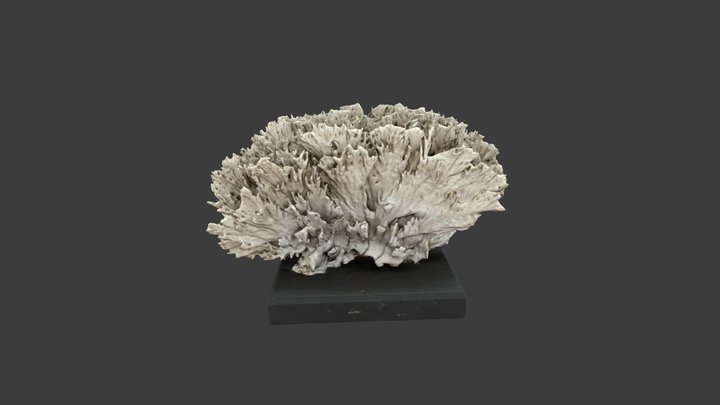
3D model
- Source
- Sketchfab
- Licence
- CC0 Public Domain
- Commercial use
- the licence allows it
Smithsonian Open Access was not reached for this taxon, so this list is what the others held rather than everything there is.
The description on this site
- Source
- Wikipedia, “Fire coral”
- Licence
- CC BY-SA 4.0
This is what the site found, which is not the same as what exists.
Keep going
What may have been alongside itMilleporina through timeFormations of the PleistoceneThe world it lived on
Occurrence data from the Paleobiology Database, CC BY 4.0.