Mimidae
The mimids are the New World family of passerine birds, Mimidae, that includes thrashers, mockingbirds, tremblers, and the New World catbirds. As their name suggests, these birds are notable for their vocalization, especially some species' remarkable ability to mimic a wide variety of birds and other sounds heard outdoors. They are commonly referred to as mimic thrushes but are not, in fact, thrushes.

Sydney Dragon · CC BY 4.0 · via Wikipedia/Commons. May be a photograph of a specimen, or an artist’s reconstruction — an interpretation of a skeleton, since colour and soft tissue are almost never preserved.
On record
Recorded, not inferred- Sits inside
- PasseriformesPBDB
- Diet
- insectivorePBDB
- Life habit
- volantPBDB
- Motility
- actively mobilePBDB, for Theropoda
- Environment
- terrestrialPBDB
Time the record covers
At least 4.6 million years on record.
The record covers at least 4.7 Mya to 11.7 ka. No occurrence read is dated outside 9.4 Mya to 0 Mya.
50 occurrences of Mimidae on record, most of them in the Pleistocene. The Paleobiology Database records this as a living group. Bar height is expected occurrences, not a count: each fossil is spread across the span it is dated to, so a tall narrow bar means tight dating and a low wide one means loose.
When
50 occurrences- Miocene2%
- Plioceneunder 1%
- Pleistocene64%
- Holocene34%
These are dates about fossils, not the animal: the record can only begin after it arose and end before it died out, so either end may reach further. Shares are expected occurrences: a fossil dated to a span is counted partly in each period it straddles. More on what this infers.
Mimidae and its relatives
PleistoceneWhere Mimidae and its relatives were recorded in the Pleistocene.
Found in the same rock
849 taxa- Athene cunicularia14 sites
- Falco sparverius13 sites
- Zenaida aurita10 sites
- Margarops fuscatus9 sites
- Passeriformes9 sites
- Patagioenas squamosa9 sites
- Podilymbus podiceps9 sites
- Tyto alba9 sites
- Zenaida macroura9 sites
- Aves8 sites
- Patagioenas leucocephala8 sites
- Turdus migratorius7 sites
- Accipiter striatus6 sites
- Agelaius phoeniceus6 sites
- Alsophis6 sites
- Branta canadensis6 sites
- Buteo jamaicensis6 sites
- Charadrius vociferus6 sites
- Columbina passerina6 sites
- Corvus corax6 sites
- Ectopistes migratorius6 sites
- Eremophila alpestris6 sites
- Fulica americana6 sites
- Megascops asio6 sites
The Paleobiology Database records 33 sites for Mimidae, and this reads all of them. The number is how many of those sites it was catalogued from too. The 24 sharing the most are listed.
This is not a list of everything alive at the time. It is only what has come out of the same ground as this animal and been written down.
Entered from
21 references- Archaeology of Trants, Montserrat. Part 5. Prehistoric avifauna8
- Studies on Fossil and Extant Vertebrates from San Salvador (Watling's) Island, Bahamas6
- Terminal Pleistocene–Holocene Avifauna of San Miguel and Santa Rosa Islands: Identifications of Previously Unidentified Avian Remains Recovered from Fossil Sites and Prehistoric Cave Deposits4
- Holocene Vertebrate Fossils from Isla Floreana, Galapagos4
- The fossil Birds of California4
- Bird remains from the caves of Porto Rico4
- Avian community, climate, and sea-level changes in the Plio-Pleistocene of the Florida Peninsula2
- Fossil vertebrates from Antigua, Lesser Antilles: evidence for late Holocene human-caused extinctions in the West Indies2
- Fossil and subfossil birds from the Bahamas2
- A Pleistocene avifauna from Haile, Florida2
- A comparison of avian assemblages from individual pits at Rancho La Brea, California2
- New Record of Capybara (Rodentia: Caviidae: Hydrochoerinae) from the Pleistocene of San Diego County, California with Remarks on Their Biogeography and Dispersal in the Pleistocene of Western North America1
Each of the 50 occurrences read was entered from one of these publications, ordered by how many each accounts for. This is not a search for papers mentioning the name. 9 further references are not listed. Entries link to doi.org where the Paleobiology Database holds an identifier, and to its own record where it does not. Relayed as the Paleobiology Database holds them, not checked against what they resolve to.
Media and terms
Media content2
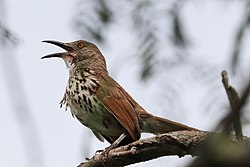
Picture of Mimidae
- Source
- Wikipedia/Commons
- Credit
- Sydney Dragon
- Licence
- CC BY 4.0
- Commercial use
- the licence allows it
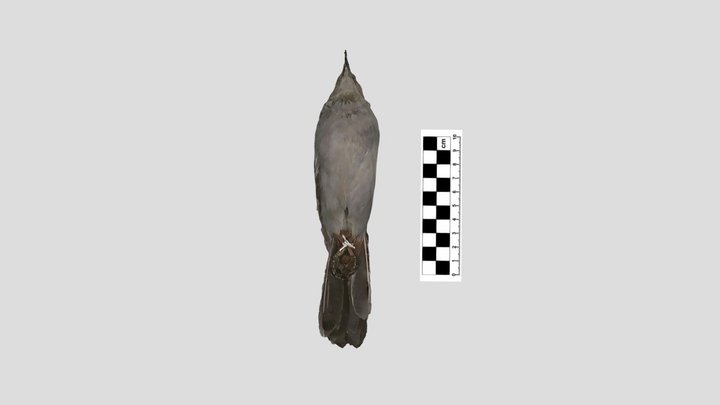
The description on this site
- Source
- Wikipedia, “Mimid”
- Licence
- CC BY-SA 4.0
This is what the site found, which is not the same as what exists.
Keep going
What may have been alongside itPasseriformes through timeFormations of the PleistoceneThe world it lived on
Occurrence data from the Paleobiology Database, CC BY 4.0. (Bonaparte 1853)