Myophoria
Myophoria is an extinct genus of bivalve mollusk from Europe belonging to the family Myophoriidae. Fossils are mainly found in Triassic rocks.
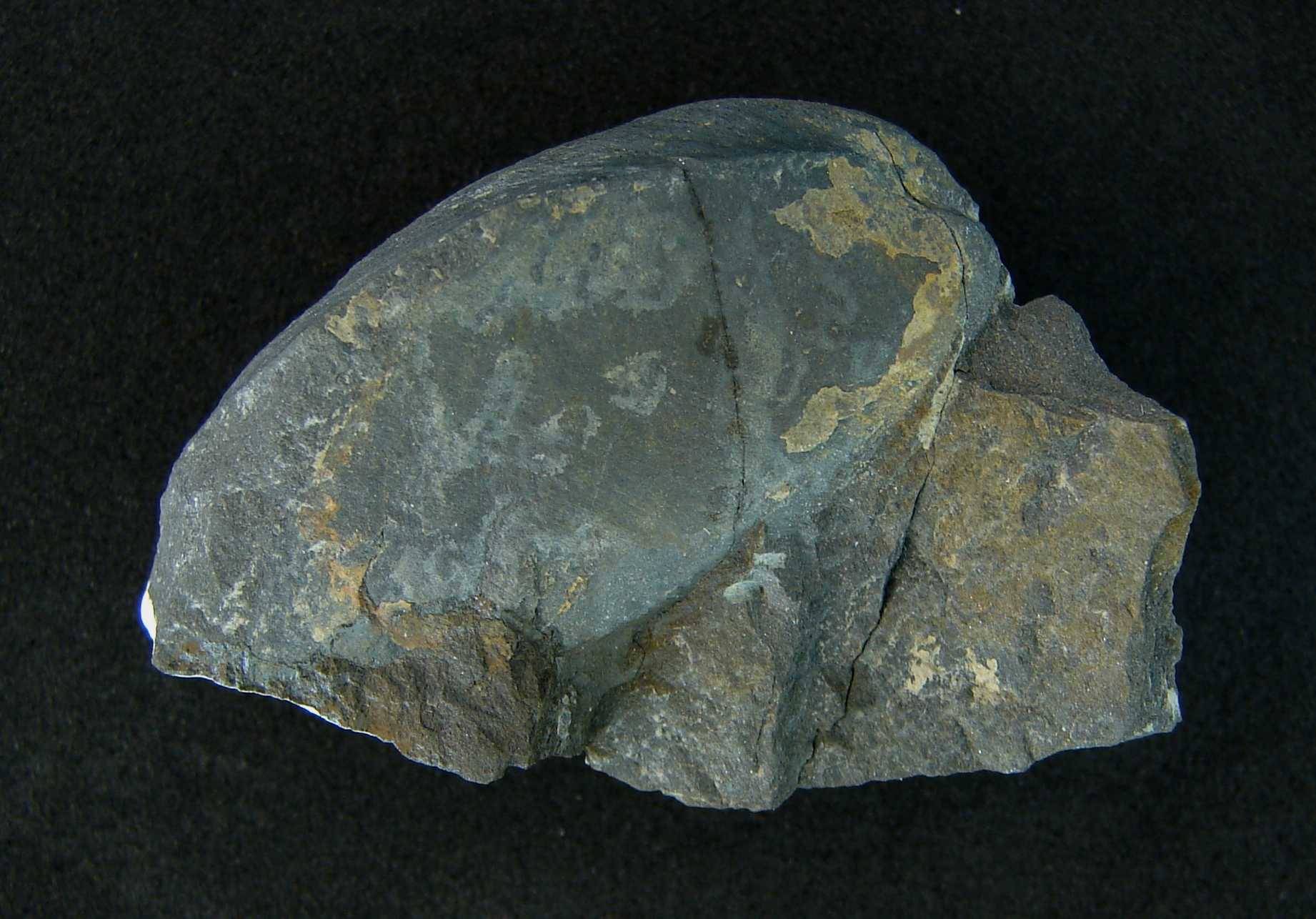
Roby Weis · CC0 · via GBIF. May be a photograph of a specimen, or an artist’s reconstruction — an interpretation of a skeleton, since colour and soft tissue are almost never preserved.
On record
Recorded, not inferred- Sits inside
- MyophoriidaePBDB
- Diet
- suspension feederPBDB, for Trigoniida
- Life habit
- infaunalPBDB, for Trigoniida
- Motility
- facultatively mobilePBDB, for Trigoniida
- Vision
- blindPBDB, for Bivalvia
Time the record covers
At least 252 million years on record.
The record covers at least 445.2 Mya to 192.9 Mya. No occurrence read is dated outside 452.8 Mya to 174.7 Mya.
317 occurrences of Myophoria on record, most of them in the Late Triassic. Bar height is expected occurrences, not a count: each fossil is spread across the span it is dated to, so a tall narrow bar means tight dating and a low wide one means loose.
When
317 occurrences- Ordovicianunder 1%
- Devonianunder 1%
- Permianunder 1%
- Early Triassic7%
- Middle Triassic42%
- Late Triassic47%
- Early Jurassic3%
These are dates about fossils, not the animal: the record can only begin after it arose and end before it died out, so either end may reach further. Shares are expected occurrences: a fossil dated to a span is counted partly in each period it straddles. More on what this infers.
Found in
73 formations
- Cassian Formation · Wegen Group16
- Luning Formation15
- Schlern Formation14
- Gabbs Formation11
- Grès à Voltzia Formation · Buntsandstein Group11
- Trochitenkalk Formation · Muschelkalk Group9
Loading coastlines…
The named rock units Myophoria has been recovered from, largest first. Drawn where the rock is now, not where it formed. 49 further formations hold fewer occurrences each and are not listed. 121 occurrences have no formation on record, which is common for older literature.
Myophoria and its relatives
Late TriassicWhere Myophoria and its relatives were recorded in the Late Triassic.
Found in the same rock
2,307 taxa- Gastropoda32 sites
- Schafhaeutlia31 sites
- Modiolus24 sites
- Cassianella21 sites
- Gervillia21 sites
- Nuculana21 sites
- Bivalvia18 sites
- Unionites18 sites
- Pecten17 sites
- Septocardia17 sites
- Mysidioptera16 sites
- Neoschizodus laevigatus16 sites
- Pinna16 sites
- Pleuromya16 sites
- Ammonoidea15 sites
- Umbrostrea montiscaprilis15 sites
- Chlamys14 sites
- Echinoidea14 sites
- Entolium14 sites
- Entolium discites14 sites
- Loxonema14 sites
- Parallelodon14 sites
- Bakevellia costata13 sites
- Palaeonucula13 sites
The Paleobiology Database records 205 sites for Myophoria, and this reads all of them. The number is how many of those sites it was catalogued from too. The 24 sharing the most are listed.
This is not a list of everything alive at the time. It is only what has come out of the same ground as this animal and been written down.
Entered from
101 references- Stratigraphische und Paläogeographische Stellung der Khenjan-Serie und deren Pelecypoden (Trias, Afgahnistan)27
- Palaeoecology of Late Ladinian (Middle Triassic) benthic faunas from the Schlern/Sciliar and Seiser Alm/Alpe di Siusi area (South Tyrol, Italy)14
- Community structure, paleoecology, and depositional environments within the Upper Triassic Luning Formation of Nevada13
- Stratigraphie und Biofacies der Koessener Formation (Obertrias, Nordliche Kalkalpen)11
- Faunes et paysages du Grès à Voltzia du Nord des Vosges: Essai paléoécologique sur le Buntsandstein supérieur11
- Paleoecological succession of Norian (Late Triassic) benthic fauna in eastern Panthalassa (Luning and Gabbs Formations, west-central Nevada)10
- Phosphatized soft-tissue in Triassic Bivalves9
- Il Trias in Lombardia, 18: La fauna a lamellibranchi dello Julico (Carnico medio) [The Triassic in Lombardy, 18: Julian (Middle Carnian) bivalves]8
- De stratigraphie van Nederlandsch Oost-Indie. 19. Mesozoikum8
- Revision der Lamellibranchiaten von St. Cassian8
- Faunal lists from Muschelkalk Museum, Ingelfingen, Germany6
- Aberhan, 19936
Each of the 317 occurrences read was entered from one of these publications, ordered by how many each accounts for. This is not a search for papers mentioning the name. 89 further references are not listed. Entries link to doi.org where the Paleobiology Database holds an identifier, and to its own record where it does not. Relayed as the Paleobiology Database holds them, not checked against what they resolve to.
Media and terms
Media content2
Picture of Myophoria
- Source
- GBIF
- Credit
- Roby Weis
- Licence
- CC0
- Commercial use
- the licence allows it
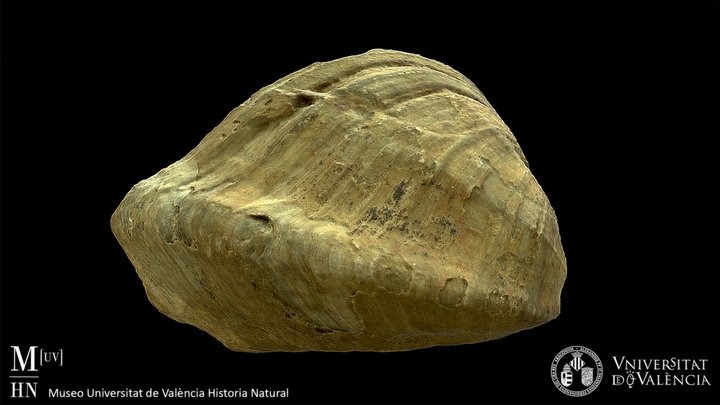
3D model
- Source
- Sketchfab
- Licence
- CC Attribution
- Commercial use
- cannot be read from the licence given — check the record
The description on this site
- Source
- Wikipedia, “Myophoria”
- Licence
- CC BY-SA 4.0
This is what the site found, which is not the same as what exists.
Keep going
What may have been alongside itMyophoriidae through timeFormations of the Late TriassicThe world it lived on
Occurrence data from the Paleobiology Database, CC BY 4.0. Bronn 1834