Mytiloides

via iDigBio · CC BY-NC-SA · via iDigBio. May be a photograph of a specimen, or an artist’s reconstruction — an interpretation of a skeleton, since colour and soft tissue are almost never preserved.
On record
Recorded, not inferred- Sits inside
- InoceramidaePBDB
- Diet
- suspension feederPBDB, for Pteriomorphia
- Life habit
- epifaunalPBDB, for Pteriomorphia
- Motility
- facultatively mobilePBDB, for Pteriomorphia
- Vision
- blindPBDB, for Bivalvia
Time the record covers
At least 98 million years on record.
The record covers at least 184.2 Mya to 85.7 Mya. No occurrence read is dated outside 192.9 Mya to 66 Mya.
548 occurrences of Mytiloides on record, most of them in the Late Cretaceous. Bar height is expected occurrences, not a count: each fossil is spread across the span it is dated to, so a tall narrow bar means tight dating and a low wide one means loose.
When
548 occurrences- Early Jurassic2%
- Middle Jurassicunder 1%
- Late Jurassicunder 1%
- Early Cretaceousunder 1%
- Late Cretaceous97%
These are dates about fossils, not the animal: the record can only begin after it arose and end before it died out, so either end may reach further. Shares are expected occurrences: a fossil dated to a span is counted partly in each period it straddles. More on what this infers.
Found in
66 formations
- Cotinguiba Formation210
- Mancos Shale Formation84
- Greenhorn Limestone Formation21
- La Luna Formation12
- Holywell Nodular Chalk Formation11
- Tropic Shale Formation9
Loading coastlines…
The named rock units Mytiloides has been recovered from, largest first. Drawn where the rock is now, not where it formed. 42 further formations hold fewer occurrences each and are not listed. 82 occurrences have no formation on record, which is common for older literature.
Mytiloides and its relatives
Late CretaceousWhere Mytiloides and its relatives were recorded in the Late Cretaceous.
Found in the same rock
503 taxa- Inoceramidae45 sites
- Inoceramus37 sites
- Lucina19 sites
- Pycnodonte15 sites
- Inoceramus (Inoceramus) pictus14 sites
- Phelopteria14 sites
- Entolium12 sites
- Inoceramus (Inoceramus) cuvierii12 sites
- Ostrea congesta12 sites
- Ostreidae12 sites
- Ammonoidea11 sites
- Bivalvia11 sites
- Pseudoperna11 sites
- Discinisca10 sites
- Drepanocheilus10 sites
- Inoceramus apicalis10 sites
- Mecaster batnensis9 sites
- Neoptychites cephalotus9 sites
- Inoceramus lamarcki8 sites
- Placenticeras8 sites
- Watinoceras8 sites
- Astarte7 sites
- Baculites yokoyamai7 sites
- Corbula7 sites
The Paleobiology Database records 406 sites for Mytiloides, and this reads 240 of them. The number is how many of those sites it was catalogued from too. The 24 sharing the most are listed.
This is not a list of everything alive at the time. It is only what has come out of the same ground as this animal and been written down.
Entered from
82 references- Turonian inoceramids and biostratigraphy of the Sergipe Basin, northeastern Brazil: an integrated study of the Votorantim and Nassau quarries197
- The paleoecology of the Cenomanian-Turonian (Cretaceous) stage boundary extinctions at Black Mesa, Arizona79
- Die Oberkreide der Sack-Mulde bei Alfeld (Cenoman-Unter-Coniac) Lithologie, Biostratigraphie und Inoceramen29
- The macrofossil biostratigraphy of the Turonian and Coniacian (Upper Cretaceous, Chalk Group) of southeast Devon16
- Paleontology of the Greenhorn cylcothem (Cretaceous: late Cenomanian to middle Turonian) at Black Mesa, northeastern Arizona14
- Integrated stratigraphy and palaeoenvironment of the Cenomanian-Lower Turonian (Upper Cretaceous) of Northern Westphalia, North Germany13
- The Cenomanian-Coniacian of Sergipe Basin, Brazil13
- Revised interpretation of the Cretaceous section on Vermilion Creek, Moffat County, Colorado12
- Mollusks from the Cogollo and La Luna Formations (Cretaceous) of the Chejende area, western Venezuela12
- A systematic survey of the Mesozoic Bivalvia from Japan9
- Turonian (Upper Cretaceous) lithostratigraphy and biochronology, southern Gulf Islands, British Columbia, and northern San Juan Islands, Washington State8
- Upper Cretaceous ammonites of California. Part III8
Each of the 548 occurrences read was entered from one of these publications, ordered by how many each accounts for. This is not a search for papers mentioning the name. 70 further references are not listed. Entries link to doi.org where the Paleobiology Database holds an identifier, and to its own record where it does not. Relayed as the Paleobiology Database holds them, not checked against what they resolve to.
Media and terms
Media content2
Picture of Mytiloides
- Source
- iDigBio
- Credit
- via iDigBio
- Licence
- CC BY-NC-SA
- Commercial use
- the licence does not allow it
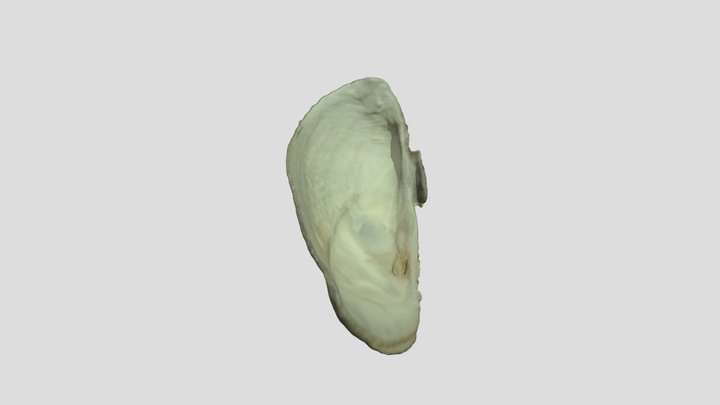
3D model
- Source
- Sketchfab
- Licence
- CC Attribution-NonCommercial
- Commercial use
- the licence does not allow it
Smithsonian Open Access was not reached for this taxon, so this list is what the others held rather than everything there is.
This is what the site found, which is not the same as what exists.
Keep going
What may have been alongside itInoceramidae through timeFormations of the Late CretaceousThe world it lived on
Occurrence data from the Paleobiology Database, CC BY 4.0. (Brongniart 1822)