Ostracods indet.
No picture of Ostracods indet. was found. Wikidata was searched and had none. Wikipedia has a picture filed under this name, but nothing tied it to Ostracods indet. itself, so it was not used. iDigBio and GBIF were not searched: the Paleobiology Database does not place Ostracods indet. firmly enough to tell it from something else bearing the same name, and a search on the name alone returns whichever of them was photographed. Smithsonian Open Access did not answer, so this is what the others held rather than everything there is.
Time the record covers
At least 207 million years on record.
The record covers at least 339.9 Mya to 132.6 Mya. No occurrence read is dated outside 346.7 Mya to 121.4 Mya.
3 occurrences of Ostracods indet. on record, most of them in the Carboniferous. Bar height is expected occurrences, not a count: each fossil is spread across the span it is dated to, so a tall narrow bar means tight dating and a low wide one means loose.
When
3 occurrences- Carboniferous33%
- Permian33%
- Early Cretaceous33%
These are dates about fossils, not the animal: the record can only begin after it arose and end before it died out, so either end may reach further. Shares are expected occurrences: a fossil dated to a span is counted partly in each period it straddles. More on what this infers.
Found in
2 formations
- Fort Payne Chert Formation1
- Kapp Starostin Formation · Tempelfjorden Group1
Loading coastlines…
The named rock units Ostracods indet. has been recovered from, largest first. Drawn where the rock is now, not where it formed. 1 occurrence has no formation on record, which is common for older literature.
Ostracods indet. and its relatives
CarboniferousWhere Ostracods indet. and its relatives were recorded in the Carboniferous.
Found in the same rock
58 taxa- Brachiopoda2 sites
- Echinodermata2 sites
- Porifera2 sites
- Acrioceras1 site
- Anahamulina1 site
- Anahamulina subcylindrica1 site
- Australosutura1 site
- Balearites pseudothurmannii1 site
- Barremites1 site
- Barycrinus1 site
- Braarudosphaera1 site
- Bryozoa1 site
- Cadosina1 site
- Cladochonus crassus1 site
- Cleiothyridina1 site
- Colomisphaera1 site
- Crioceratites1 site
- Cyclagelosphaera1 site
- Cyclagelosphaera rotaclypeata1 site
- Cypricardinia1 site
- Didemnum carpaticum1 site
- Dielasma1 site
- Discorhabdus ignotus1 site
- Euptychoceras meyrati1 site
The Paleobiology Database records 3 sites for Ostracods indet., and this reads all of them. The number is how many of those sites it was catalogued from too. The 24 sharing the most are listed.
This is not a list of everything alive at the time. It is only what has come out of the same ground as this animal and been written down.
Entered from
3 references- Permian stratigraphy of the Svalis Dome south-western Barents Sea1
- Paleoecology and Paleocommunity Analysis of Green Shale Faunas from the Fort Payne Formation (Lower Mississippian) of South-central Kentucky and North-central Tennessee1
- The biostratigraphy of the Hauterivian/Barremian Boundary Beds in the Krížna Nappe, Western Carpathians (Czechoslovakia)1
Each of the 3 occurrences read was entered from one of these publications, ordered by how many each accounts for. This is not a search for papers mentioning the name. Entries link to doi.org where the Paleobiology Database holds an identifier, and to its own record where it does not. Relayed as the Paleobiology Database holds them, not checked against what they resolve to.
Media and terms
Media content1
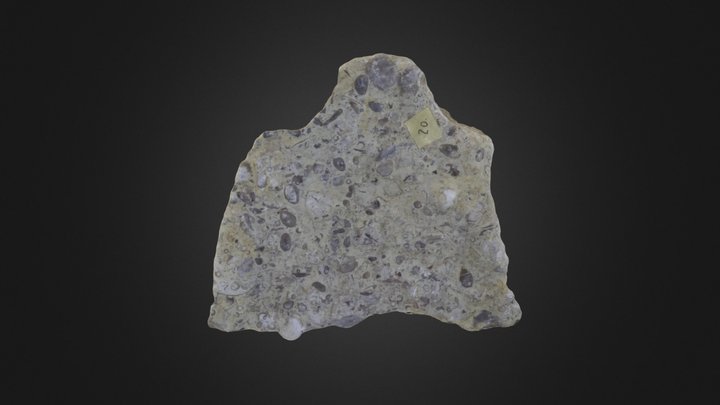
3D model
- Source
- Sketchfab
- Licence
- CC0 Public Domain
- Commercial use
- the licence allows it
No picture of Ostracods indet. was found. Wikidata was searched and had none.
Wikipedia has a picture filed under this name, but nothing tied it to Ostracods indet. itself, so it was not used.
iDigBio and GBIF were not searched: the Paleobiology Database does not place Ostracods indet. firmly enough to tell it from something else bearing the same name, and a search on the name alone returns whichever of them was photographed.
Smithsonian Open Access did not answer, so this is what the others held rather than everything there is.
Smithsonian Open Access and MorphoSource were not reached for this taxon, so this list is what the others held rather than everything there is.
This is what the site found, which is not the same as what exists.
Keep going
What may have been alongside itFormations of the CarboniferousThe world it lived on
Occurrence data from the Paleobiology Database, CC BY 4.0.