Oxytoma inequivalvis
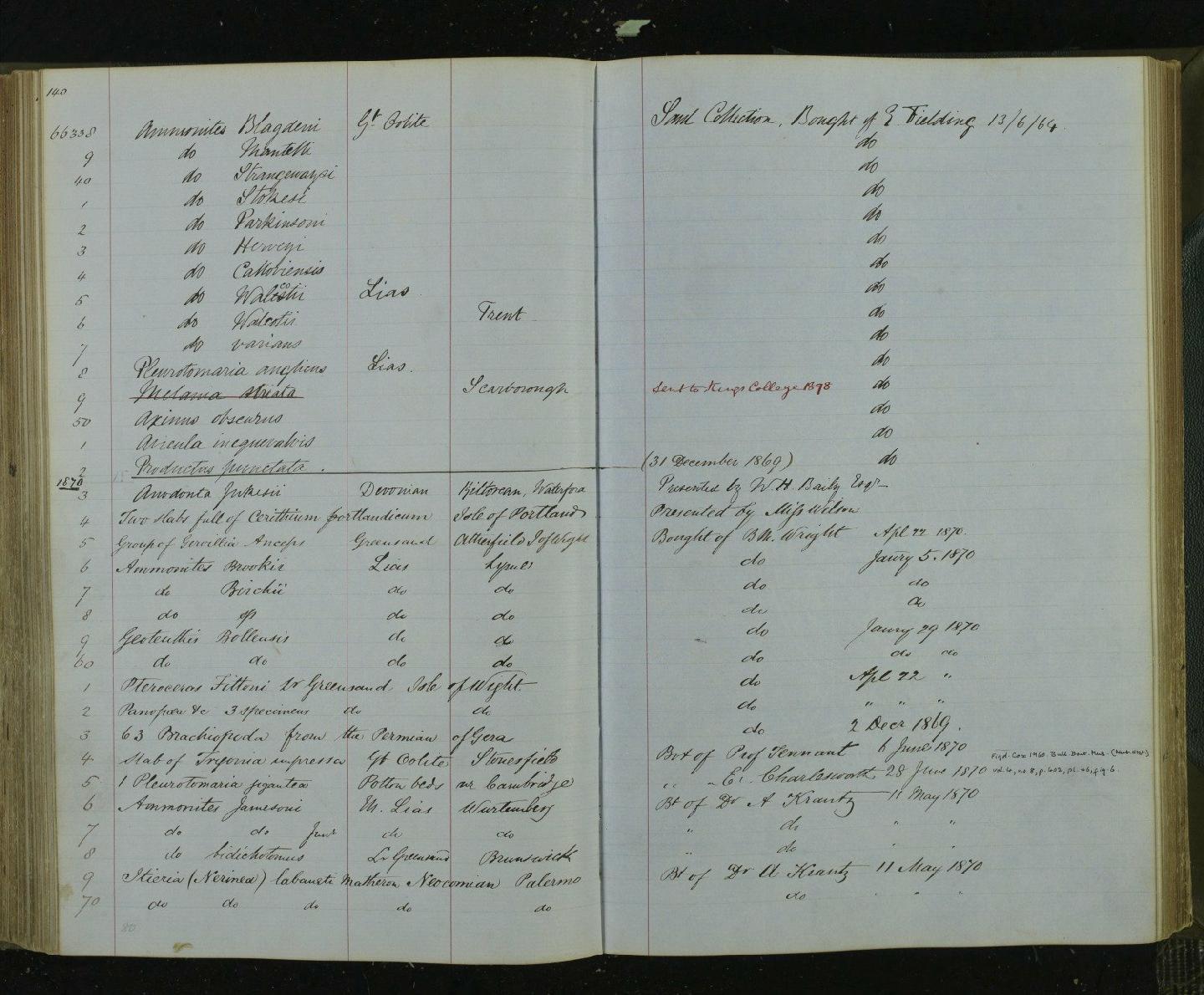
via iDigBio · CC BY · via iDigBio. May be a photograph of a specimen, or an artist’s reconstruction — an interpretation of a skeleton, since colour and soft tissue are almost never preserved.
On record
Recorded, not inferred- Sits inside
- OxytomaPBDB
- Diet
- suspension feederPBDB, for Oxytoma
- Life habit
- epifaunalPBDB, for Oxytoma
- Motility
- stationary, attachedPBDB, for Oxytoma
- Vision
- blindPBDB, for Bivalvia
- Environment
- marinePBDB, for Pectinida
Time the record covers
At least 56 million years on record.
The record covers at least 205.7 Mya to 149.2 Mya. No occurrence read is dated outside 227.3 Mya to 143.1 Mya.
303 occurrences of Oxytoma inequivalvis on record, most of them in the Early Jurassic. Bar height is expected occurrences, not a count: each fossil is spread across the span it is dated to, so a tall narrow bar means tight dating and a low wide one means loose.
When
303 occurrencesThese are dates about fossils, not the animal: the record can only begin after it arose and end before it died out, so either end may reach further. Shares are expected occurrences: a fossil dated to a span is counted partly in each period it straddles. More on what this infers.
Found in
53 formations
- Kap Leslie Formation33
- Whitby Mudstone Formation15
- Chari Formation12
- Lower Lias Formation · Lias Group12
- Cape Stewart Beds Formation11
- Kossen Formation9
Loading coastlines…
The named rock units Oxytoma inequivalvis has been recovered from, largest first. Drawn where the rock is now, not where it formed. 29 further formations hold fewer occurrences each and are not listed. 112 occurrences have no formation on record, which is common for older literature.
Oxytoma inequivalvis and its relatives
Early JurassicWhere Oxytoma inequivalvis and its relatives were recorded in the Early Jurassic.
Found in the same rock
869 taxa- Liostrea59 sites
- Astarte58 sites
- Pleuromya55 sites
- Camptonectes46 sites
- Plagiostoma46 sites
- Modiolus42 sites
- Plicatula41 sites
- Gryphaea cymbium39 sites
- Pecten priscus39 sites
- Tancredia38 sites
- Belemnitida37 sites
- Ammonoidea36 sites
- Isognomon36 sites
- Entolium34 sites
- Arcomya33 sites
- Entolium orbiculare33 sites
- Cardinia hybrida32 sites
- Parallelodon32 sites
- Chlamys substriata31 sites
- Gryphaea arcuata31 sites
- Chlamys textoria29 sites
- Buchia mosquensis28 sites
- Grammatodon28 sites
- Isocyprina28 sites
The Paleobiology Database records 270 sites for Oxytoma inequivalvis, and this reads 240 of them. The number is how many of those sites it was catalogued from too. The 24 sharing the most are listed.
This is not a list of everything alive at the time. It is only what has come out of the same ground as this animal and been written down.
Entered from
56 references- The Lower Jurassic Rocks of East Greenland Part 144
- Early Jurassic Bivalvia of western Canada. Part I. Subclasses Palaeotaxodonta, Pteriomorpha, and Isofilibranchia33
- Genesis and environmental significance of Upper Cretaceous shell concentrations from the Cauvery Basin, southern India27
- The Impact of Global Warming and Anoxia on Marine Benthic Community Dynamics: an Example from the Toarcian (Early Jurassic)23
- The Stratigraphical Palaeontology, ammonites excluded, of the Stowell Park borehole18
- The Lower Jurassic Rocks of East Greenland Part II The Mesozoic Sediments of the Kap Hope Area Southern Liverpool Land14
- Unpublished data from Kachchh13
- Dynamische Palaookologie und taxonomische Bearbeitung des Unterjura (Hettangium bis unteres Sinemurium) auf der Schwabischen Alb13
- Bivalvia of the polish middle jurassic and remarks on their paleoecology10
- A temporary exposure of Lower Lias (Late Sinemurian) at Dimmer Camp, Castle Cary, Somerset, south-west England9
- Early Jurassic Bivalvia of Argentina: Part 1, Stratigraphical introduction and superfamilies Nuculanacea, Arcacea, Mytilacea and Pinnacea9
- Stratigraphie und Biofacies der Koessener Formation (Obertrias, Nordliche Kalkalpen)8
Each of the 303 occurrences read was entered from one of these publications, ordered by how many each accounts for. This is not a search for papers mentioning the name. 44 further references are not listed. Entries link to doi.org where the Paleobiology Database holds an identifier, and to its own record where it does not. Relayed as the Paleobiology Database holds them, not checked against what they resolve to.
Media and terms
Media content1
Picture of Oxytoma inequivalvis
- Source
- iDigBio
- Credit
- via iDigBio
- Licence
- CC BY
- Commercial use
- the licence allows it
No 3D scan of Oxytoma inequivalvis was found in MorphoSource and Sketchfab.
Smithsonian Open Access was not reached for this taxon, so this list is what the others held rather than everything there is.
This is what the site found, which is not the same as what exists.
Keep going
What may have been alongside itOxytoma through timeFormations of the Early JurassicThe world it lived on
Occurrence data from the Paleobiology Database, CC BY 4.0. (Sowerby 1819)