Panthera pardus
The leopard is one of the five extant cat species in the genus Panthera. It has a pale yellowish to dark golden fur with dark spots grouped in rosettes. Its body is slender and muscular, reaching a length of 92–183 cm (36–72 in) with a 66–102 cm (26–40 in) long tail and a shoulder height of 60–70 cm (24–28 in). Males typically weigh 30.9–72 kg (68–159 lb), and females 20.5–43 kg (45–95 lb).

Sumeet Moghe · CC BY-SA 4.0 · via Wikipedia/Commons. May be a photograph of a specimen, or an artist’s reconstruction — an interpretation of a skeleton, since colour and soft tissue are almost never preserved.
On record
Recorded, not inferred- Also called
- leopardPBDB
- Sits inside
- PantheraPBDB
- Diet
- carnivorePBDB, for Panthera
- Life habit
- scansorialPBDB, for Felidae
- Motility
- actively mobilePBDB, for Osteichthyes
- Environment
- terrestrialPBDB, for Eutheria
Time the record covers
At least 2.5 million years on record.
The record covers at least 2.58 Mya to 11.7 ka. No occurrence read is dated outside 5.333 Mya to 0 Mya.
106 occurrences of Panthera pardus on record, most of them in the Pleistocene. The Paleobiology Database records this as a living group. Bar height is expected occurrences, not a count: each fossil is spread across the span it is dated to, so a tall narrow bar means tight dating and a low wide one means loose.
When
106 occurrences- Pliocene8%
- Pleistocene82%
- Holocene11%
These are dates about fossils, not the animal: the record can only begin after it arose and end before it died out, so either end may reach further. Shares are expected occurrences: a fossil dated to a span is counted partly in each period it straddles. More on what this infers.
Found in
11 formations
- Swartkrans Formation · Transvaal Group6
- Kromdraai Formation3
- Makapansgat Formation3
- Humbu Formation · Peninj Group2
- Sterkfontein Formation · Transvaal Group2
- USNO Formation · Omo Group1
Loading coastlines…
The named rock units Panthera pardus has been recovered from, largest first. Drawn where the rock is now, not where it formed. 84 occurrences have no formation on record, which is common for older literature.
Panthera pardus and its relatives
PleistoceneWhere Panthera pardus and its relatives were recorded in the Pleistocene.
Found in the same rock
1,018 taxa- Sus scrofa29 sites
- Crocuta crocuta26 sites
- Equus26 sites
- Panthera leo25 sites
- Bovidae23 sites
- Canis lupus23 sites
- Lepus23 sites
- Taurotragus oryx23 sites
- Hystrix africaeaustralis22 sites
- Lupulella mesomelas22 sites
- Cervus21 sites
- Hippopotamus amphibius21 sites
- Hystrix20 sites
- Raphicerus campestris19 sites
- Caracal caracal18 sites
- Felis18 sites
- Mellivora capensis18 sites
- Bos primigenius17 sites
- Connochaetes16 sites
- Gazella16 sites
- Phacochoerus aethiopicus16 sites
- Procavia capensis16 sites
- Tragelaphus strepsiceros16 sites
- Vulpes vulpes16 sites
The Paleobiology Database records 105 sites for Panthera pardus, and this reads all of them. The number is how many of those sites it was catalogued from too. The 24 sharing the most are listed.
This is not a list of everything alive at the time. It is only what has come out of the same ground as this animal and been written down.
Entered from
80 references- First fossil record of leopard-like felid (Panthera cf. pardus) from alluvial deposits of the Po River in northern Italy7
- I giacimenti Quaternari di vertebrati fossili nell'Italia Nord-Orientale5
- Mittelpleistozane Saugetierfaunen aus Mitteleuropa - der Versuch einer biostratigraphischen Zuordnung4
- Paleoenvironmental and Cultural Implications of Late Holocene Archaeological Faunas from the Orange Free State and North Central Cape Province, South Africa3
- Macromammalian faunas, biochronology and palaeoecology of the early Pleistocene Main Quarry hominin-bearing deposits of the Drimolen Palaeocave System, South Africa2
- Geochronology of Ailuropoda–Stegodon fauna and Gigantopithecus in Guangxi Province, southern China2
- Quaternary large mammals from the Apidima Caves (Lakonia, S. Peloponnese, Greece2
- Swartkrans: A Cave's Chronicle of Early Man2
- A revision of the faunal remains from two central Sudanese sites: Khartoum Hospital and Esh Shaheinab2
- Mammalian fossils found in northwest part of Hunan province and their significance2
- Re-appraisal of lithostratigraphy of Sterkfontein hominid site2
- A Later Prehistory of Tangier, Morocco2
Each of the 106 occurrences read was entered from one of these publications, ordered by how many each accounts for. This is not a search for papers mentioning the name. 68 further references are not listed. Entries link to doi.org where the Paleobiology Database holds an identifier, and to its own record where it does not. Relayed as the Paleobiology Database holds them, not checked against what they resolve to.
Media and terms
Media content3

Picture of Panthera pardus
- Source
- Wikipedia/Commons
- Credit
- Sumeet Moghe
- Licence
- CC BY-SA 4.0
- Commercial use
- the licence allows it
CT scan
- Source
- MorphoSource
- Credit
- LACM Mammalogy
- Licence
- In Copyright
- Commercial use
- cannot be read from the licence given — check the record
- Specimen
- Panthera Panthera pardus · LACM:Mammals:11704
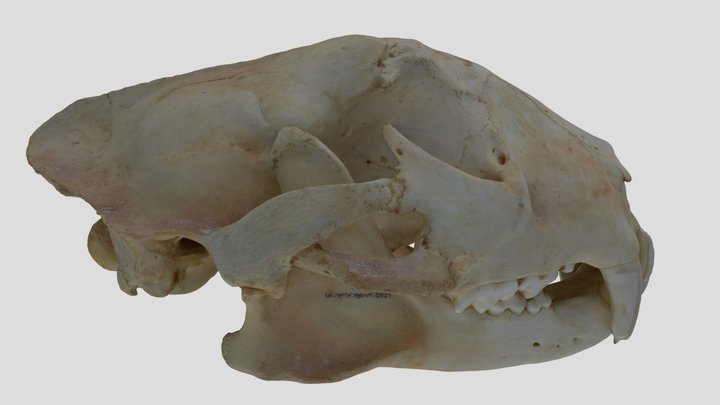
3D model
- Source
- Sketchfab
- Licence
- CC Attribution
- Commercial use
- cannot be read from the licence given — check the record
The description on this site
- Source
- Wikipedia, “Leopard”
- Licence
- CC BY-SA 4.0
This is what the site found, which is not the same as what exists.
Keep going
What may have been alongside itPanthera through timeFormations of the PleistoceneThe world it lived on
Occurrence data from the Paleobiology Database, CC BY 4.0. (Linnaeus 1758)