Patagiosites
No picture of Patagiosites was found. Wikipedia, Wikidata and iDigBio were searched and had none. Smithsonian Open Access did not answer, so this is what the others held rather than everything there is. GBIF was asked, and what came back is not recorded: nothing, or a picture this site could not tie to Patagiosites, or no answer at all. This entry cannot say which.
On record
Recorded, not inferred- Sits inside
- PachydiscidaePBDB
- Diet
- carnivorePBDB, for Ammonoidea
- Life habit
- nektonicPBDB, for Ammonoidea
- Motility
- fast-movingPBDB, for Ammonoidea
- Vision
- well-developedPBDB, for Cephalopoda
- Environment
- marinePBDB, for Cephalopoda
Time the record covers
At least 2.1 million years on record.
The record covers at least 85.7 Mya to 83.6 Mya. No occurrence read is dated outside 89.8 Mya to 66 Mya.
29 occurrences of Patagiosites on record, most of them in the Late Cretaceous. Bar height is expected occurrences, not a count: each fossil is spread across the span it is dated to, so a tall narrow bar means tight dating and a low wide one means loose.
When
29 occurrences- Late Cretaceous100%
These are dates about fossils, not the animal: the record can only begin after it arose and end before it died out, so either end may reach further. Shares are expected occurrences: a fossil dated to a span is counted partly in each period it straddles. More on what this infers.
Found in
8 formations
- Forbes Formation · Asuncion Group10
- Matanuska Formation8
- Abderaz Formation2
- Obourg Formation1
- Ahlen Formation1
- Bandodani Formation1
Loading coastlines…
The named rock units Patagiosites has been recovered from, largest first. Drawn where the rock is now, not where it formed. 4 occurrences have no formation on record, which is common for older literature.
Patagiosites and its relatives
Late CretaceousWhere Patagiosites and its relatives were recorded in the Late Cretaceous.
Found in the same rock
201 taxa- Inoceramus subundatus7 sites
- Gaudryceras tenuiliratum5 sites
- Hypophylloceras (Neophylloceras) hetonaiense4 sites
- Belemnitella mucronata3 sites
- Pachydiscus3 sites
- Baculites2 sites
- Baculites inornatus2 sites
- Cardiotaxis2 sites
- Echinocorys2 sites
- Galerites2 sites
- Gaudryceras striatum2 sites
- Hypophylloceras (Neophylloceras) ramosum2 sites
- Inoceramus digitatus2 sites
- Micraster2 sites
- Micraster glyphus2 sites
- Pachydiscus (Pachydiscus) ootacodensis2 sites
- Scaphites (Scaphites) gibbus2 sites
- Seliscothon2 sites
- Spirolophia tortuosa2 sites
- Trachyscaphites spiniger2 sites
- Ventriculites radiatus2 sites
- Allopleuron hoffmanni1 site
- Amphilectella piriformis1 site
- Amphithelion (Amphithelion) macrommata1 site
The Paleobiology Database records 23 sites for Patagiosites, and this reads all of them. The number is how many of those sites it was catalogued from too. The 24 sharing the most are listed.
This is not a list of everything alive at the time. It is only what has come out of the same ground as this animal and been written down.
Entered from
12 references- Upper Cretaceous (Campanian and Maestrichtian) ammonites from southern Alaska8
- Upper Cretaceous of the Pacific Coast8
- First record of late Campanian ammonites from the Abderaz Formation of the Koppeh Dagh, northeastern Iran2
- Das Campan (höhere Ober-Kreide) der Lehrter Westmulde bei Hannover2
- Upper Cretaceous ammonites of California. Part III2
- Mode of occurrence and taphonomy of the heteromorph ammonite Pravitoceras sigmoidale Yabe from the Upper Cretaceous Izumi Group, Japan1
- New data on the raninid crab Cretacoranina schloenbachi (Schlüter, 1879) (Late Cretaceous, NW Germany)1
- Erstfunde von Ophiuren (Schlangensterne) im Obercampanium des öslischen Münsterland.1
- Campanian and Maastrichtian ammonites from the Mons Basin and adajcent areas (Belgium)1
- Late Cretaceous (Campanian and Maastrichtian) ammonites from Awaji Island, southwest Japan1
- The Upper Cretaceous cephalopod fauna of Graham Land1
- Die Cephalopoden der oberen Kreide Südpatagoniens1
Each of the 29 occurrences read was entered from one of these publications, ordered by how many each accounts for. This is not a search for papers mentioning the name. Entries link to doi.org where the Paleobiology Database holds an identifier, and to its own record where it does not. Relayed as the Paleobiology Database holds them, not checked against what they resolve to.
Media and terms
Media content1
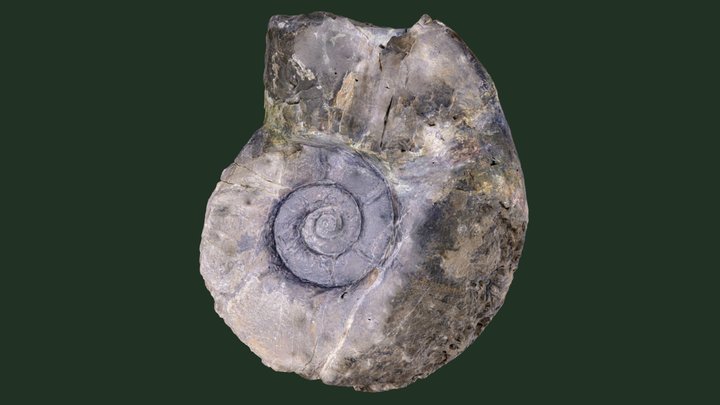
3D model
- Source
- Sketchfab
- Licence
- CC Attribution
- Commercial use
- cannot be read from the licence given — check the record
No picture of Patagiosites was found. Wikipedia, Wikidata and iDigBio were searched and had none.
Smithsonian Open Access did not answer, so this is what the others held rather than everything there is.
GBIF was asked, and what came back is not recorded: nothing, or a picture this site could not tie to Patagiosites, or no answer at all. This entry cannot say which.
Smithsonian Open Access was not reached for this taxon, so this list is what the others held rather than everything there is.
This is what the site found, which is not the same as what exists.
Keep going
What may have been alongside itPachydiscidae through timeFormations of the Late CretaceousThe world it lived on
Occurrence data from the Paleobiology Database, CC BY 4.0. Spath 1953