Polymorphinidae
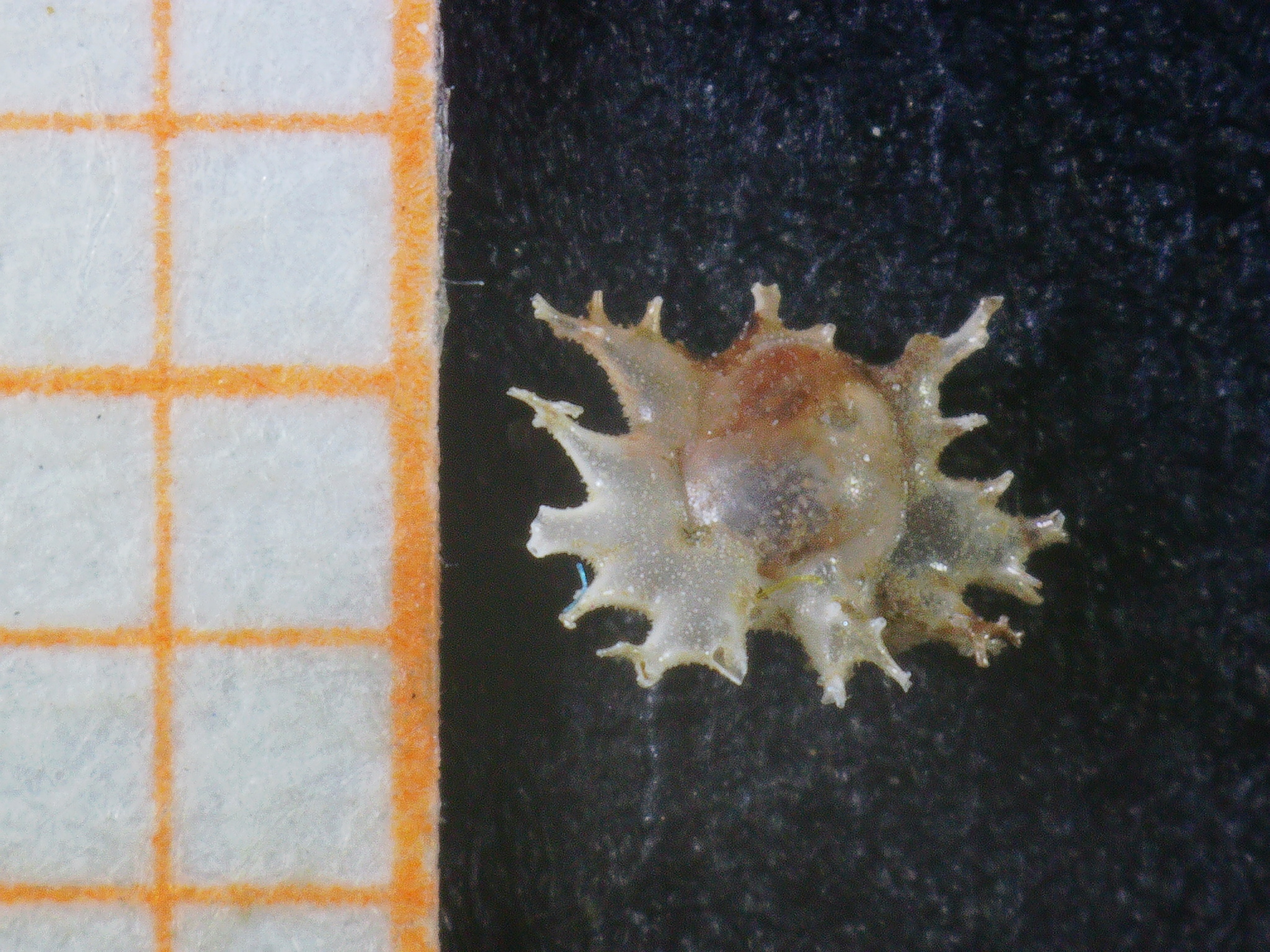
Not Polymorphinidae. This is Globulina gibba (d'Orbigny, 1832), a relative — both are Polymorphinidae.
George Manavopoulos · CC BY-NC 4.0 · via GBIF. May be a photograph of a specimen, or an artist’s reconstruction — an interpretation of a skeleton, since colour and soft tissue are almost never preserved.
On record
Recorded, not inferred- Sits inside
- PolymorphinidaPBDB
- Diet
- omnivorePBDB, for Foraminifera
- Life habit
- semi-infaunalPBDB, for Foraminifera
- Motility
- stationaryPBDB, for Foraminifera
Time the record covers
At least 243 million years on record.
The record covers at least 243.43 Mya to 11.7 ka. No occurrence read is dated outside 247 Mya to 0 Mya.
1,241 occurrences of Polymorphinidae on record, most of them in the Miocene. The Paleobiology Database records this as a living group. Bar height is expected occurrences, not a count: each fossil is spread across the span it is dated to, so a tall narrow bar means tight dating and a low wide one means loose.
When
1,241 occurrences- Middle Triassicunder 1%
- Late Triassicunder 1%
- Early Jurassic3%
- Middle Jurassic5%
- Late Jurassic5%
- Early Cretaceous9%
- Late Cretaceous11%
- Paleocene7%
- Eocene11%
- Oligocene8%
- Miocene27%
- Pliocene6%
- Pleistocene7%
- Holoceneunder 1%
These are dates about fossils, not the animal: the record can only begin after it arose and end before it died out, so either end may reach further. Shares are expected occurrences: a fossil dated to a span is counted partly in each period it straddles. More on what this infers.
Found in
64 formations
- Sundays River Formation80
- El Haria Formation75
- Roca Formation · Malargüe Group38
- Castillo Pedroso Formation24
- Keasey Formation13
- Camino Formation12
Loading coastlines…
The named rock units Polymorphinidae has been recovered from, largest first. Drawn where the rock is now, not where it formed. 40 further formations hold fewer occurrences each and are not listed. 850 occurrences have no formation on record, which is common for older literature.
Polymorphinidae and its relatives
MioceneWhere Polymorphinidae and its relatives were recorded in the Miocene.
Found in the same rock
1,807 taxa- Lenticulina112 sites
- Dentalina106 sites
- Nodosaria84 sites
- Globulina74 sites
- Ammobaculites69 sites
- Saracenaria65 sites
- Gaudryina64 sites
- Astacolus62 sites
- Spiroplectammina56 sites
- Eoguttulina55 sites
- Pullenia53 sites
- Cristellaria (Marginulina)52 sites
- Lenticulina munsteri52 sites
- Lentigodentalium52 sites
- Elphidium51 sites
- Gyroidinoides51 sites
- Anomalinoides50 sites
- Palmula50 sites
- Nonion49 sites
- Varicorbula gibba49 sites
- Dorothia48 sites
- Limopsis (Limopsis) aurita48 sites
- Haplophragmoides47 sites
- Venus (Ventricoloidea) multilamella47 sites
The Paleobiology Database records 828 sites for Polymorphinidae, and this reads 240 of them. Of that, one read hit the database's own return limit, so every count below is a floor rather than a total. The number is how many of those sites it was catalogued from too. The 24 sharing the most are listed.
This is not a list of everything alive at the time. It is only what has come out of the same ground as this animal and been written down.
Entered from
149 references- Die Fauna des marinen Miozäns von Kevelaer (Niederrhein). Band 1 Foraminiferen, Anthozoen.169
- The Foraminifera of the Late Valangian to Hautverian (Early Cretaceous) Sundays River Formation of the Algoa Basin, Eastern Cape Province, South Africa80
- The Late Campian and Maastrichtian in northwestern Tunisia: palaeoenvironmental inferences from lithology, macrofauna and benthic formainifera75
- Site U133759
- Benthic foraminifers and palaeoenvironment in the Lower and Middle Jurassic of the Western Basque-Cantabrian Basin (Northern Spain)48
- Site U133543
- Site U133440
- Site U133332
- Site U146230
- Foraminiferal assemblages of the uppermost Oxfordian and Lower Kimmeridgian of the Wielun Upland and their stratigraphic importance28
- Site U150727
- Micropaleontología del Paleoceno de General Roca (provincia de Río Negro)25
Each of the 1,241 occurrences read was entered from one of these publications, ordered by how many each accounts for. This is not a search for papers mentioning the name. 137 further references are not listed. Entries link to doi.org where the Paleobiology Database holds an identifier, and to its own record where it does not. Relayed as the Paleobiology Database holds them, not checked against what they resolve to.
Media and terms
Media content1
Picture of Globulina gibba (d'Orbigny, 1832)
- Source
- GBIF
- Credit
- George Manavopoulos
- Licence
- CC BY-NC 4.0
- Commercial use
- the licence does not allow it
No 3D scan of Polymorphinidae was found in MorphoSource and Sketchfab.
Smithsonian Open Access was not reached for this taxon, so this list is what the others held rather than everything there is.
This is what the site found, which is not the same as what exists.
Keep going
What may have been alongside itPolymorphinida through timeFormations of the MioceneThe world it lived on
Occurrence data from the Paleobiology Database, CC BY 4.0. d'Orbigny 1839