Pterioida
The Pteriida are an order of large and medium-sized marine bivalve mollusks. It includes five families, among them the Pteriidae.

Original uploader was Alan p at it.wikipedia · Public Domain · via Wikipedia/Commons. May be a photograph of a specimen, or an artist’s reconstruction — an interpretation of a skeleton, since colour and soft tissue are almost never preserved.
On record
Recorded, not inferred- Sits inside
- PteriomorphiaPBDB
- Diet
- suspension feederPBDB
- Life habit
- low-level epifaunalPBDB
- Motility
- stationaryPBDB
- Vision
- blindPBDB, for Bivalvia
Time the record covers
At least 422 million years on record.
The record covers at least 445.5 Mya to 23.04 Mya. No occurrence read is dated outside 450.2 Mya to 15.98 Mya.
296 occurrences of Pterioida on record, most of them in the Middle Jurassic. The Paleobiology Database records this as a living group, and the chart stops with its fossils rather than at the present. Bar height is expected occurrences, not a count: each fossil is spread across the span it is dated to, so a tall narrow bar means tight dating and a low wide one means loose.
When
296 occurrences- Ordovicianunder 1%
- Silurianunder 1%
- Devonian9%
- Carboniferous3%
- Permian1%
- Early Triassic1%
- Middle Triassic10%
- Late Triassic5%
- Early Jurassic10%
- Middle Jurassic43%
- Late Jurassic8%
- Early Cretaceous2%
- Late Cretaceous3%
- Eocene2%
- Mioceneunder 1%
These are dates about fossils, not the animal: the record can only begin after it arose and end before it died out, so either end may reach further. Shares are expected occurrences: a fossil dated to a span is counted partly in each period it straddles. More on what this infers.
Found in
60 formations
- Chari Formation104
- Kap Leslie Formation11
- Blue Lias Formation · Lias Group9
- Jhurio Formation7
- Cotinguiba Formation7
- Trochitenkalk Formation · Muschelkalk Group6
Loading coastlines…
The named rock units Pterioida has been recovered from, largest first. Drawn where the rock is now, not where it formed. 36 further formations hold fewer occurrences each and are not listed. 58 occurrences have no formation on record, which is common for older literature.
Pterioida and its relatives
Middle JurassicWhere Pterioida and its relatives were recorded in the Middle Jurassic.
Found in the same rock
1,469 taxa- Terquemia difformis29 sites
- Gastropoda28 sites
- Fenestellidae24 sites
- Phacopidae19 sites
- Schellwienella18 sites
- Acrospirifer17 sites
- Plagiostoma17 sites
- Bivalvia16 sites
- Parallelodon16 sites
- Strophomenida16 sites
- Terquemia16 sites
- Elita15 sites
- Longispina15 sites
- Mucrospiriferidae15 sites
- Pleuromya15 sites
- Praebuchia15 sites
- Atrypa14 sites
- Rugosa14 sites
- Unicardium14 sites
- Coenothyris vulgaris13 sites
- Entolium13 sites
- Eodevonaria13 sites
- Leptostrophiidae13 sites
- Liostrea13 sites
The Paleobiology Database records 165 sites for Pterioida, and this reads all of them. The number is how many of those sites it was catalogued from too. The 24 sharing the most are listed.
This is not a list of everything alive at the time. It is only what has come out of the same ground as this animal and been written down.
Entered from
76 references- Unpublished data from Kachchh111
- Paleoecology and stratigraphy of Devonian sediments in the northern Andes, Colombia: paleogeographic implications [Unpublished Ph.D. thesis, University of Chicago]23
- Unpublished data11
- A sedimentary and faunal study of the Blue Lias of Dorset and Glamorgan9
- Turonian inoceramids and biostratigraphy of the Sergipe Basin, northeastern Brazil: an integrated study of the Votorantim and Nassau quarries7
- Taxonomy and palaeoecology of the benthic macroinvertebrate fauna from the Middle Jurassic of northwestern Jordan7
- Jurassic bivalves of Gebel Maghara, North Sinai, Egypt6
- A new oxytomid bivalve from the Upper Jurassic-Lower Cretaceous of Antarctica6
- Depositional dynamics and the record of ecosystem stability: early Eocene faunal gradients in the Pyrenean foreland, Spain5
- Middle and Upper Jurassic bivalve associations from the Iberian Range (Spain). Las asociaciones de bivalvos del Jurasico Medio y Superior en la Cordillera Iberica (Espana)5
- Primary collection data of Cassian Formation used for publication of Fürsich and Wendt (1977) (ref. 9188)4
- Middle Triassic (Anisian) diversified bivavles: depositional environments and bivalve assemblages in the Leidapo Member of the Qingyan Formation, southern China4
Each of the 296 occurrences read was entered from one of these publications, ordered by how many each accounts for. This is not a search for papers mentioning the name. 64 further references are not listed. Entries link to doi.org where the Paleobiology Database holds an identifier, and to its own record where it does not. Relayed as the Paleobiology Database holds them, not checked against what they resolve to.
Media and terms
Media content2

Picture of Pterioida
- Source
- Wikipedia/Commons
- Credit
- Original uploader was Alan p at it.wikipedia
- Licence
- Public Domain
- Commercial use
- the licence allows it
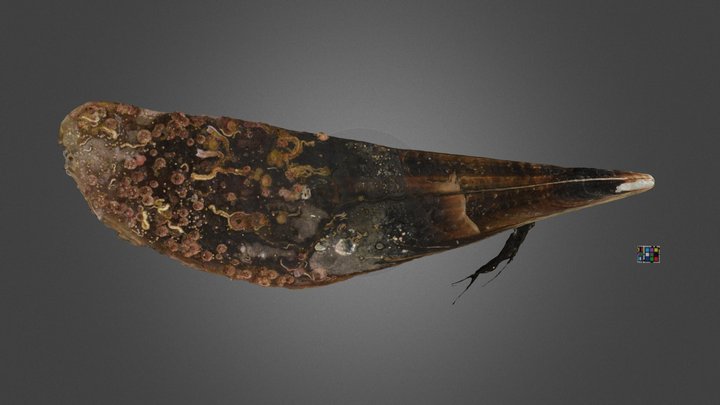
3D model
- Source
- Sketchfab
- Licence
- CC0 Public Domain
- Commercial use
- the licence allows it
Smithsonian Open Access and MorphoSource were not reached for this taxon, so this list is what the others held rather than everything there is.
The description on this site
- Source
- Wikipedia, “Pteriida”
- Licence
- CC BY-SA 4.0
This is what the site found, which is not the same as what exists.
Keep going
What may have been alongside itPteriomorphia through timeFormations of the Middle JurassicThe world it lived on
Occurrence data from the Paleobiology Database, CC BY 4.0. Newell 1965