Schellwienella

Yale Peabody Museum · CC0 · via GBIF. May be a photograph of a specimen, or an artist’s reconstruction — an interpretation of a skeleton, since colour and soft tissue are almost never preserved.
On record
Recorded, not inferred- Sits inside
- PulsiidaePBDB
- Diet
- suspension feederPBDB, for Brachiopoda
- Life habit
- low-level epifaunalPBDB, for Brachiopoda
- Motility
- stationary, attachedPBDB, for Brachiopoda
- Vision
- blindPBDB, for Strophomenata
- Environment
- marinePBDB, for Lophophorata
Time the record covers
At least 204 million years on record.
The record covers at least 458.2 Mya to 254.14 Mya. No occurrence read is dated outside 468 Mya to 251.902 Mya.
223 occurrences of Schellwienella on record, most of them in the Carboniferous. Bar height is expected occurrences, not a count: each fossil is spread across the span it is dated to, so a tall narrow bar means tight dating and a low wide one means loose.
When
223 occurrences- Ordovicianunder 1%
- Silurian6%
- Devonian31%
- Carboniferous56%
- Permian7%
These are dates about fossils, not the animal: the record can only begin after it arose and end before it died out, so either end may reach further. Shares are expected occurrences: a fossil dated to a span is counted partly in each period it straddles. More on what this infers.
Found in
76 formations
- Banff Formation19
- High Tor Limestone Formation15
- Black Rock Limestone Formation · Pembroke Limestone Group10
- Black Rock Formation9
- Sappington Formation7
- Gydo Formation · Bokkeveld Group7
Loading coastlines…
The named rock units Schellwienella has been recovered from, largest first. Drawn where the rock is now, not where it formed. 52 further formations hold fewer occurrences each and are not listed. 38 occurrences have no formation on record, which is common for older literature.
Schellwienella and its relatives
CarboniferousWhere Schellwienella and its relatives were recorded in the Carboniferous.
Found in the same rock
1,374 taxa- Chonetes49 sites
- Spirifer45 sites
- Camarotoechia44 sites
- Cleiothyridina40 sites
- Syringopora36 sites
- Rugosa32 sites
- Leptagonia analoga30 sites
- Atrypa28 sites
- Rhipidomella michelini28 sites
- Dictyoclostus26 sites
- Acrospirifer24 sites
- Fenestellidae24 sites
- Syringothyris24 sites
- Brachythyris23 sites
- Composita23 sites
- Gastropoda23 sites
- Eodevonaria22 sites
- Bryozoa21 sites
- Caninia cornucopiae21 sites
- Phacopidae21 sites
- Crinoidea20 sites
- Fenestella20 sites
- Strophomenida20 sites
- Ambocoelia19 sites
The Paleobiology Database records 192 sites for Schellwienella, and this reads all of them. The number is how many of those sites it was catalogued from too. The 24 sharing the most are listed.
This is not a list of everything alive at the time. It is only what has come out of the same ground as this animal and been written down.
Entered from
67 references- Paleoecology and stratigraphy of Devonian sediments in the northern Andes, Colombia: paleogeographic implications [Unpublished Ph.D. thesis, University of Chicago]25
- Geology of the Country around Wells and Cheddar (Explanation of One-inch Geological Sheet 280, New Series)19
- Lower Carboniferous brachiopods from the Banff Formation of Western Alberta17
- Fossil associations in the High Tor Limestone (Lower Carboniferous) of South Wales15
- Tong-Dzuy et al., 198810
- Silurian System of West Virginia10
- The Stratigraphy of the Kinderhook Series of Iowa10
- Preliminary catalogue and report on the biostratigraphy and palaeogeographic distribution of the Bokkeveld fauna8
- Early Carboniferous brachiopod zones of eastern Australia8
- The stratigraphy of the Carboniferous rocks of the Weaver Hills District, North Staffordshire8
- Brachiopods from the Sappinton Formation (Devonian - Mississippian) of western Montana7
- Yang et al., 19876
Each of the 223 occurrences read was entered from one of these publications, ordered by how many each accounts for. This is not a search for papers mentioning the name. 55 further references are not listed. Entries link to doi.org where the Paleobiology Database holds an identifier, and to its own record where it does not. Relayed as the Paleobiology Database holds them, not checked against what they resolve to.
Media and terms
Media content2
Picture of Schellwienella
- Source
- GBIF
- Credit
- Yale Peabody Museum
- Licence
- CC0
- Commercial use
- the licence allows it
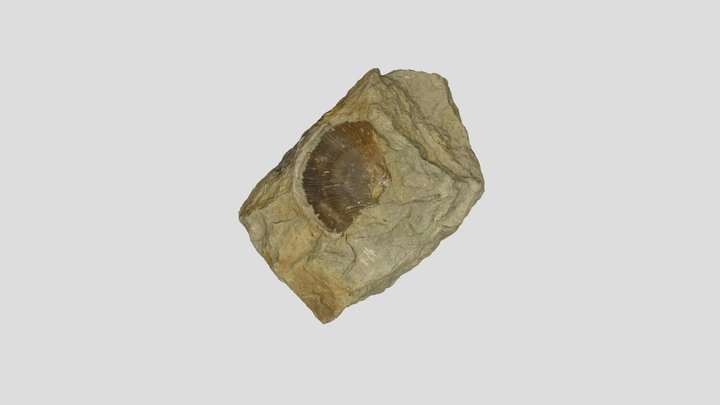
This is what the site found, which is not the same as what exists.
Keep going
What may have been alongside itPulsiidae through timeFormations of the CarboniferousThe world it lived on
Occurrence data from the Paleobiology Database, CC BY 4.0.