Pterygotus
Pterygotus is an extinct genus of giant predatory eurypterid, a group of extinct aquatic arthropods. Fossils of Pterygotus have been discovered in deposits ranging in age from Middle Silurian to Late Devonian, and have been referred to several different species. Fossils have been recovered from five continents; Australia, Asia, Europe, North America and South America, which indicates that Pterygotus might have had a nearly cosmopolitan (worldwide) distribution. The type species, P. anglicus, was described by Swiss naturalist Louis Agassiz in 1839, who gave it the name Pterygotus, meaning "winged one". Agassiz mistakenly believed the remains were of a giant fish; he would only realize the mistake five years later in 1844.

Ghedoghedo · CC BY-SA 3.0 · via Wikipedia/Commons. May be a photograph of a specimen, or an artist’s reconstruction — an interpretation of a skeleton, since colour and soft tissue are almost never preserved.
On record
Recorded, not inferred- Sits inside
- PterygotidaePBDB
- Diet
- carnivorePBDB, for Eurypterida
- Life habit
- nektobenthicPBDB, for Eurypterida
- Motility
- actively mobilePBDB, for Eurypterida
- Vision
- well-developedPBDB, for Eurypterida
Time the record covers
At least 66 million years on record.
The record covers at least 438.6 Mya to 372.15 Mya. No occurrence read is dated outside 443.1 Mya to 368.5 Mya.
64 occurrences of Pterygotus on record, most of them in the Silurian. Bar height is expected occurrences, not a count: each fossil is spread across the span it is dated to, so a tall narrow bar means tight dating and a low wide one means loose.
When
64 occurrencesThese are dates about fossils, not the animal: the record can only begin after it arose and end before it died out, so either end may reach further. Shares are expected occurrences: a fossil dated to a span is counted partly in each period it straddles. More on what this infers.
Found in
41 formations
- Pozary Formation4
- Sundvollen Formation3
- Dundee Flagstone Formation · Arbuthnott Group3
- Syracuse Formation · Salina Group2
- Bostów Formation2
- Steinsfjorden Formation2
Loading coastlines…
The named rock units Pterygotus has been recovered from, largest first. Drawn where the rock is now, not where it formed. 17 further formations hold fewer occurrences each and are not listed. 10 occurrences have no formation on record, which is common for older literature.
Pterygotus and its relatives
SilurianWhere Pterygotus and its relatives were recorded in the Silurian.
Found in the same rock
561 taxa- Orbiculoidea15 sites
- Bivalvia13 sites
- Gastropoda13 sites
- Camarotoechia11 sites
- Nuculites11 sites
- Ostracoda11 sites
- Lingula10 sites
- Orthoceras10 sites
- Crinoidea8 sites
- Lunulacardium8 sites
- Pterinopecten8 sites
- Carcinosoma7 sites
- Erettopterus7 sites
- Leperditia7 sites
- Actinopteria6 sites
- Bryozoa6 sites
- Conularia6 sites
- Eurypterus6 sites
- Howellella6 sites
- Mytilarca6 sites
- Phyllocarida6 sites
- Plantae6 sites
- Pterochaenia6 sites
- Acastella5 sites
The Paleobiology Database records 60 sites for Pterygotus, and this reads all of them. The number is how many of those sites it was catalogued from too. The 24 sharing the most are listed.
This is not a list of everything alive at the time. It is only what has come out of the same ground as this animal and been written down.
Entered from
29 references- Habitat of Llandoverian-Lochkovian eurypterids27
- Poland6
- Stratigraphy of Upper Silurian Cayugan Evaporites3
- Silurian communities of the Oslo Region, Norway2
- Polish Ludlow-Lower Devonian communities2
- Devonian Eurypterids from Indiana and Pennsylvania1
- Pterygotid Eurypterids from the Upper Silurian of Podolia (Ukraine)1
- A diverse chasmataspidid (Arthropoda: Chelicerata) fauna from the Early Devonian (Lochkovian) of Siberia1
- Pterygotus anglicus Agassiz (Chelicerata: Eurypterida) from Atholville, Lower Devonian Campbellton Formation, New Brunswick, Canada1
- Two new Silurian species of Eurypterus (Chelicerata: Eurypterida) from Norway and Canada and the phylogeny of the genus1
- Some Wenlockian-Geddinian, chiefly brachiopod dominated communities of North America1
- Chapter 4. Early Devonian fossil fishes sites of the Welsh Borders1
Each of the 64 occurrences read was entered from one of these publications, ordered by how many each accounts for. This is not a search for papers mentioning the name. 17 further references are not listed. Entries link to doi.org where the Paleobiology Database holds an identifier, and to its own record where it does not. Relayed as the Paleobiology Database holds them, not checked against what they resolve to.
Media and terms
Media content2

Picture of Pterygotus
- Source
- Wikipedia/Commons
- Credit
- Ghedoghedo
- Licence
- CC BY-SA 3.0
- Commercial use
- the licence allows it
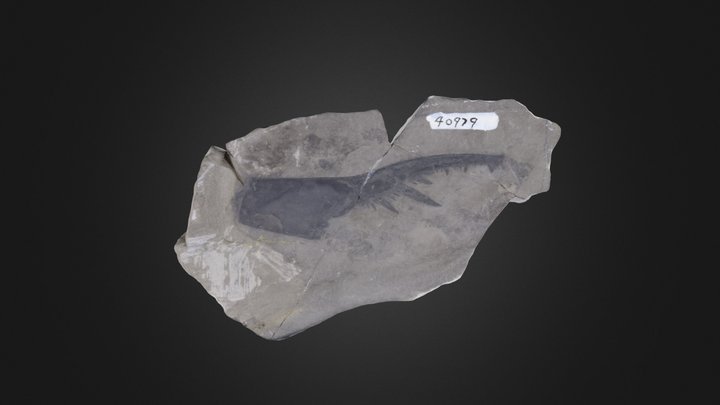
3D model
- Source
- Sketchfab
- Licence
- CC0 Public Domain
- Commercial use
- the licence allows it
Smithsonian Open Access was not reached for this taxon, so this list is what the others held rather than everything there is.
The description on this site
- Source
- Wikipedia, “Pterygotus”
- Licence
- CC BY-SA 4.0
This is what the site found, which is not the same as what exists.
Keep going
What may have been alongside itPterygotidae through timeFormations of the SilurianThe world it lived on
Occurrence data from the Paleobiology Database, CC BY 4.0. Agassiz 1844