Ostracoda
Ostracods, or ostracodes, are a class of the Crustacea, sometimes known as seed shrimp. Some 33,000 species have been identified, grouped into 7 valid orders. They are small crustaceans, typically around 1 mm (0.04 in) in size, but varying from 0.2 to 32 mm, the latter in the case of the marine Gigantocypris. The largest known freshwater species is Megalocypris princeps, which reach 8 mm in length. In most cases, their bodies are flattened from side to side and protected by a bivalve-like valve or "shell" made of chitin, and often calcium carbonate. The family Entocytheridae and many planktonic forms do not have calcium carbonate. The hinge of the two valves is in the upper (dorsal) region of the body. Ostracods are grouped together based on shell and soft part morphology, and molecular studies have not unequivocally supported the group's monophyly. They have a wide range of diets, and the class includes carnivores, herbivores, scavengers and filter feeders, but most ostracods are deposit feeders.

Anna33 at English Wikipedia · CC BY 2.5 · via Wikipedia/Commons. May be a photograph of a specimen, or an artist’s reconstruction — an interpretation of a skeleton, since colour and soft tissue are almost never preserved.
On record
Recorded, not inferred- Also called
- ostracodPBDB
- Sits inside
- OligostracaPBDB
- Life habit
- epifaunalPBDB
- Motility
- actively mobilePBDB
- Vision
- limitedPBDB
- Environment
- marinePBDB
Time the record covers
At least 520 million years on record.
The record covers at least 521 Mya to 11.7 ka. No occurrence read is dated outside 530.7 Mya to 0 Mya.
12,000+ occurrences of Ostracoda on record. The Paleobiology Database records this as a living group. Bar height is expected occurrences, not a count: each fossil is spread across the span it is dated to, so a tall narrow bar means tight dating and a low wide one means loose.
When
12,000 occurrences read- Cambrianunder 1%
- Ordovician21%
- Silurian12%
- Devonian15%
- Carboniferous6%
- Permian6%
- Early Triassicunder 1%
- Middle Triassic1%
- Late Triassicunder 1%
- Early Jurassic9%
- Middle Jurassic3%
- Late Jurassic1%
- Early Cretaceous4%
- Late Cretaceous3%
- Paleocene1%
- Eocene4%
- Oligocene2%
- Miocene6%
- Pliocene2%
- Pleistocene2%
- Holoceneunder 1%
These are dates about fossils, not the animal: the record can only begin after it arose and end before it died out, so either end may reach further. Shares are expected occurrences: a fossil dated to a span is counted partly in each period it straddles. The read hit its cap, so every figure above is a floor and the shares are of the occurrences read. More on what this infers.
Found in
at least 882 formations
- Jurensismergel Formation509
- Moscow Formation221
- Naujoji Akmené Formation190
- Decorah Shale Formation168
- Blacourt Formation166
- Dunleith Formation · Galena Group163
Loading coastlines…
The named rock units Ostracoda has been recovered from, largest first. Drawn where the rock is now, not where it formed. The read hit its cap, so each count is a floor. 858 further formations hold fewer occurrences each and are not listed. 2,229 occurrences have no formation on record, which is common for older literature.
Found in the same rock
2,197 taxa- Crinoidea50 sites
- Bryozoa43 sites
- Strophomena43 sites
- Leptaena42 sites
- Sowerbyella40 sites
- Ctenodonta35 sites
- Fenestella35 sites
- Lophospira35 sites
- Modiolopsis35 sites
- Schuchertella35 sites
- Isotelus33 sites
- Nuculites33 sites
- Tentaculites32 sites
- Lingula31 sites
- Pterinea31 sites
- Flexicalymene30 sites
- Eoleperditia29 sites
- Tallinnella28 sites
- Atrypa27 sites
- Onniella27 sites
- Conularia26 sites
- Remopleurides26 sites
- Camarotoechia25 sites
- Cleiothyridina24 sites
The Paleobiology Database records at least 790 sites for Ostracoda, and this reads 240 of them. The number is how many of those sites it was catalogued from too. The 24 sharing the most are listed.
This is not a list of everything alive at the time. It is only what has come out of the same ground as this animal and been written down.
Entered from
at least 772 references- Middle and Upper Ordovician Ostracoda of Minnesota and Iowa743
- Die Grenzziehung Unter-/Mitteljura (Toarcium/Aalenium) bei Wittnau und Fuentelsaz [Determinig the boundary between Toarcium/Aalenium near Wittnau and Fuentelsaz]585
- Ostracods and fore-reef sedimentology of the Frasnian-Famennian boundary beds in Kielce (Holy Cross Mountains, Poland)315
- The Clinton of Western and Central New York308
- A re-examination of the Pliensbachian and Toarcian Ostracoda of Zambujal, west-central Portugal300
- Silurian System of West Virginia259
- Facies and faunal associations of the Telengitian (Emsian) in its type locality236
- Permskaya sistema Pribaltiki (fauna i stratigrafiya). Permian deposits of the Baltic region (stratigraphy and fauna)235
- Ostracoda from the Windom Shale (Hamilton) of Western New York220
- Preliminary stratigraphical investigations of the Miocene successions of the Porto Torres Basin (northern Sardinia, Italy)183
- Ordovician Ostracoda, southeastern District of Franklin176
- Ostracodes du Givetian de Ferques (Devonien moyen, Boulonnais-France)164
Each of the 12,000 occurrences read was entered from one of these publications, ordered by how many each accounts for. This is not a search for papers mentioning the name. That read hit its cap, so each count is a floor. 760 further references are not listed. Entries link to doi.org where the Paleobiology Database holds an identifier, and to its own record where it does not. Relayed as the Paleobiology Database holds them, not checked against what they resolve to.
Media and terms
Media content2
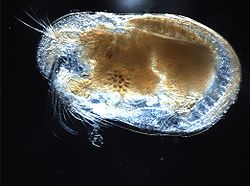
Picture of Ostracoda
- Source
- Wikipedia/Commons
- Credit
- Anna33 at English Wikipedia
- Licence
- CC BY 2.5
- Commercial use
- the licence allows it
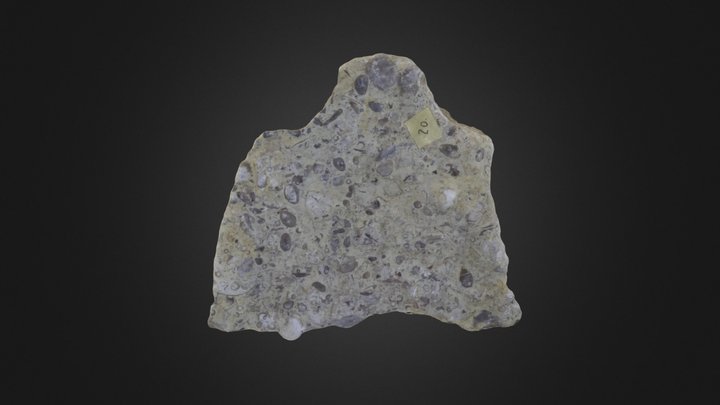
3D model
- Source
- Sketchfab
- Licence
- CC0 Public Domain
- Commercial use
- the licence allows it
Smithsonian Open Access and MorphoSource were not reached for this taxon, so this list is what the others held rather than everything there is.
The description on this site
- Source
- Wikipedia, “Ostracod”
- Licence
- CC BY-SA 4.0
This is what the site found, which is not the same as what exists.
Keep going
What may have been alongside itOligostraca through timeThe world it lived on
Occurrence data from the Paleobiology Database, CC BY 4.0. (Latreille 1802)