Pulchratia
Pulchratia is an extinct genus of brachiopods which lived in marine habitats during the Upper Carboniferous period. Its fossils have been found in North America.
No picture of Pulchratia was found. Wikipedia, Wikidata, iDigBio and Smithsonian Open Access were searched and had none. GBIF was asked, and what came back is not recorded: nothing, or a picture this site could not tie to Pulchratia, or no answer at all. This entry cannot say which.
On record
Recorded, not inferred- Sits inside
- JuresaniiniPBDB
- Diet
- suspension feederPBDB, for Productidina
- Life habit
- low-level epifaunalPBDB, for Productidina
- Motility
- stationaryPBDB, for Productidina
- Vision
- blindPBDB, for Strophomenata
- Environment
- marinePBDB, for Lophophorata
Time the record covers
At least 44 million years on record.
The record covers at least 318.6 Mya to 274.4 Mya. No occurrence read is dated outside 323.4 Mya to 266.9 Mya.
12 occurrences of Pulchratia on record, most of them in the Carboniferous. Bar height is expected occurrences, not a count: each fossil is spread across the span it is dated to, so a tall narrow bar means tight dating and a low wide one means loose.
When
12 occurrences- Carboniferous92%
- Permian8%
These are dates about fossils, not the animal: the record can only begin after it arose and end before it died out, so either end may reach further. Shares are expected occurrences: a fossil dated to a span is counted partly in each period it straddles. More on what this infers.
Found in
8 formations
- Watahomigi Formation · Supai Group4
- Graham Formation2
- Mattoon Formation1
- Bluff Creek Formation · Cisco Group1
- Sausbee Formation1
- Takhandit Formation1
Loading coastlines…
The named rock units Pulchratia has been recovered from, largest first. Drawn where the rock is now, not where it formed.
Pulchratia and its relatives
CarboniferousWhere Pulchratia and its relatives were recorded in the Carboniferous.
Found in the same rock
219 taxa- Linoproductus7 sites
- Crurithyris planoconvexa6 sites
- Composita subtilita5 sites
- Hustedia mormoni4 sites
- Crinoidea3 sites
- Derbyia3 sites
- Ianthinopsis3 sites
- Juresania3 sites
- Kutorginella lasallensis3 sites
- Lissochonetes geinitzianus3 sites
- Neochonetes granulifer3 sites
- Nuculopsis3 sites
- Palaeolima retifera3 sites
- Paleyoldia glabra3 sites
- Permophorus3 sites
- Phestia3 sites
- Pseudorthoceras knoxense3 sites
- Amphiscapha subrugosa2 sites
- Anomphalus2 sites
- Anthracospirifer2 sites
- Anthracospirifer occiduus2 sites
- Astartella2 sites
- Astartella concentrica2 sites
- Bryozoa2 sites
The Paleobiology Database records 11 sites for Pulchratia, and this reads all of them. The number is how many of those sites it was catalogued from too. The 24 sharing the most are listed.
This is not a list of everything alive at the time. It is only what has come out of the same ground as this animal and been written down.
Entered from
8 references- The Supai Group of the Grand Canyon4
- Stratigraphic and Paleontologic Studies of the Pennsylvanian and Permian Rocks in North-Central Texas2
- Stability of regional brachiopod diversity structure across the Mississippian/Pennsylvanian boundary1
- Marine invertebrate assemblages from the Late Pennsylvanian (Virgilian) Holder Formation, Dry Canyon, Sacramento Mountains, south-central New Mexico1
- A late Pennsylvanian encruster: terminal Paleozoic calcified demosponge?1
- Brachiopods of the suborder Strophomenidina from the Shumway Cyclothem, Mattoon Formation, Virgilian of Illinois.1
- Macrofauna and fossil preservation in the Magoffin marine zone, Pennsylvanian Breathitt Formation of eastern Kentucky USA1
- Stratigraphy and paleontology of the revised type section for the Takhandit Limestone (Permian) in east-central Alaska1
Each of the 12 occurrences read was entered from one of these publications, ordered by how many each accounts for. This is not a search for papers mentioning the name. Entries link to doi.org where the Paleobiology Database holds an identifier, and to its own record where it does not. Relayed as the Paleobiology Database holds them, not checked against what they resolve to.
Media and terms
Media content1
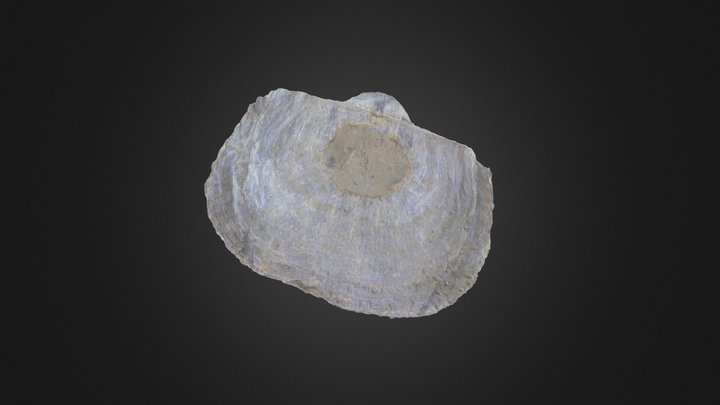
3D model
- Source
- Sketchfab
- Licence
- CC0 Public Domain
- Commercial use
- the licence allows it
No picture of Pulchratia was found. Wikipedia, Wikidata, iDigBio and Smithsonian Open Access were searched and had none.
GBIF was asked, and what came back is not recorded: nothing, or a picture this site could not tie to Pulchratia, or no answer at all. This entry cannot say which.
The description on this site
- Source
- Wikipedia, “Pulchratia”
- Licence
- CC BY-SA 4.0
This is what the site found, which is not the same as what exists.
Keep going
What may have been alongside itJuresaniini through timeFormations of the CarboniferousThe world it lived on
Occurrence data from the Paleobiology Database, CC BY 4.0.