Pyrene
Pyrene is a genus of small sea snails, marine gastropod mollusks in the family Columbellidae.

H. Zell · CC BY-SA 3.0 · via Wikipedia/Commons. May be a photograph of a specimen, or an artist’s reconstruction — an interpretation of a skeleton, since colour and soft tissue are almost never preserved.
On record
Recorded, not inferred- Sits inside
- ColumbellidaePBDB
- Diet
- carnivorePBDB, for Columbellidae
- Life habit
- epifaunalPBDB, for Columbellidae
- Motility
- actively mobilePBDB, for Columbellidae
- Vision
- limitedPBDB, for Gastropoda
Time the record covers
At least 15 million years on record.
The record covers at least 15.98 Mya to 11.7 ka. No occurrence read is dated outside 20.45 Mya to 0 Mya.
82 occurrences of Pyrene on record, most of them in the Pleistocene. The Paleobiology Database records this as a living group. Bar height is expected occurrences, not a count: each fossil is spread across the span it is dated to, so a tall narrow bar means tight dating and a low wide one means loose.
When
82 occurrences- Miocene28%
- Pliocene11%
- Pleistocene56%
- Holocene5%
These are dates about fossils, not the animal: the record can only begin after it arose and end before it died out, so either end may reach further. Shares are expected occurrences: a fossil dated to a span is counted partly in each period it straddles. More on what this infers.
Found in
19 formations
- Aldabra Limestone Formation5
- Kubota Formation · Higashi-Tanakura Group4
- Gelingseh Formation3
- Bundera Calcarenite Formation3
- Termofourà Formation3
- Poivre Formation2
Loading coastlines…
The named rock units Pyrene has been recovered from, largest first. Drawn where the rock is now, not where it formed. 45 occurrences have no formation on record, which is common for older literature.
Pyrene and its relatives
PleistoceneWhere Pyrene and its relatives were recorded in the Pleistocene.
Found in the same rock
1,241 taxa- Cerithium17 sites
- Conus11 sites
- Hipponix11 sites
- Cancellaria10 sites
- Nassarius10 sites
- Cantharus8 sites
- Latirus8 sites
- Mitra8 sites
- Ostrea8 sites
- Coralliophila7 sites
- Oliva7 sites
- Anadara6 sites
- Chama6 sites
- Chlamys6 sites
- Cythara (Mangelia)6 sites
- Diplodonta6 sites
- Dosinia6 sites
- Natica6 sites
- Phos6 sites
- Pseudozonaria nigropunctata6 sites
- Turritella6 sites
- Alvania5 sites
- Arca5 sites
- Atilia5 sites
The Paleobiology Database records 34 sites for Pyrene, and this reads all of them. The number is how many of those sites it was catalogued from too. The 24 sharing the most are listed.
This is not a list of everything alive at the time. It is only what has come out of the same ground as this animal and been written down.
Entered from
36 references- Late Pleistocene molluscan assemblages from the coral reefs of the Kenya coast7
- Pliocene-Pleistocene coastal events and history along the western margin of Australia5
- Faunal response to the instability of reef habitats: Pleistocene molluscan assemblages of Aldabra Atoll5
- Marine Pleistocene mollusks from the Galapagos Islands5
- The paleoenvironment of an early Middle Miocene Paratethys sequence in NE Austria with special emphasis on mollusks and foraminifera4
- Cenozoic Molluscs and Echinoids of Barrow Island, Western Australia4
- Pliocene fossils from Baltra (South Seymour) Island, Galápagos Islands4
- The Shiobara-type Molluscan Fauna: An ecological analysis of fossil molluscs4
- Tertiary and Quaternary Gastropoda of Okinawa: A comparison of the late Miocene, Pliocene, and Pleistocene Gastropoda of Okinawa with related faunas of East Asia together with a resume of the geological setting of the fossiliferous deposits4
- Lower to Middle Miocene Mollusc assemblages from the Torino Hills (NW Italy): Synthesis of new data and chronostratigraphical arrangement3
- Skwarko, 19943
- Presenza di «Ospiti boreali» (Mollusca, Gastropoda) nel Pleistocene di Contrada Case Alte (Villa S. Giovanni)3
Each of the 82 occurrences read was entered from one of these publications, ordered by how many each accounts for. This is not a search for papers mentioning the name. 24 further references are not listed. Entries link to doi.org where the Paleobiology Database holds an identifier, and to its own record where it does not. Relayed as the Paleobiology Database holds them, not checked against what they resolve to.
Media and terms
Media content2

Picture of Pyrene
- Source
- Wikipedia/Commons
- Credit
- H. Zell
- Licence
- CC BY-SA 3.0
- Commercial use
- the licence allows it
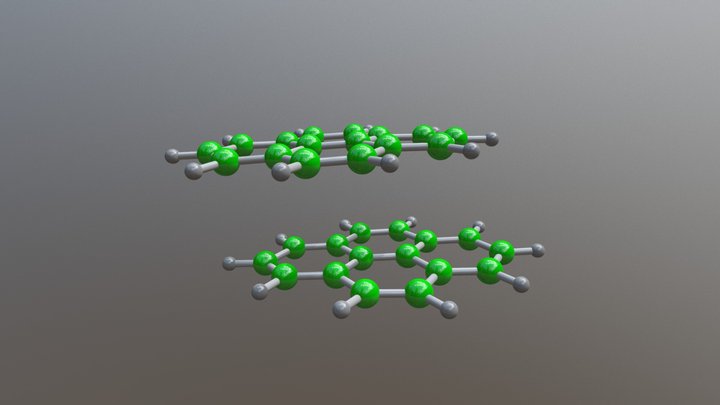
3D model
- Source
- Sketchfab
- Credit
- MitricGroup
- Licence
- CC Attribution
- Commercial use
- cannot be read from the licence given — check the record
Smithsonian Open Access was not reached for this taxon, so this list is what the others held rather than everything there is.
The description on this site
- Licence
- CC BY-SA 4.0
This is what the site found, which is not the same as what exists.
Keep going
What may have been alongside itColumbellidae through timeFormations of the PleistoceneThe world it lived on
Occurrence data from the Paleobiology Database, CC BY 4.0. Röding 1798