Rattus rattus
The black rat, also known as the roof rat, ship rat, or house rat, is a common long-tailed rodent of the stereotypical rat genus Rattus, in the subfamily Murinae. It is a generalist omnivore that can live on a wide variety of foods. It associates extensively with humans, and most populations are synanthropic. It likely originated in the Indian subcontinent, but is now found worldwide.

Davidvraju · CC0 · via Wikipedia/Commons. May be a photograph of a specimen, or an artist’s reconstruction — an interpretation of a skeleton, since colour and soft tissue are almost never preserved.
On record
Recorded, not inferred- Also called
- black ratPBDB
- Sits inside
- RattusPBDB
- Diet
- herbivore, insectivorePBDB, for Muridae
- Life habit
- ground dwellingPBDB, for Rattus
- Motility
- actively mobilePBDB, for Osteichthyes
- Environment
- terrestrialPBDB, for Eutheria
Time the record covers
At least 117 thousand years on record.
The record covers at least 129 ka to 11.7 ka. No occurrence read is dated outside 2.58 Mya to 0 Mya.
28 occurrences of Rattus rattus on record. The Paleobiology Database records this as a living group. Bar height is expected occurrences, not a count: each fossil is spread across the span it is dated to, so a tall narrow bar means tight dating and a low wide one means loose.
When
28 occurrences- Pleistocene32%
- Holocene68%
These are dates about fossils, not the animal: the record can only begin after it arose and end before it died out, so either end may reach further. Shares are expected occurrences: a fossil dated to a span is counted partly in each period it straddles. More on what this infers.
Found in
1 formation
Loading coastlines…
The named rock units Rattus rattus has been recovered from, largest first. Drawn where the rock is now, not where it formed. 27 occurrences have no formation on record, which is common for older literature.
Found in the same rock
595 taxa- Mus musculus9 sites
- Paguma larvata5 sites
- Passeriformes5 sites
- Sus5 sites
- Alsophis4 sites
- Arctonyx collaris4 sites
- Aves4 sites
- Geochelone elephantopus4 sites
- Geospiza fuliginosa4 sites
- Geospiza magnirostris4 sites
- Hystrix4 sites
- Macaca4 sites
- Mimus trifasciatus4 sites
- Mus4 sites
- Panthera pardus4 sites
- Phyllodactylus4 sites
- Pteropus4 sites
- Sus scrofa4 sites
- Tropidurus4 sites
- Ursus thibetanus4 sites
- Zenaida galapagoensis4 sites
- Ailuropoda melanoleuca3 sites
- Crocuta crocuta3 sites
- Cuon3 sites
The Paleobiology Database records 28 sites for Rattus rattus, and this reads all of them. The number is how many of those sites it was catalogued from too. The 24 sharing the most are listed.
This is not a list of everything alive at the time. It is only what has come out of the same ground as this animal and been written down.
Entered from
22 references- Holocene Vertebrate Fossils from Isla Floreana, Galapagos4
- The prehistory of vertebrates, especially birds, on Tinian, Aguiguan, and Rota, Northern Mariana Islands3
- Subfossil lemur discoveries from the Beanka Protected Area in western Madagascar2
- New rodents (Cricetidae) from the Neogene of Curaçao and Bonaire, Dutch Antilles1
- Antemortem trauma and survival in the late Middle Pleistocene human cranium from Maba, South China1
- Geochronology of Ailuropoda–Stegodon fauna and Gigantopithecus in Guangxi Province, southern China1
- Fossils indicate Pelecanoides georgicus had large colonies at Mason Bay, Stewart Island, New Zealand1
- Analysis of a late Quaternary deposit and small mammal fauna from Nettle Cave, Jenolan, New South Wales1
- Biostratigraphy of amphibians, reptiles, birds and mammals in Corsica and the role of man in the Holocene faunal turnover1
- Quaternary fossil fauna of South Canterbury, South Island, New Zealand1
- Extension of the geographic distribution of the giant panda (Ailuropoda) and search for the reasons for its progressive disappearance in Southeast Asia during the Latest Middle Pleistocene1
- The Cuban Crocodile, Crocodylus rhombifer, from Late Quaternary Fossil Deposits on Grand Cayman1
Each of the 28 occurrences read was entered from one of these publications, ordered by how many each accounts for. This is not a search for papers mentioning the name. 10 further references are not listed. Entries link to doi.org where the Paleobiology Database holds an identifier, and to its own record where it does not. Relayed as the Paleobiology Database holds them, not checked against what they resolve to.
Media and terms
Media content2

Picture of Rattus rattus
- Source
- Wikipedia/Commons
- Credit
- Davidvraju
- Licence
- CC0
- Commercial use
- the licence allows it
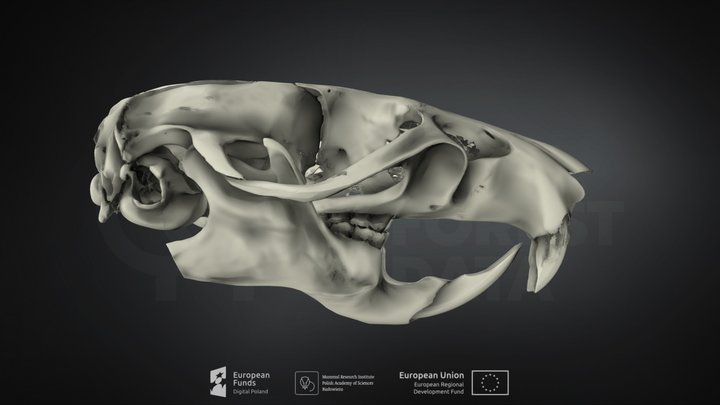
3D model
- Source
- Sketchfab
- Licence
- CC Attribution
- Commercial use
- cannot be read from the licence given — check the record
Smithsonian Open Access and MorphoSource were not reached for this taxon, so this list is what the others held rather than everything there is.
The description on this site
- Source
- Wikipedia, “Black rat”
- Licence
- CC BY-SA 4.0
This is what the site found, which is not the same as what exists.
Keep going
What may have been alongside itRattus through timeThe world it lived on
Occurrence data from the Paleobiology Database, CC BY 4.0. (Linnaeus 1758)