Rhynchorthoceras
Rhynchorthoceras is a Middle Ordovician genus characterized by a rapidly expanded, weakly annulate orthocone, like the orthoconic section of Ancistroceras, but with only a curved, cyrtoconic apex instead of juvenile whorls.
No picture of Rhynchorthoceras was found. Wikipedia, Wikidata and iDigBio were searched and had none. Smithsonian Open Access did not answer, so this is what the others held rather than everything there is. GBIF was asked, and what came back is not recorded: nothing, or a picture this site could not tie to Rhynchorthoceras, or no answer at all. This entry cannot say which.
On record
Recorded, not inferred- Sits inside
- SinoceratidaePBDB
- Diet
- carnivorePBDB, for Lituitida
- Life habit
- nektonicPBDB, for Lituitida
- Motility
- fast-movingPBDB, for Cephalopoda
- Vision
- well-developedPBDB, for Cephalopoda
- Environment
- marinePBDB, for Cephalopoda
Time the record covers
At least 7 million years on record.
The record covers at least 464.3 Mya to 457.3 Mya. No occurrence read is dated outside 469.4 Mya to 449.6 Mya.
18 occurrences of Rhynchorthoceras on record, most of them in the Ordovician. Bar height is expected occurrences, not a count: each fossil is spread across the span it is dated to, so a tall narrow bar means tight dating and a low wide one means loose.
When
18 occurrences- Ordovician100%
These are dates about fossils, not the animal: the record can only begin after it arose and end before it died out, so either end may reach further. Shares are expected occurrences: a fossil dated to a span is counted partly in each period it straddles. More on what this infers.
Found in
13 formations
- Elnes Formation4
- Arnestad Formation2
- Lourdes Formation · Long Point Group2
- Seby Limestone Formation1
- Segerstad Limestone Formation1
- Frognerkilen Formation1
Loading coastlines…
The named rock units Rhynchorthoceras has been recovered from, largest first. Drawn where the rock is now, not where it formed.
Rhynchorthoceras and its relatives
OrdovicianWhere Rhynchorthoceras and its relatives were recorded in the Ordovician.
Found in the same rock
189 taxa- Lituites4 sites
- Asaphus3 sites
- Atractopyge3 sites
- Ctenodonta3 sites
- Endoceras3 sites
- Glyptorthis3 sites
- Illaenus3 sites
- Pararaphistoma3 sites
- Polygrammoceras3 sites
- Pseudoasaphus3 sites
- Remopleurides3 sites
- Sinuites3 sites
- Skenidioides3 sites
- Brachypleura2 sites
- Bronteopsis2 sites
- Chonetoidea2 sites
- Christiania2 sites
- Climacograptus2 sites
- Cochlioceras2 sites
- Cremnorthis2 sites
- Ctenoceras2 sites
- Cymbularia2 sites
- Cyrtodontula2 sites
- Dalmanella2 sites
The Paleobiology Database records 18 sites for Rhynchorthoceras, and this reads all of them. The number is how many of those sites it was catalogued from too. The 24 sharing the most are listed.
This is not a list of everything alive at the time. It is only what has come out of the same ground as this animal and been written down.
Entered from
11 references- The middle ordovician of the Oslo region, Norway 10. Nautiloid Cephalopods4
- Unpublished notes on Norwegian Ordovician fossil occurrences compiled from various resources, primarily from the series of papers on taxa of the Middle Ordovician on the Oslo-Asker District, published in Norsk Geologisk Tidsskrift3
- Nautiloids of the Lourdes Formation (Middle Ordovician), Port au Port Peninsula, western Newfoundland2
- Stratigraphic Summary of the Southwestern Region of China2
- Middle Ordovician cephalopod biofacies and palaeoenvironments of Baltoscandia1
- Early orthoceratoid cephalopods from the Argentine Precordillera (Lower-Middle Ordovician)1
- The Lower and Middle Ordovician cephalopod faunas of England and Wales1
- Connecting ring structure and its significance for classification of the orthoceratid cephalopods1
- Ordovician system of the Lower Yangtze region in Jiangsu Province1
- Lower and Middle Viruan (Middle Ordovician) of the Siljan district1
- The Viruan (Middle Ordovician) of Oland1
Each of the 18 occurrences read was entered from one of these publications, ordered by how many each accounts for. This is not a search for papers mentioning the name. Entries link to doi.org where the Paleobiology Database holds an identifier, and to its own record where it does not. Relayed as the Paleobiology Database holds them, not checked against what they resolve to.
Media and terms
Media content1
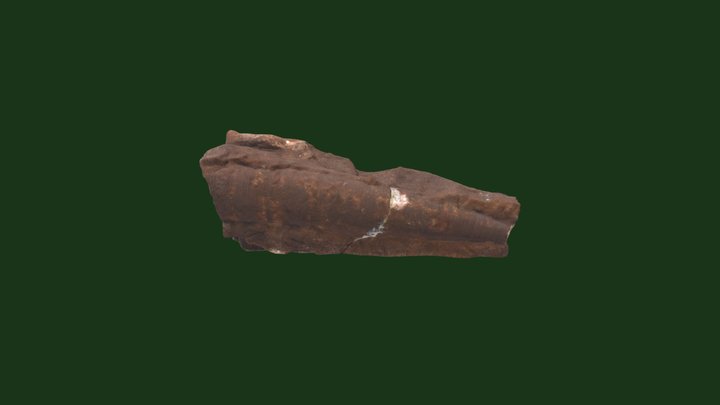
3D model
- Source
- Sketchfab
- Credit
- Shellie Luallin
- Licence
- CC Attribution
- Commercial use
- cannot be read from the licence given — check the record
No picture of Rhynchorthoceras was found. Wikipedia, Wikidata and iDigBio were searched and had none.
Smithsonian Open Access did not answer, so this is what the others held rather than everything there is.
GBIF was asked, and what came back is not recorded: nothing, or a picture this site could not tie to Rhynchorthoceras, or no answer at all. This entry cannot say which.
Smithsonian Open Access and MorphoSource were not reached for this taxon, so this list is what the others held rather than everything there is.
The description on this site
- Licence
- CC BY-SA 4.0
This is what the site found, which is not the same as what exists.
Keep going
What may have been alongside itSinoceratidae through timeFormations of the OrdovicianThe world it lived on
Occurrence data from the Paleobiology Database, CC BY 4.0. Remelé 1882