Syringopora
Syringopora is an extinct genus of phaceloid tabulate coral. It has been found in rocks ranging in age from the Ordovician to the Permian, although it was most widespread during the Silurian, Devonian, and Carboniferous periods. Among other places, it has been found in the Columbus Limestone in Ohio, and in the Spring Branch Member of the Lecompton Limestone in Kansas.

Wilson44691 · Public Domain · via Wikipedia/Commons. May be a photograph of a specimen, or an artist’s reconstruction — an interpretation of a skeleton, since colour and soft tissue are almost never preserved.
On record
Recorded, not inferred- Sits inside
- SyringoporidaePBDB
- Diet
- suspension feeder, photosymbioticPBDB
- Life habit
- epifaunalPBDB
- Motility
- stationary, attached, epibiontPBDB
- Vision
- blindPBDB, for Anthozoa
Time the record covers
At least 175 million years on record.
The record covers at least 449.5 Mya to 274.4 Mya. No occurrence read is dated outside 458.2 Mya to 251.902 Mya.
682 occurrences of Syringopora on record, most of them in the Carboniferous. Bar height is expected occurrences, not a count: each fossil is spread across the span it is dated to, so a tall narrow bar means tight dating and a low wide one means loose.
When
682 occurrences- Ordovician2%
- Silurian29%
- Devonian22%
- Carboniferous43%
- Permian5%
These are dates about fossils, not the animal: the record can only begin after it arose and end before it died out, so either end may reach further. Shares are expected occurrences: a fossil dated to a span is counted partly in each period it straddles. More on what this infers.
Found in
250 formations
- High Tor Limestone Formation35
- Tin Mountain Formation35
- Mount Head Formation · Rundle Group22
- Khandyg Formation14
- Black Rock Limestone Formation · Pembroke Limestone Group13
- Treskelodden Beds Formation13
Loading coastlines…
The named rock units Syringopora has been recovered from, largest first. Drawn where the rock is now, not where it formed. 226 further formations hold fewer occurrences each and are not listed. 94 occurrences have no formation on record, which is common for older literature.
Syringopora and its relatives
CarboniferousWhere Syringopora and its relatives were recorded in the Carboniferous.
Found in the same rock
1,745 taxa- Favosites79 sites
- Rugosa59 sites
- Heliolites51 sites
- Bryozoa47 sites
- Crinoidea47 sites
- Caninia cornucopiae46 sites
- Halysites37 sites
- Spirifer37 sites
- Fenestella36 sites
- Stromatoporoidea35 sites
- Gastropoda32 sites
- Atrypa30 sites
- Chonetes30 sites
- Michelinia30 sites
- Productidae30 sites
- Ostracoda29 sites
- Sychnoelasma hawbankense29 sites
- Rhipidomella michelini28 sites
- Atrypa reticularis26 sites
- Calymene26 sites
- Camarotoechia26 sites
- Spiriferida24 sites
- Coenites23 sites
- Delepinea23 sites
The Paleobiology Database records 502 sites for Syringopora, and this reads 240 of them. The number is how many of those sites it was catalogued from too. The 24 sharing the most are listed.
This is not a list of everything alive at the time. It is only what has come out of the same ground as this animal and been written down.
Entered from
215 references- Fossil associations in the High Tor Limestone (Lower Carboniferous) of South Wales35
- Ordovician, Silurian, and Devonian corals of Alaska20
- Mississippian and Devonian paleontology and stratigraphy, Quartz Spring area Inyo County, California17
- Geology and mineral deposits of southeastern Alaska14
- Late Carboniferous to early Permian Tabulata from Spitsbergen13
- Stratigraphy and facies relationships of the upper Mississippian Mount Head Formation, Rocky Mountains and foothills, southwestern Alberta13
- Silurian brachiopod communities of Mongolia12
- The distribution of platform conodonts, corals, and foraminifera from the Black Rock Limestone (late Tournaisian and early Visean) of Tears Point, Gower, south Wales12
- Correlation of the Silurian rocks of China12
- The Yoredale Series of Upper Wensleydale and adjacent parts of North-West Yorkshire12
- Upper Paleozoic sections at Highwood Pass, Alberta12
- Ordovik i silur Yuzhnogo Verkhoyanya (biostratigrafiya i paleontologiya) [The Ordovician and Silurian of the southern Verkhoyansk Range (biostratigraphy and paleontology)]11
Each of the 682 occurrences read was entered from one of these publications, ordered by how many each accounts for. This is not a search for papers mentioning the name. 203 further references are not listed. Entries link to doi.org where the Paleobiology Database holds an identifier, and to its own record where it does not. Relayed as the Paleobiology Database holds them, not checked against what they resolve to.
Media and terms
Media content3
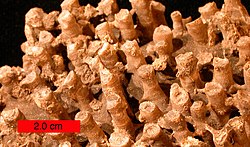
Picture of Syringopora
- Source
- Wikipedia/Commons
- Credit
- Wilson44691
- Licence
- Public Domain
- Commercial use
- the licence allows it
Photogrammetry
- Source
- MorphoSource
- Licence
- not stated by the source
- Commercial use
- cannot be read from the licence given — check the record
- Specimen
- syringopora sp. · MST:PALEO:MST-SP-6954
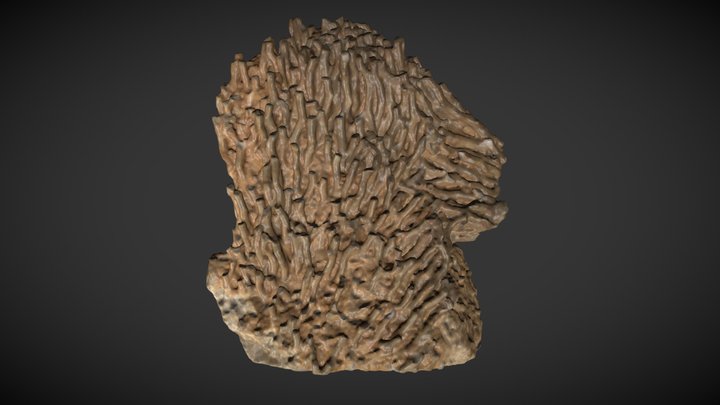
3D model
- Source
- Sketchfab
- Credit
- EDDyLab @ULiege
- Licence
- CC Attribution-NonCommercial
- Commercial use
- the licence does not allow it
The description on this site
- Source
- Wikipedia, “Syringopora”
- Licence
- CC BY-SA 4.0
This is what the site found, which is not the same as what exists.
Keep going
What may have been alongside itSyringoporidae through timeFormations of the CarboniferousThe world it lived on
Occurrence data from the Paleobiology Database, CC BY 4.0. Goldfuss 1826