Sciaroidea
Sciaroidea is a superfamily in the infraorder Bibionomorpha. There are about 16 families and more than 15,000 described species in Sciaroidea. Most of its constituent families are various gnats.

Uncredited · Public Domain · via Wikipedia/Commons. May be a photograph of a specimen, or an artist’s reconstruction — an interpretation of a skeleton, since colour and soft tissue are almost never preserved.
On record
Recorded, not inferred- Also called
- fungus gnatPBDB
- Sits inside
- BibionomorphaPBDB
- Motility
- actively mobilePBDB, for Arthropoda
- Environment
- terrestrialPBDB, for Insecta
Time the record covers
At least 205 million years on record.
The record covers at least 205.7 Mya to 11.7 ka. No occurrence read is dated outside 227.3 Mya to 0 Mya.
1,291 occurrences of Sciaroidea on record, most of them in the Eocene. The Paleobiology Database records this as a living group. Bar height is expected occurrences, not a count: each fossil is spread across the span it is dated to, so a tall narrow bar means tight dating and a low wide one means loose.
When
1,291 occurrences- Late Triassicunder 1%
- Early Jurassicunder 1%
- Middle Jurassicunder 1%
- Late Jurassic6%
- Early Cretaceous12%
- Late Cretaceous7%
- Eocene49%
- Oligocene10%
- Miocene12%
- Plioceneunder 1%
- Pleistoceneunder 1%
- Holoceneunder 1%
These are dates about fossils, not the animal: the record can only begin after it arose and end before it died out, so either end may reach further. Shares are expected occurrences: a fossil dated to a span is counted partly in each period it straddles. More on what this infers.
Found in
73 formations
- Rott Formation65
- Zaza Formation63
- Dzun-Bain Formation · Bon Tsaagan Group50
- Randeck Maar Formation36
- Niveau du gypse d'Aix Formation25
- Karabastau Formation21
Loading coastlines…
The named rock units Sciaroidea has been recovered from, largest first. Drawn where the rock is now, not where it formed. 49 further formations hold fewer occurrences each and are not listed. 741 occurrences have no formation on record, which is common for older literature.
Sciaroidea and its relatives
EoceneWhere Sciaroidea and its relatives were recorded in the Eocene.
Found in the same rock
7,683 taxa- Coleoptera14 sites
- Formicidae14 sites
- Mycetophilidae14 sites
- Curculionidae13 sites
- Keroplatidae12 sites
- Diptera11 sites
- Syntemna tele11 sites
- Bibionidae10 sites
- Forcipomyia9 sites
- Nylanderia pygmaea9 sites
- Plecia bucklandi9 sites
- Sciaridae9 sites
- Tetraponera simplex9 sites
- Bibio8 sites
- Brachycera8 sites
- Chironomidae8 sites
- Drepanorzeckia extrunculipennis8 sites
- Gesomyrmex hoernesi8 sites
- Orthoptera8 sites
- Plecia8 sites
- Plecia foersteri8 sites
- Prenolepis henschei8 sites
- Yantaromyrmex geinitzi8 sites
- Acrididae7 sites
The Paleobiology Database records 273 sites for Sciaroidea, and this reads 240 of them. Of that, one read hit the database's own return limit, so every count below is a floor rather than a total. The number is how many of those sites it was catalogued from too. The 24 sharing the most are listed.
This is not a list of everything alive at the time. It is only what has come out of the same ground as this animal and been written down.
Entered from
219 references- Monographie des Cecidomyidae, des Sciaridae, des Mycetophilidae et des Chironomidae de l'ambre de la Baltique189
- Fungus Gnats (Diptera, Mycetophilidae) from the Lower Cretaceous of Mongolia50
- Die Trauermücken des Sächsischen Bernsteins aus dem Untermiozän von Bitterfeld/Deutschland (Diptera, Sciaridae)46
- Fossil Sciaroidea (Diptera) in Cretaceous ambers, exclusive of Cecidomyiidae, Sciaridae, and Keroplatidae39
- Bibionomorpha and Asilomorpha38
- Versteinerte Honigbienen aus dem obermiocänen Randecker Maar36
- Les insectes fossiles des terrains oligocènes de France31
- Sciarid flies from Dominican amber (Diptera, Sciaridae)30
- New gall midges of the Tribe Leptosynini (Diptera, Cecidomyiidae) from the Late Eocene ambers and the classification of the Supertribe Heteropezidi28
- Fungus Gnats of the Tribe Gnoristini (Diptera, Mycetophilidae) from the Lower Cretaceous of Transbaikalia27
- Neue Dipteren (Nematocera) aus dem Oberoligocan von Rott. 2. Familie Fungivoridae (Pilzmuchen)27
- Hong, 200226
Each of the 1,291 occurrences read was entered from one of these publications, ordered by how many each accounts for. This is not a search for papers mentioning the name. 207 further references are not listed. Entries link to doi.org where the Paleobiology Database holds an identifier, and to its own record where it does not. Relayed as the Paleobiology Database holds them, not checked against what they resolve to.
Media and terms
Media content1
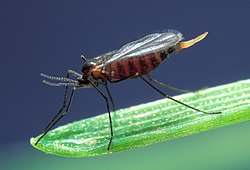
Picture of Sciaroidea
- Source
- Wikipedia/Commons
- Credit
- nobody named on the record
- Licence
- Public Domain
- Commercial use
- the licence allows it
No 3D scan of Sciaroidea was found in Sketchfab.
Smithsonian Open Access and MorphoSource were not reached for this taxon, so this list is what the others held rather than everything there is.
The description on this site
- Source
- Wikipedia, “Sciaroidea”
- Licence
- CC BY-SA 4.0
This is what the site found, which is not the same as what exists.
Keep going
What may have been alongside itBibionomorpha through timeFormations of the EoceneThe world it lived on
Occurrence data from the Paleobiology Database, CC BY 4.0. Billberg 1820