Selachii
No picture of Selachii was found. Wikidata and iDigBio were searched and had none. Wikipedia has a picture filed under this name, but nothing tied it to Selachii itself, so it was not used. Smithsonian Open Access did not answer, so this is what the others held rather than everything there is. GBIF was asked, and what came back is not recorded: nothing, or a picture this site could not tie to Selachii, or no answer at all. This entry cannot say which.
On record
Recorded, not inferred- Also called
- sharkPBDB
- Sits inside
- ElasmobranchiiPBDB
- Diet
- carnivorePBDB
- Life habit
- nektonicPBDB
- Motility
- actively mobilePBDB
Time the record covers
At least 335 million years on record.
The record covers at least 335.9 Mya to 774 ka. No occurrence read is dated outside 339.9 Mya to 129 ka.
123 occurrences of Selachii on record, most of them in the Late Cretaceous. The Paleobiology Database records this as a living group, and the chart stops with its fossils rather than at the present. Bar height is expected occurrences, not a count: each fossil is spread across the span it is dated to, so a tall narrow bar means tight dating and a low wide one means loose.
When
123 occurrences- Carboniferous20%
- Middle Triassicunder 1%
- Late Triassic5%
- Early Jurassicunder 1%
- Middle Jurassicunder 1%
- Late Jurassic2%
- Early Cretaceous2%
- Late Cretaceous35%
- Paleocene8%
- Eocene16%
- Oligocene3%
- Miocene6%
- Plioceneunder 1%
- Pleistoceneunder 1%
These are dates about fossils, not the animal: the record can only begin after it arose and end before it died out, so either end may reach further. Shares are expected occurrences: a fossil dated to a span is counted partly in each period it straddles. More on what this infers.
Found in
68 formations
- Cherryvale shale Formation · Kansas City Group13
- Hatchetigbee Bluff Formation · Wilcox Group8
- Tuscahoma Formation · Wilcox Group4
- Foraker Formation · Council Grove Group4
- Tropic Shale Formation4
- Greenhorn Limestone Formation4
Loading coastlines…
The named rock units Selachii has been recovered from, largest first. Drawn where the rock is now, not where it formed. 44 further formations hold fewer occurrences each and are not listed. 8 occurrences have no formation on record, which is common for older literature.
Selachii and its relatives
Late CretaceousWhere Selachii and its relatives were recorded in the Late Cretaceous.
Found in the same rock
1,650 taxa- Osteichthyes23 sites
- Ostrea18 sites
- Teleostei18 sites
- Turritella15 sites
- Testudines14 sites
- Reptilia13 sites
- Theropoda12 sites
- Crocodylia11 sites
- Batoidea10 sites
- Pitar10 sites
- Calyptraphorus9 sites
- Mosasauridae8 sites
- Actinopterygii7 sites
- Athleta7 sites
- Bullia altilis7 sites
- Gastropoda7 sites
- Glycymeris idonea7 sites
- Kapalmerella mortoni7 sites
- Macrocallista7 sites
- Pseudoliva vetusta7 sites
- Sinum7 sites
- Venericardia7 sites
- Venericardia (Venericor) bashiplata7 sites
- Balanophyllia desmophyllum6 sites
The Paleobiology Database records 109 sites for Selachii, and this reads all of them. The number is how many of those sites it was catalogued from too. The 24 sharing the most are listed.
This is not a list of everything alive at the time. It is only what has come out of the same ground as this animal and been written down.
Entered from
70 references- Conodonts and fish remains from the Cherokee, Kansas City, and Wabaunsee Groups of Missouri and Kansas18
- Stratigraphic Distribution of Paleocene and Eocene Fossils in the Eastern Gulf Coast Region15
- The Selsey Division (Bracklesham Group) at Lee-on-the-Solent, Gosport, (Hants)4
- Cretaceous sedimentation and tectonism in the southeastern Kaiparowits region, Utah4
- Rhaetian (Upper Triassic) marine faunas from "Le Golfe du Luxembourg" in Belgium (preliminary note)3
- Sirenian evolution in the North Pacific Ocean3
- Pennsylvanian Conodonts and Other Fossils from Insoluble Residues of the Minturn Formation (Desmoinesian), Colorado3
- Die Fauna der sogenannten Cardita- und Raibler-Schichten in den Nordtiroler und bayerischen Alpen.3
- Late Cretaceous marine vertebrates from the upper half of the Pfeifer Shale Member of the Greenhorn Limestone in central Kansas, USA, and comments on the geologically oldest mosasaur remains in Kansas2
- Will Downs and the Zinda Pir Dome2
- Carnivorous dinosaurs (Saurischia, Theropoda) from the Maastrichtian of the Volga-Don interfluve, Russia2
- Les faunes de vertébrés continentaux du Maastrichtien supérieur d'Europe: systématique et biodiversité [The continental vertebrate faunas of the upper Maastrichtian of Europe: systematics and biodiversity]2
Each of the 123 occurrences read was entered from one of these publications, ordered by how many each accounts for. This is not a search for papers mentioning the name. 58 further references are not listed. Entries link to doi.org where the Paleobiology Database holds an identifier, and to its own record where it does not. Relayed as the Paleobiology Database holds them, not checked against what they resolve to.
Media and terms
Media content1
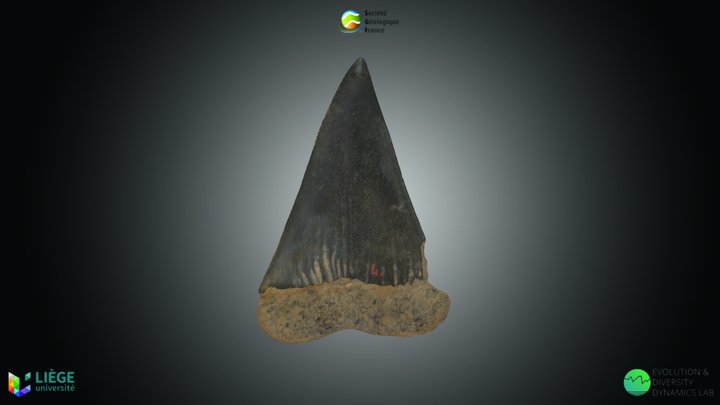
3D model
- Source
- Sketchfab
- Licence
- CC Attribution-NonCommercial-ShareAlike
- Commercial use
- the licence does not allow it
No picture of Selachii was found. Wikidata and iDigBio were searched and had none.
Wikipedia has a picture filed under this name, but nothing tied it to Selachii itself, so it was not used.
Smithsonian Open Access did not answer, so this is what the others held rather than everything there is.
GBIF was asked, and what came back is not recorded: nothing, or a picture this site could not tie to Selachii, or no answer at all. This entry cannot say which.
Smithsonian Open Access and MorphoSource were not reached for this taxon, so this list is what the others held rather than everything there is.
This is what the site found, which is not the same as what exists.
Keep going
What may have been alongside itElasmobranchii through timeFormations of the Late CretaceousThe world it lived on
Occurrence data from the Paleobiology Database, CC BY 4.0.