Skenidioides pyramidalis
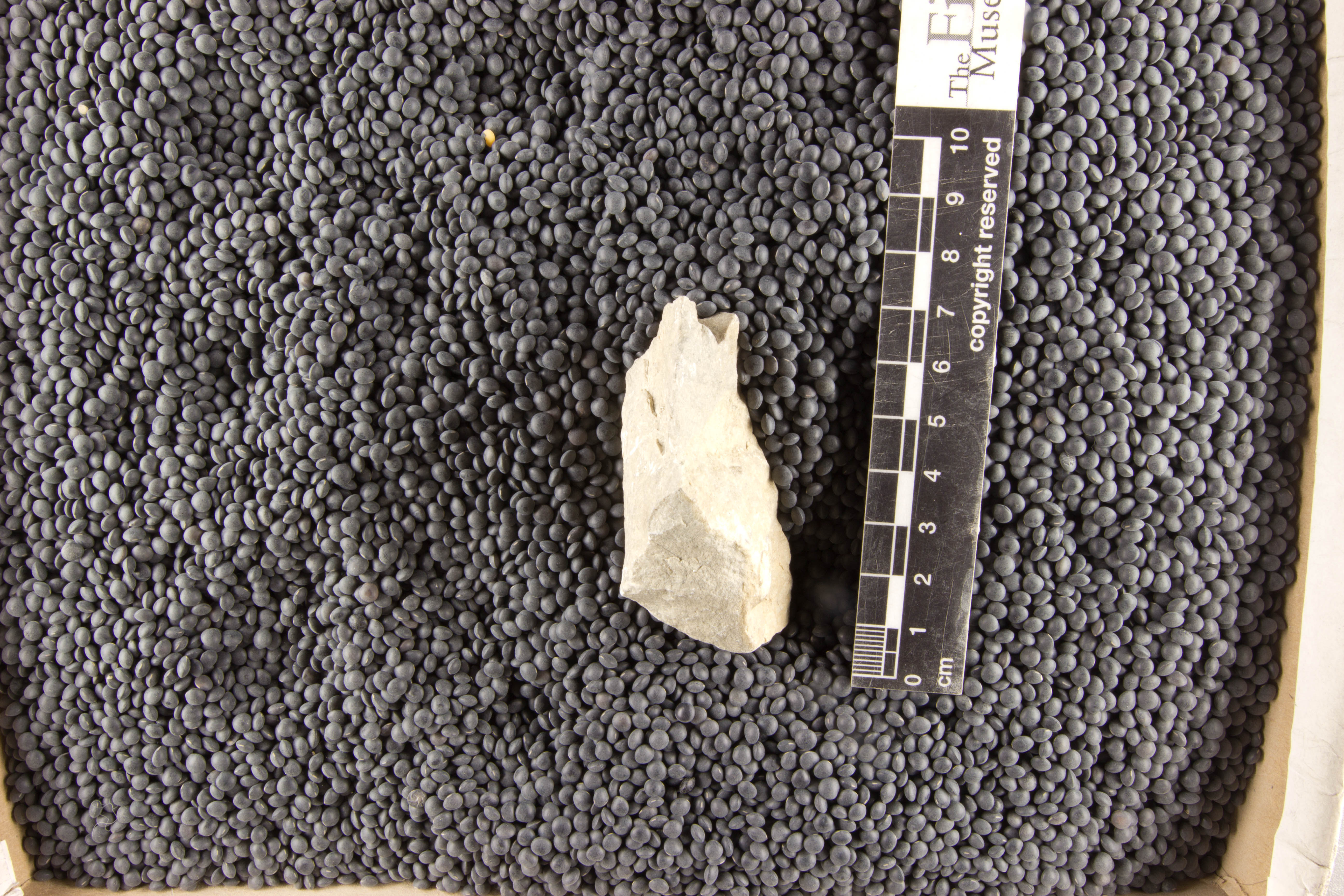
The Field Museum of Natural History · CC0 · via GBIF. May be a photograph of a specimen, or an artist’s reconstruction — an interpretation of a skeleton, since colour and soft tissue are almost never preserved.
On record
Recorded, not inferred- Sits inside
- SkenidioidesPBDB
- Diet
- suspension feederPBDB, for Skenidioides
- Life habit
- epifaunalPBDB, for Skenidioides
- Motility
- facultatively mobilePBDB, for Skenidioides
- Vision
- blindPBDB, for Rhynchonellata
- Environment
- marinePBDB, for Lophophorata
Time the record covers
At least 7.9 million years on record.
The record covers at least 432.9 Mya to 425 Mya. No occurrence read is dated outside 443.1 Mya to 422.7 Mya.
10 occurrences of Skenidioides pyramidalis on record, most of them in the Silurian. Bar height is expected occurrences, not a count: each fossil is spread across the span it is dated to, so a tall narrow bar means tight dating and a low wide one means loose.
When
10 occurrences- Silurian100%
These are dates about fossils, not the animal: the record can only begin after it arose and end before it died out, so either end may reach further. Shares are expected occurrences: a fossil dated to a span is counted partly in each period it straddles. More on what this infers.
Found in
4 formations
- Williamson Shale Formation · Clinton Group6
- Rochester Shale Formation · Clinton Group2
- Wabash Formation1
- Irondequoit Limestone Formation · Clinton Group1
Loading coastlines…
The named rock units Skenidioides pyramidalis has been recovered from, largest first. Drawn where the rock is now, not where it formed.
Skenidioides pyramidalis and its relatives
SilurianWhere Skenidioides pyramidalis and its relatives were recorded in the Silurian.
Found in the same rock
216 taxa- Atrypa reticularis9 sites
- Fardenia (Coolinia)9 sites
- Leptaena rhomboidalis9 sites
- Dicoelosia biloba8 sites
- Eoplectodonta (Eoplectodonta) transversalis8 sites
- Craniops7 sites
- Eospirifer radiatus7 sites
- Mastigobolbina7 sites
- Atrypina disparilis6 sites
- Dibolbina6 sites
- Dictyonema6 sites
- Monograptus6 sites
- Resserella elegantula6 sites
- Retiolites geinitzianus6 sites
- Beyrichia5 sites
- Chonetes5 sites
- Cornellites5 sites
- Dalejina hybrida5 sites
- Dalmanites5 sites
- Enterolasma5 sites
- Favosites5 sites
- Fenestella5 sites
- Murchisonia subulata5 sites
- Orthoceras5 sites
The Paleobiology Database records 10 sites for Skenidioides pyramidalis, and this reads all of them. The number is how many of those sites it was catalogued from too. The 24 sharing the most are listed.
This is not a list of everything alive at the time. It is only what has come out of the same ground as this animal and been written down.
Entered from
3 references- Bathymetry and paleoecology of Silurian benthic assemblages, late Llandoverian, New York State5
- Wenlockian fossil communities in New York State and adjacent areas: Paleontology and Paleoecology4
- Paleoecology and Petrology of Pipe Creek Jr. Reef (Niagaran-Cayugan), Grant County, Indiana1
Each of the 10 occurrences read was entered from one of these publications, ordered by how many each accounts for. This is not a search for papers mentioning the name. Entries link to doi.org where the Paleobiology Database holds an identifier, and to its own record where it does not. Relayed as the Paleobiology Database holds them, not checked against what they resolve to.
Media and terms
Media content1
Picture of Skenidioides pyramidalis
- Source
- GBIF
- Credit
- The Field Museum of Natural History
- Licence
- CC0
- Commercial use
- the licence allows it
No 3D scan of Skenidioides pyramidalis was found in MorphoSource and Sketchfab.
Smithsonian Open Access was not reached for this taxon, so this list is what the others held rather than everything there is.
This is what the site found, which is not the same as what exists.
Keep going
What may have been alongside itSkenidioides through timeFormations of the SilurianThe world it lived on
Occurrence data from the Paleobiology Database, CC BY 4.0. (Twenhofel 1928)