Sphagnum
Sphagnum is a genus of approximately 380 accepted species of mosses, commonly known as sphagnum moss, also bog moss and quacker moss. Accumulations of Sphagnum can store water, since both living and dead plants can hold large quantities of water inside their cells; plants may hold 16 to 26 times as much water as their dry weight, depending on the species. The empty cells help retain water in drier conditions.

Uncredited · via Wikipedia/Commons. May be a photograph of a specimen, or an artist’s reconstruction — an interpretation of a skeleton, since colour and soft tissue are almost never preserved.
On record
Recorded, not inferred- Also called
- peat mossPBDB
- Sits inside
- SphagnaceaePBDB
- Diet
- "photoautotroph"PBDB, for Streptophyta
Time the record covers
At least 113 million years on record.
The record covers at least 113.2 Mya to 11.7 ka. No occurrence read is dated outside 121.4 Mya to 0 Mya.
201 occurrences of Sphagnum on record, most of them in the Pleistocene. The Paleobiology Database records this as a living group. Bar height is expected occurrences, not a count: each fossil is spread across the span it is dated to, so a tall narrow bar means tight dating and a low wide one means loose.
When
201 occurrences- Early Cretaceousunder 1%
- Paleocene8%
- Eocene3%
- Oligocene1%
- Miocene6%
- Pliocene7%
- Pleistocene75%
- Holocene1%
These are dates about fossils, not the animal: the record can only begin after it arose and end before it died out, so either end may reach further. Shares are expected occurrences: a fossil dated to a span is counted partly in each period it straddles. More on what this infers.
Found in
7 formations
- Naborton Formation · Wilcox Group4
- Dolet Hills Formation · Wilcox Group3
- Aluginskaya Formation2
- Tuscahoma Formation2
- Haughton Formation1
- Kovachinskaya Formation1
Loading coastlines…
The named rock units Sphagnum has been recovered from, largest first. Drawn where the rock is now, not where it formed. 187 occurrences have no formation on record, which is common for older literature.
Sphagnum and its relatives
PleistoceneWhere Sphagnum and its relatives were recorded in the Pleistocene.
Found in the same rock
583 taxa- Picea141 sites
- <Undifferentiated pollen from trees>121 sites
- Pteridophyta110 sites
- <Reworked palynomorphs>102 sites
- Chlorophyceae99 sites
- Pinus92 sites
- <Undifferentiated pollen from shrubs>71 sites
- <Undifferentiated pollen from herbs>44 sites
- Poaceae41 sites
- Asteraceae40 sites
- Ericaceae33 sites
- Apiaceae31 sites
- Cyperaceae29 sites
- Proteaceae29 sites
- Cupressaceae27 sites
- Myrtaceae27 sites
- Araucariaceae26 sites
- Plantago26 sites
- Podocarpus26 sites
- Botryococcus25 sites
- Casuarinaceae25 sites
- Alnus24 sites
- Polypodiaceae24 sites
- Betula23 sites
The Paleobiology Database records 197 sites for Sphagnum, and this reads all of them. The number is how many of those sites it was catalogued from too. The 24 sharing the most are listed.
This is not a list of everything alive at the time. It is only what has come out of the same ground as this animal and been written down.
Entered from
19 references- Site U134460
- Site U134345
- Early Pleistocene vegetation change in upland south-eastern Australia20
- Site U134519
- Ecology of Paleocene & Eocene vegetation at Kakahu, South Canterbury, New Zealand10
- Palynology of Paleocene lignite beds and associated detrital strata from Louisiana and Mississippi9
- Niche evolution versus niche conservatism and habitat loss determine persistence and extirpation in late Neogene European Fagaceae8
- Stratigraphic, Paleoclimatic, and Paleobiogeographic Significance of Tertiary Sporomorphs from Massachusetts8
- A Catalogue of Fossil Plants from India Part 6: Cenozoic (Quaternary) Palynology and Palaeobotany6
- Raschleneniye oligotsen-nizhnemiotsenovykh tolshch vostochnoy Kamchatki (zaliv Korfa). Subdivision of Oligocene-lower Miocene layers of eastern Kamchatka, Gulf of Korfa4
- Pre-Late Wisconsinan Pleistocene biota from southeastern Michigan, U.S.A.3
- Miocenska Flora ze Starych Gliwic na Slasku (Miocene Flora of Stare Gliwice in Upper Silesia)2
Each of the 201 occurrences read was entered from one of these publications, ordered by how many each accounts for. This is not a search for papers mentioning the name. 7 further references are not listed. Entries link to doi.org where the Paleobiology Database holds an identifier, and to its own record where it does not. Relayed as the Paleobiology Database holds them, not checked against what they resolve to.
Media and terms
Media content2
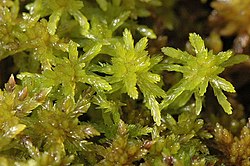
Picture of Sphagnum
- Source
- Wikipedia/Commons
- Credit
- nobody named on the record
- Licence
- not stated by the source
- Commercial use
- cannot be read from the licence given — check the record
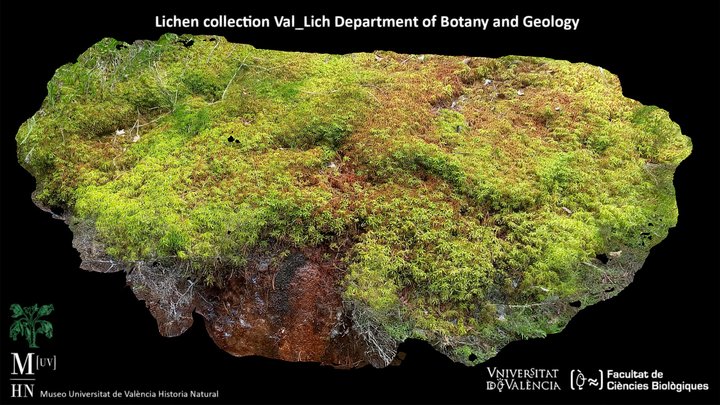
3D model
- Source
- Sketchfab
- Licence
- CC Attribution
- Commercial use
- cannot be read from the licence given — check the record
Smithsonian Open Access and MorphoSource were not reached for this taxon, so this list is what the others held rather than everything there is.
The description on this site
- Source
- Wikipedia, “Sphagnum”
- Licence
- CC BY-SA 4.0
This is what the site found, which is not the same as what exists.
Keep going
What may have been alongside itSphagnaceae through timeFormations of the PleistoceneThe world it lived on
Occurrence data from the Paleobiology Database, CC BY 4.0. Linnaeus 1753