Squalus
Squalus is a genus of dogfish sharks in the family Squalidae. Commonly known as spurdogs, these sharks are characterized by smooth dorsal fin spines, teeth in upper and lower jaws similar in size, caudal peduncle with lateral keels; upper precaudal pit usually present, and caudal fin without subterminal notch. In spurdogs, the hyomandibula is oriented at a right angle to the neurocranium, while in other sharks, the hyomandibula runs more parallel to the body. This led some to think that the upper jaw of Squalus would not be as protractile as the jaws of other sharks. However, a study that compared different jaw suspension types in sharks showed that this is not the case and that Squalus is quite capable of protruding its upper jaw during feeding.

Uncredited · Public Domain · via Wikidata/Commons. May be a photograph of a specimen, or an artist’s reconstruction — an interpretation of a skeleton, since colour and soft tissue are almost never preserved.
On record
Recorded, not inferred- Sits inside
- SqualidaePBDB
- Diet
- carnivorePBDB, for Squaliformes
- Life habit
- nektonicPBDB, for Squaliformes
- Motility
- actively mobilePBDB, for Squaliformes
Time the record covers
At least 161 million years on record.
The record covers at least 161.5 Mya to 11.7 ka. No occurrence read is dated outside 165.3 Mya to 0 Mya.
333 occurrences of Squalus on record, most of them in the Oligocene. The Paleobiology Database records this as a living group. Bar height is expected occurrences, not a count: each fossil is spread across the span it is dated to, so a tall narrow bar means tight dating and a low wide one means loose.
When
333 occurrences- Middle Jurassicunder 1%
- Late Cretaceous20%
- Paleocene13%
- Eocene18%
- Oligocene27%
- Miocene18%
- Pliocene3%
- Pleistocene2%
- Holoceneunder 1%
These are dates about fossils, not the animal: the record can only begin after it arose and end before it died out, so either end may reach further. Shares are expected occurrences: a fossil dated to a span is counted partly in each period it straddles. More on what this infers.
Found in
106 formations
- Boom Clay Formation63
- La Meseta Formation20
- Mesaverde Formation12
- Fox Hills Formation7
- Sables de Bracheux Formation7
- Dongen Formation7
Loading coastlines…
The named rock units Squalus has been recovered from, largest first. Drawn where the rock is now, not where it formed. 82 further formations hold fewer occurrences each and are not listed. 57 occurrences have no formation on record, which is common for older literature.
Squalus and its relatives
OligoceneWhere Squalus and its relatives were recorded in the Oligocene.
Found in the same rock
2,886 taxa- Raja46 sites
- Squatina45 sites
- Dasyatis34 sites
- Keasius parvus32 sites
- Atlantoraja cecilae29 sites
- Myliobatis29 sites
- Galeocerdo aduncus27 sites
- Carcharodon hastalis26 sites
- Carcharias acutissimus25 sites
- Heterodontus25 sites
- Scyliorhinus25 sites
- Hemipristis serra24 sites
- Otodus megalodon22 sites
- Squatina prima21 sites
- Carcharhinus20 sites
- Carcharias cuspidatus20 sites
- Gadidarum parvus20 sites
- Notorynchus primigenius20 sites
- Odontaspis winkleri18 sites
- Pachygaleus lefevrei18 sites
- Carcharias17 sites
- Cretorectolobus olsoni17 sites
- Hexanchus17 sites
- Argentina16 sites
The Paleobiology Database records 294 sites for Squalus, and this reads 240 of them. The number is how many of those sites it was catalogued from too. The 24 sharing the most are listed.
This is not a list of everything alive at the time. It is only what has come out of the same ground as this animal and been written down.
Entered from
129 references- Biostratigraphie et poissons fossiles de la formation de l'Argile de Boom (Oligocène moyen du Bassin Belge)59
- Maastrichtian squaloid sharks from southern Sweden18
- Eocene squalomorph sharks (Chondrichthyes, Elasmobranchii) from Antarctica12
- A new selachian fauna from the late Campanian of Wyoming (Teapot Sandstone Member, Mesaverde Formation, Big Horn Basin)12
- Middle Eocene chondrichthyan fauna from Antarctic Peninsula housed in the Museo de La Plata, Argentina7
- Chondrichthyan and osteichthyan paleofaunas from the Cretaceous (Late Maastrichtian) Fox Hills Formation of North Dakota, USA: paleoecology, paleogeography, and extinction7
- Contribution à l'étude des élasmobranches du Thanétien (Paléocène) du Bassin de Paris. 1. Découverte d'une faune d'elasmobranches dans la partie supérieure des Sables de Bracheux (Thanétien, Paléocène du Bassin de Paris) des régions de Compiègne (Oise) et de Montdidier (Somme)7
- Elasmobranch teeth (Vertebrata, Pisces) from the Dongen Formation (Eocene) in The Netherlands7
- Inventaire des Élasmobranches (requins, raies, chimères) des dépôts molassiques du Sud-Luberon (Miocène supérieur)6
- Les élasmobranches du Thanétien (Paléocène) du Nord de la France, des carrières de Templeuve et de Leforest6
- Sharks from the La Meseta Formation (Eocene), Seymour Island, Antarctic Peninsula6
- Les sélaciens des terrains néocrétacés and paléocènes de Belgique and des contrées limitrophes. Eléments d'une biostratigraphie intercontinentale6
Each of the 333 occurrences read was entered from one of these publications, ordered by how many each accounts for. This is not a search for papers mentioning the name. 117 further references are not listed. Entries link to doi.org where the Paleobiology Database holds an identifier, and to its own record where it does not. Relayed as the Paleobiology Database holds them, not checked against what they resolve to.
Media and terms
Media content3
Picture of Squalus
- Source
- Wikidata/Commons
- Credit
- nobody named on the record
- Licence
- Public Domain
- Commercial use
- the licence allows it
CT scan
- Source
- MorphoSource
- Credit
- 3D Anatomy Studios
- Licence
- In Copyright
- Commercial use
- cannot be read from the licence given — check the record
- Specimen
- Squalus acanthias · 3DAS:00003
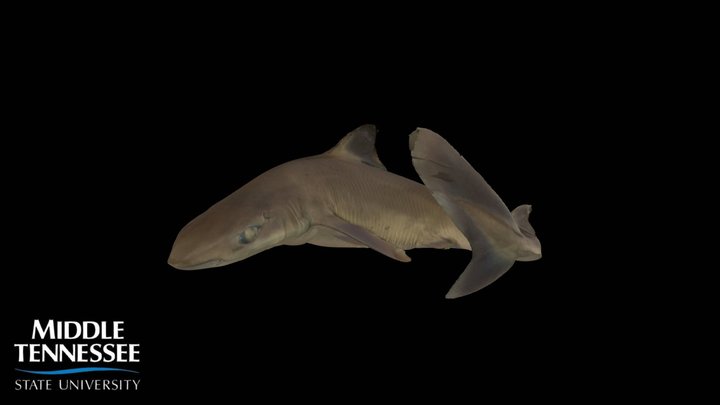
3D model
- Source
- Sketchfab
- Credit
- MTSUichthyology
- Licence
- CC Attribution
- Commercial use
- cannot be read from the licence given — check the record
The description on this site
- Source
- Wikipedia, “Spurdog”
- Licence
- CC BY-SA 4.0
This is what the site found, which is not the same as what exists.
Keep going
What may have been alongside itSqualidae through timeFormations of the OligoceneThe world it lived on
Occurrence data from the Paleobiology Database, CC BY 4.0. Linnaeus 1758