Hexanchus
The sixgill sharks are a genus, Hexanchus, of deepwater sharks in the family Hexanchidae. These sharks are characterized by a broad, pointed head, six pairs of gill slits, comb-like, yellow lower teeth, and a long tail. The largest species can grow up to 8 m (26 ft) long and weigh over 600 kg (1,300 lb). They are continental shelf-dwelling and abyssal plain scavengers with a keen sense of smell and are among the first to arrive at carrion, together with hagfish and rattails. They show a characteristic rolling motion of the head when feeding.

NOAA · Public Domain · via Wikipedia/Commons. May be a photograph of a specimen, or an artist’s reconstruction — an interpretation of a skeleton, since colour and soft tissue are almost never preserved.
On record
Recorded, not inferred- Also called
- sixgill sharkPBDB
- Sits inside
- HexanchidaePBDB
- Diet
- carnivorePBDB, for Hexanchiformes
- Life habit
- nektonicPBDB, for Hexanchiformes
- Motility
- actively mobilePBDB, for Hexanchiformes
Time the record covers
At least 111 million years on record.
The record covers at least 113.2 Mya to 1.8 Mya. No occurrence read is dated outside 121.4 Mya to 774 ka.
177 occurrences of Hexanchus on record, most of them in the Late Cretaceous. The Paleobiology Database records this as a living group, and the chart stops with its fossils rather than at the present. Bar height is expected occurrences, not a count: each fossil is spread across the span it is dated to, so a tall narrow bar means tight dating and a low wide one means loose.
When
177 occurrences- Early Cretaceous1%
- Late Cretaceous29%
- Paleocene8%
- Eocene28%
- Oligocene5%
- Miocene21%
- Pliocene7%
- Pleistocene1%
These are dates about fossils, not the animal: the record can only begin after it arose and end before it died out, so either end may reach further. Shares are expected occurrences: a fossil dated to a span is counted partly in each period it straddles. More on what this infers.
Found in
85 formations
- Gehannam Formation10
- Marnes de Donzacq Formation7
- Yamaga Formation · Ashiya Group5
- Hornerstown Formation · Rancocas Group4
- Birket Qarun Formation4
- Gerhartsreit Formation4
Loading coastlines…
The named rock units Hexanchus has been recovered from, largest first. Drawn where the rock is now, not where it formed. 61 further formations hold fewer occurrences each and are not listed. 40 occurrences have no formation on record, which is common for older literature.
Hexanchus and its relatives
Late CretaceousWhere Hexanchus and its relatives were recorded in the Late Cretaceous.
Found in the same rock
2,014 taxa- Carcharodon hastalis31 sites
- Squatina29 sites
- Dasyatis28 sites
- Otodus megalodon27 sites
- Myliobatis26 sites
- Squalus25 sites
- Cretalamna appendiculata23 sites
- Galeocerdo aduncus20 sites
- Hemipristis serra20 sites
- Isurus oxyrinchus19 sites
- Galeorhinus18 sites
- Carcharhinus17 sites
- Carcharhinus priscus17 sites
- Heterodontus17 sites
- Carcharias16 sites
- Scyliorhinus16 sites
- Odontaspis15 sites
- Pristiophorus15 sites
- Rhinobatos14 sites
- Squalicorax pristodontus14 sites
- Squatina prima14 sites
- Striatolamia macrota14 sites
- Heterodontus vincenti13 sites
- Negaprion13 sites
The Paleobiology Database records 155 sites for Hexanchus, and this reads all of them. The number is how many of those sites it was catalogued from too. The 24 sharing the most are listed.
This is not a list of everything alive at the time. It is only what has come out of the same ground as this animal and been written down.
Entered from
107 references- Shark and ray faunas in the Middle and Late Eocene of the Fayum Area, Egypt14
- Nouvelle faunes de sélaciens (Elasmobranchii, Neoselachii) de l'Eocène moyen des Landes (Sud-Ouest, France). Implication dans la connaissance des communautés de sélaciens d'eau profondes8
- Late Mesozoic and Cenozoic fish faunas of Japan6
- Senonian elasmobranch teeth from Israel. Biostratigraphic and paleoenvironmental implications5
- Shifts in composition of northern Tethyan elasmobranch assemblages during the last millennia of the Cretaceous4
- A shark fauna from the Campanian of Hornby Island, British Columbia, Canada: an insight into the diversity of Cretaceous deep-water assemblages3
- Features and paleoecological significance of the shark fauna from the Upper Cretaceous Hinoshima Formation, Himenoura Group, southwest Japan3
- Neoselachians and Chimaeriformes (Chondrichthyes) from the latest Cretaceous-Paleogene of Sierra Baguales, southernmost Chile. Chronostratigraphic, paleobiogeographic and paleoenvironmental implications3
- Habitat reconstruction of Oligocene elasmobranchs from Yamaga Formation, Ashiya Group, western Japan3
- The marine vertebrate faunas from the Late Cretaceous phosphates of Syria3
- Late Cenozoic elasmobranchs from the Hokuriku district, central Japan3
- Detailed comparisons of the dentitions of extant hexanchid sharks and Tertiary hexanchid teeth from South Australia and Victoria, Australia3
Each of the 177 occurrences read was entered from one of these publications, ordered by how many each accounts for. This is not a search for papers mentioning the name. 95 further references are not listed. Entries link to doi.org where the Paleobiology Database holds an identifier, and to its own record where it does not. Relayed as the Paleobiology Database holds them, not checked against what they resolve to.
Media and terms
Media content3

Picture of Hexanchus
- Source
- Wikipedia/Commons
- Credit
- NOAA
- Licence
- Public Domain
- Commercial use
- the licence allows it
CT scan
- Source
- MorphoSource
- Licence
- not stated by the source
- Commercial use
- cannot be read from the licence given — check the record
- Specimen
- Hexanchus vitulus · uf:fish:246748
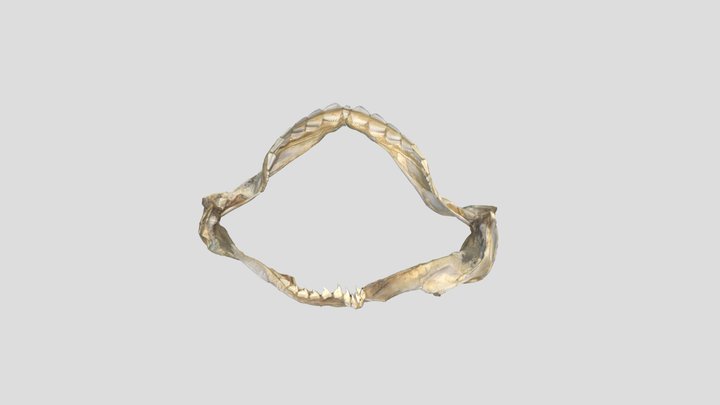
3D model
- Source
- Sketchfab
- Licence
- CC Attribution-NonCommercial
- Commercial use
- the licence does not allow it
The description on this site
- Source
- Wikipedia, “Hexanchus”
- Licence
- CC BY-SA 4.0
This is what the site found, which is not the same as what exists.
Keep going
What may have been alongside itHexanchidae through timeFormations of the Late CretaceousThe world it lived on
Occurrence data from the Paleobiology Database, CC BY 4.0. (Rafinesque 1810)