Syncerus caffer
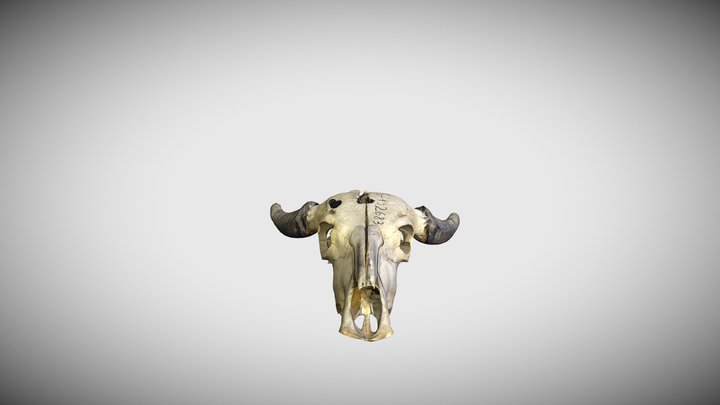
The African buffalo is a large species of true buffalo native to Sub-Saharan Africa, where it is found in a number of disconnected ranges stretching from south-eastern Senegal through West and Central Africa to South Africa. The adult African buffalo's horns are its characteristic feature: they have fused bases that form a continuous bone shield, referred to as a "boss", across the top of the head. The African buffalo is more closely related to Asian buffalo (Bubalus) species than it is to other bovids such as American bison or domestic cattle. Its unpredictable temperament may be part of the reason that the African buffalo has never been domesticated and has no domesticated descendants, unlike the wild yak and wild water buffalo, which are the ancestors of the domestic yak and water buffalo, respectively. Natural predators of adult African buffaloes include lions, African wild dogs, spotted hyenas, and Nile crocodiles. As one of the Big Five game animals, the Cape buffalo, the largest subspecies native to eastern and southern Africa, is a sought-after trophy in hunting.

Charles J. Sharp · CC BY-SA 4.0 · via Wikipedia/Commons. May be a photograph of a specimen, or an artist’s reconstruction — an interpretation of a skeleton, since colour and soft tissue are almost never preserved.
On record
Recorded, not inferred- Also called
- African buffaloPBDB
- Sits inside
- SyncerusPBDB
- Diet
- grazer, browserPBDB, for Bovidae
- Life habit
- ground dwellingPBDB, for Bovidae
- Motility
- actively mobilePBDB, for Osteichthyes
- Environment
- terrestrialPBDB, for Artiodactyla
Time the record covers
At least 2.5 million years on record.
The record covers at least 2.58 Mya to 11.7 ka. No occurrence read is dated outside 3.6 Mya to 0 Mya.
49 occurrences of Syncerus caffer on record, most of them in the Pleistocene. Bar height is expected occurrences, not a count: each fossil is spread across the span it is dated to, so a tall narrow bar means tight dating and a low wide one means loose.
When
49 occurrences- Pliocene2%
- Pleistocene53%
- Holocene45%
These are dates about fossils, not the animal: the record can only begin after it arose and end before it died out, so either end may reach further. Shares are expected occurrences: a fossil dated to a span is counted partly in each period it straddles. More on what this infers.
Found in
5 formations
- Nachukui Formation · Omo Group2
- Mbuga Clays Formation1
- Kapthurin Formation1
- Rietputs Formation1
- Makapansgat Formation1
Loading coastlines…
The named rock units Syncerus caffer has been recovered from, largest first. Drawn where the rock is now, not where it formed. 43 occurrences have no formation on record, which is common for older literature.
Syncerus caffer and its relatives
PleistoceneWhere Syncerus caffer and its relatives were recorded in the Pleistocene.
Found in the same rock
397 taxa- Hippopotamus amphibius26 sites
- Phacochoerus aethiopicus26 sites
- Taurotragus oryx23 sites
- Procavia capensis21 sites
- Alcelaphus buselaphus19 sites
- Hystrix africaeaustralis19 sites
- Potamochoerus porcus19 sites
- Tragelaphus strepsiceros18 sites
- Bovidae17 sites
- Homo sapiens17 sites
- Raphicerus campestris17 sites
- Redunca fulvorufula17 sites
- Tragelaphus scriptus17 sites
- Equus quagga burchelli16 sites
- Loxodonta africana16 sites
- Papio ursinus16 sites
- Oreotragus oreotragus15 sites
- Felis lybica14 sites
- Lupulella mesomelas14 sites
- Diceros bicornis13 sites
- Suidae13 sites
- Aepyceros melampus12 sites
- Bos taurus12 sites
- Mellivora capensis12 sites
The Paleobiology Database records 49 sites for Syncerus caffer, and this reads all of them. The number is how many of those sites it was catalogued from too. The 24 sharing the most are listed.
This is not a list of everything alive at the time. It is only what has come out of the same ground as this animal and been written down.
Entered from
35 references- Paleoenvironmental and Cultural Implications of Late Holocene Archaeological Faunas from the Orange Free State and North Central Cape Province, South Africa8
- Later Stone Age Faunal Samples from Heuningneskrans Shelter (Transvaal) and Leopard's Hill Cave (Zambia)4
- Late Pleistocene hunter-gatherers at Ishango (eastern Zaire): the faunal evidence2
- Stratigraphy and Paleontology of pliocene and Pleistocene Localities West of Lake Turkana, Kenya2
- The Mammalian Fauna of the Klasies River Mouth Sites, Southern Cape Province, South Africa2
- The Prehistory of Eastern Zambia2
- Dating, Archaeology and Human Fossils from the Middle Stone Age Levels of Die Kelders, South Africa1
- Environmental, Ecological and Paleoanthropological Implications of the Late Pleistocene Mammalian Fauna from Equus Cave, Northern Cape Province, South Africa1
- The Archaeological Significance of Animal Bones from Acheulean Sites in Southern Africa1
- Late Pleistocene and Early Holocene Occupations in the Upper Atbara River Valley, Sudan1
- Provenience, Age and Associations of Archaic Homo Sapiens Crania fron Lake Eyasi, Tanzania1
- The ES-11693 Cranium from Eliye Springs, West Turkana, Kenya1
Each of the 49 occurrences read was entered from one of these publications, ordered by how many each accounts for. This is not a search for papers mentioning the name. 23 further references are not listed. Entries link to doi.org where the Paleobiology Database holds an identifier, and to its own record where it does not. Relayed as the Paleobiology Database holds them, not checked against what they resolve to.
Media and terms
Media content4

Picture of Syncerus caffer
- Source
- Wikipedia/Commons
- Credit
- Charles J. Sharp
- Licence
- CC BY-SA 4.0
- Commercial use
- the licence allows it
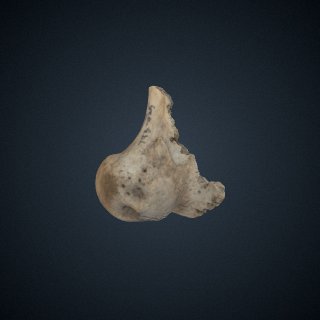
3D scan
- Source
- Smithsonian
- Licence
- CC0 — this site’s default, not the record’s
- Commercial use
- the licence allows it
- Specimen
- Syncerus caffer
Structured light scan
- Source
- MorphoSource
- Licence
- In Copyright
- Commercial use
- cannot be read from the licence given — check the record
- Specimen
- Syncerus caffer · FMNH:Mammals:101983
The description on this site
- Licence
- CC BY-SA 4.0
This is what the site found, which is not the same as what exists.
Keep going
What may have been alongside itSyncerus through timeFormations of the PleistoceneThe world it lived on
Occurrence data from the Paleobiology Database, CC BY 4.0. (Sparman 1779)