Xiphiorhynchus
Xiphiorhynchus is an extinct genus of prehistoric swordfish that lived from the Eocene until the Miocene. Unlike the modern swordfish, both the upper and lower jaws of Xiphiorhynchus were extended into blade-like points. The largest member of this genus, Xiphiorhynchus rotundus, was at least 5.1 meters in length and had an estimate weight of 708 kilograms, making it larger than any record extant billfish, and largest billfish ever known.

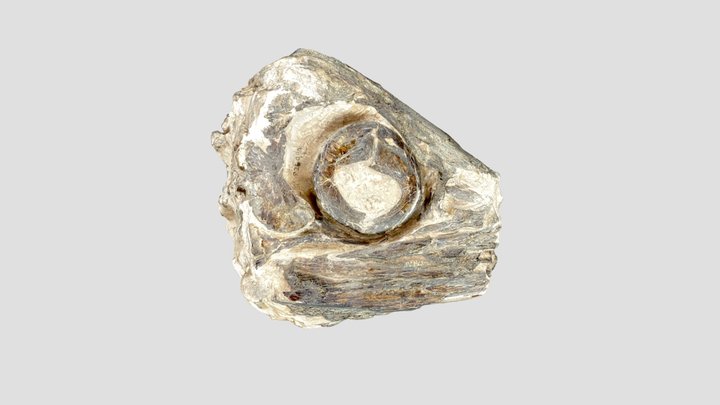
Ghedoghedo · CC BY-SA 3.0 · via Wikipedia/Commons. May be a photograph of a specimen, or an artist’s reconstruction — an interpretation of a skeleton, since colour and soft tissue are almost never preserved.
On record
Recorded, not inferred- Sits inside
- XiphiorhynchinaePBDB
- Motility
- actively mobilePBDB, for Osteichthyes
Time the record covers
At least 40 million years on record.
The record covers at least 48.07 Mya to 7.246 Mya. No occurrence read is dated outside 56 Mya to 5.333 Mya.
17 occurrences of Xiphiorhynchus on record, most of them in the Eocene. Bar height is expected occurrences, not a count: each fossil is spread across the span it is dated to, so a tall narrow bar means tight dating and a low wide one means loose.
When
17 occurrencesThese are dates about fossils, not the animal: the record can only begin after it arose and end before it died out, so either end may reach further. Shares are expected occurrences: a fossil dated to a span is counted partly in each period it straddles. More on what this infers.
Found in
12 formations
- Chandler Bridge Formation · Cooper Group2
- Yazoo Formation · Jackson Group2
- London Clay Formation2
- Red Bluff Clay Formation · Vicksburg Group2
- Elmore Formation · Bracklesham Group1
- Selsey Formation · Bracklesham Group1
Loading coastlines…
The named rock units Xiphiorhynchus has been recovered from, largest first. Drawn where the rock is now, not where it formed. 1 occurrence has no formation on record, which is common for older literature.
Xiphiorhynchus and its relatives
EoceneWhere Xiphiorhynchus and its relatives were recorded in the Eocene.
Found in the same rock
520 taxa- Cylindracanthus rectus8 sites
- Myliobatis7 sites
- Rhinoptera6 sites
- Brachycarcharias lerichei5 sites
- Basilosauridae4 sites
- Carcharias hopei4 sites
- Heterodontus vincenti4 sites
- Isurus praecursor4 sites
- Premontreia (Oxyscyllium) gilberti4 sites
- Pristis lathami4 sites
- Squatina prima4 sites
- Striatolamia macrota4 sites
- Trichiurides sagittidens4 sites
- Abdounia enniskilleni3 sites
- Acipenser toliapicus3 sites
- Aetobatus3 sites
- Aetobatus irregularis3 sites
- Aetomylaeus dixoni3 sites
- Albula oweni3 sites
- Carcharhinus gibbesii3 sites
- Conger3 sites
- Edaphodon eurygnathus3 sites
- Galeocerdo clarkensis3 sites
- Hemipristis curvatus3 sites
The Paleobiology Database records 14 sites for Xiphiorhynchus, and this reads all of them. The number is how many of those sites it was catalogued from too. The 24 sharing the most are listed.
This is not a list of everything alive at the time. It is only what has come out of the same ground as this animal and been written down.
Entered from
15 references- Preliminary report on the fishes (Chondrichthyes & Teleostei) from the lower Oligocene (Rupelian) Red Bluff Clay at site AMo-9, Monroe County, Alabama, USA2
- Casier, 19662
- Late Eocene fishes from the Tupelo Bay Formation of South Carolina, USA1
- A new specimen of Xiphiorhynchus cf. X. aegyptiacus (Istiophoriformes, Xiphioidei, Xiphiidae) and Billfish Diversity in the Oligocene of South Carolina1
- Weddellian marine/coastal vertebrates diversity from a basal horizon (Ypresian, Eocene) of the Cucullaea I Allomember, La Meseta formation, Seymour (Marambio) Island, Antarctica1
- Specimens of the Billfish Xiphiorhynchus Van Beneden, 1871, From the Yazoo Clay Formation (Late Eocene), Louisiana1
- Xiphiorhynchus cf. X. eocaenicus (Woodward, 1901), (Scombroidei: Xiphiidae: Xiphiorhynchinae) from the middle Eocene of Mississippi, the first transatlantic distribution of a species of Xiphiorhynchus1
- Taxonomic revision and stratigraphic provenance of '†Histiophorus rotundus' Woodward 1901 (Teleostei, Perciformes)1
- Paleoenvironment of a diverse marine vertebrate fauna from the Yazoo Clay (Late Eocene) at Copenhagen, Caldwell Parish, Louisiana1
- The Selsey Division (Bracklesham Group) at Lee-on-the-Solent, Gosport, (Hants)1
- Geology and paleontology of late Cenozoic marine deposits in the Sacaco area (Peru)1
- Messinian marine fish communities of the Mediterranean Sea1
Each of the 17 occurrences read was entered from one of these publications, ordered by how many each accounts for. This is not a search for papers mentioning the name. 3 further references are not listed. Entries link to doi.org where the Paleobiology Database holds an identifier, and to its own record where it does not. Relayed as the Paleobiology Database holds them, not checked against what they resolve to.
Media and terms
Media content2

Picture of Xiphiorhynchus
- Source
- Wikipedia/Commons
- Credit
- Ghedoghedo
- Licence
- CC BY-SA 3.0
- Commercial use
- the licence allows it
Smithsonian Open Access was not reached for this taxon, so this list is what the others held rather than everything there is.
The description on this site
- Licence
- CC BY-SA 4.0
This is what the site found, which is not the same as what exists.
Keep going
What may have been alongside itXiphiorhynchinae through timeFormations of the EoceneThe world it lived on
Occurrence data from the Paleobiology Database, CC BY 4.0. Van Beneden 1871