Anoura
Anoura is a genus of leaf-nosed bats from Central and South America. Anoura members lack or have a short tail, and are nectarivorous bats of small to medium size among the Phyllostomidae.

NBII · Public Domain · via Wikipedia/Commons. May be a photograph of a specimen, or an artist’s reconstruction — an interpretation of a skeleton, since colour and soft tissue are almost never preserved.
On record
Recorded, not inferred- Also called
- tailless batPBDB
- Sits inside
- GlossophaginaePBDB
- Diet
- omnivorePBDB, for Phyllostomidae
- Life habit
- volantPBDB, for Chiroptera
- Motility
- actively mobilePBDB, for Osteichthyes
- Environment
- terrestrialPBDB, for Chiroptera
Time the record covers
At least 22 million years on record.
The record covers at least 23.04 Mya to 129 ka. No occurrence read is dated outside 27.3 Mya to 11.7 ka.
2 occurrences of Anoura on record. The Paleobiology Database records this as a living group. Bar height is expected occurrences, not a count: each fossil is spread across the span it is dated to, so a tall narrow bar means tight dating and a low wide one means loose.
When
2 occurrences- Oligocene50%
- Pleistocene50%
These are dates about fossils, not the animal: the record can only begin after it arose and end before it died out, so either end may reach further. Shares are expected occurrences: a fossil dated to a span is counted partly in each period it straddles. More on what this infers.
Found in
1 formation
Loading coastlines…
The named rock units Anoura has been recovered from, largest first. Drawn where the rock is now, not where it formed. 1 occurrence has no formation on record, which is common for older literature.
Found in the same rock
32 taxa- Amphicyonidae1 site
- Anguinae1 site
- Anthracotherium magnum1 site
- Archaeomys gervaisi1 site
- Blainvillimys blainvillei1 site
- Boidea indet.1 site
- Cadurcotherium cayluxi1 site
- Conepatus1 site
- Coragyps1 site
- Desmodus1 site
- Diabolotherium nordenskioldi1 site
- Diplocynodon1 site
- Elomeryx crispus1 site
- Eucricetodon huberi1 site
- Felidae1 site
- Lophiomeryx1 site
- Lycalopex1 site
- Molassitherium albigense1 site
- Nimravus intermedius1 site
- Percymygale vauclusensis1 site
- Platalina genovensium1 site
- Pseudocricetodon montalbanensis1 site
- Pseudodryomys1 site
- Puma concolor1 site
The Paleobiology Database records 2 sites for Anoura, and this reads all of them. The number is how many of those sites it was catalogued from too. The 24 sharing the most are listed.
This is not a list of everything alive at the time. It is only what has come out of the same ground as this animal and been written down.
Entered from
2 references- Gisements paléontologiques à mammifères ou empreintes de pas de mammifères du Parc naturel régional du Luberon1
- New Pleistocene Cave Faunas of the Andes of Central Perú: Radiocarbon Ages and the Survival of Low Latitude, Pleistocene DNA1
Each of the 2 occurrences read was entered from one of these publications, ordered by how many each accounts for. This is not a search for papers mentioning the name. Each entry links to the Paleobiology Database's own record for the work.
Media and terms
Media content2
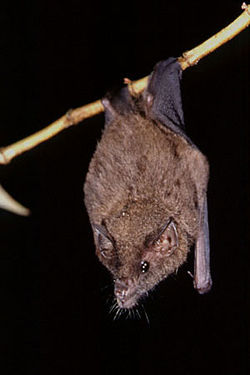
Picture of Anoura
- Source
- Wikipedia/Commons
- Credit
- NBII
- Licence
- Public Domain
- Commercial use
- the licence allows it
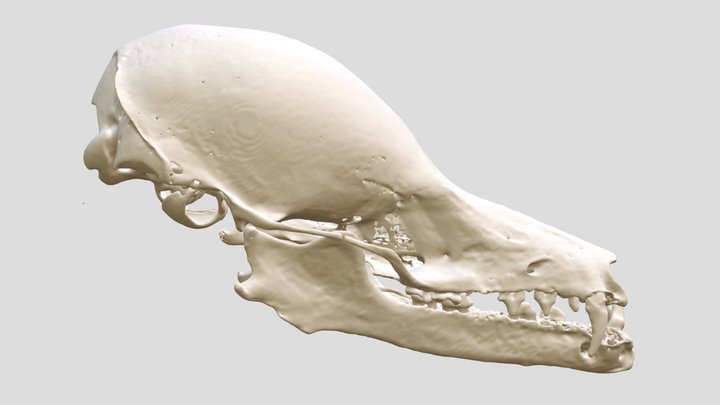
3D model
- Source
- Sketchfab
- Credit
- Biodiversity
- Licence
- CC Attribution
- Commercial use
- cannot be read from the licence given — check the record
Smithsonian Open Access and MorphoSource were not reached for this taxon, so this list is what the others held rather than everything there is.
The description on this site
- Source
- Wikipedia, “Anoura”
- Licence
- CC BY-SA 4.0
This is what the site found, which is not the same as what exists.
Keep going
What may have been alongside itGlossophaginae through timeThe world it lived on
Occurrence data from the Paleobiology Database, CC BY 4.0. Gray 1838