Apodidae
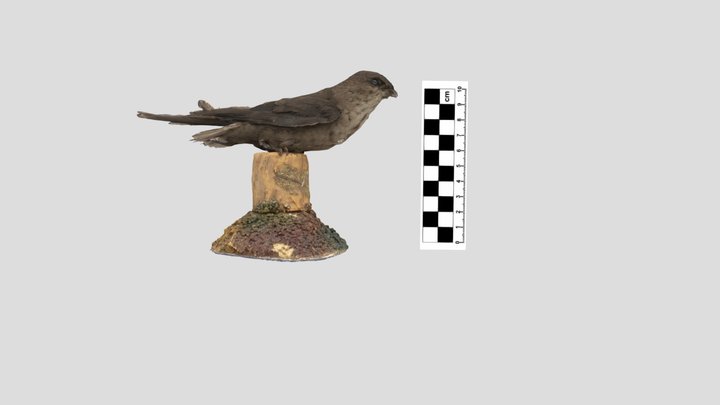
The Apodidae, or swifts, form a family of highly aerial birds. They are superficially similar to swallows but are not closely related to any passerine species. Swifts are placed in the order Apodiformes along with hummingbirds. The treeswifts are closely related to the true swifts but form a separate family, the Hemiprocnidae.

Paweł Kuźniar ( Jojo_1 , Jojo ) · CC BY-SA 3.0 · via Wikipedia/Commons. May be a photograph of a specimen, or an artist’s reconstruction — an interpretation of a skeleton, since colour and soft tissue are almost never preserved.
On record
Recorded, not inferred- Also called
- swiftPBDB
- Sits inside
- CaprimulgiformesPBDB
- Diet
- insectivorePBDB
- Life habit
- volantPBDB
- Motility
- actively mobilePBDB, for Theropoda
- Environment
- terrestrialPBDB
Time the record covers
At least 315 million years on record.
The record covers at least 315.2 Mya to 11.7 ka. No occurrence read is dated outside 323.4 Mya to 0 Mya.
125 occurrences of Apodidae on record. The Paleobiology Database records this as a living group. Bar height is expected occurrences, not a count: each fossil is spread across the span it is dated to, so a tall narrow bar means tight dating and a low wide one means loose.
When
125 occurrences- Carboniferous2%
- Permianunder 1%
- Middle Jurassic2%
- Oligoceneunder 1%
- Miocene2%
- Pliocene1%
- Pleistocene43%
- Holocene50%
These are dates about fossils, not the animal: the record can only begin after it arose and end before it died out, so either end may reach further. Shares are expected occurrences: a fossil dated to a span is counted partly in each period it straddles. More on what this infers.
Found in
6 formations
- Ukureyskaya Formation2
- Varswater Formation1
- Pradineaux Formation1
- Ottweiler Schichten Formation1
- Bannockburn Formation · Manuherikia Group1
- facies à Congeria Formation1
Loading coastlines…
The named rock units Apodidae has been recovered from, largest first. Drawn where the rock is now, not where it formed. 118 occurrences have no formation on record, which is common for older literature.
Found in the same rock
1,112 taxa- Aerodramus fuciphagus32 sites
- Passeriformes19 sites
- Tyto alba16 sites
- Gekkonidae15 sites
- Aerodramus spodiopygius14 sites
- Collocalia esculenta14 sites
- Aerodramus vanikorensis13 sites
- Rattus exulans12 sites
- Columbidae11 sites
- Zapornia tabuensis11 sites
- Pteropus10 sites
- Aplonis opaca9 sites
- Emballonura semicaudata9 sites
- Pyrrhocorax graculus9 sites
- Rallidae9 sites
- Apus8 sites
- Corvus monedula8 sites
- Emberiza8 sites
- Erithacus rubecula8 sites
- Gallirallus philippensis8 sites
- Rana8 sites
- Turdus8 sites
- Alopecoenas xanthonurus7 sites
- Apus apus7 sites
The Paleobiology Database records 104 sites for Apodidae, and this reads all of them. The number is how many of those sites it was catalogued from too. The 24 sharing the most are listed.
This is not a list of everything alive at the time. It is only what has come out of the same ground as this animal and been written down.
Entered from
35 references- Late Pleistocene-Holocene non-passerine avifauna of Liang Bua (Flores, Indonesia)43
- Fossil and archaeological avifauna of Niue Island, Pacific Ocean11
- Late Quaternary terrestrial vertebrates from Palawan Islad, Philippines9
- The prehistory of vertebrates, especially birds, on Tinian, Aguiguan, and Rota, Northern Mariana Islands7
- The Quaternary avifauna of Crete, Greece6
- Faunal extinction and human habitation in New Caledonia: initial results and implications of new research at the Pindai Caves5
- The prehistory and biogeography of terrestrial vertebrates on Guam, Mariana Islands5
- Prehistoric birds from New Ireland, Papua New Guinea: extinctions on a large Melanesian island3
- Holocene vertebrate assemblages provide the first evidence for the presence of the barn owl (Tytonidae, Tyto alba) on Socotra Island (Yemen)2
- Jurassic dinosaurs of Transbaikalia and prospects of searching for them in Mongolia2
- New Neanderthal remains from Mani peninsula, Southern Greece: The Kalamakia Middle Paleolithic cave site2
- A late-Holocene bird community from Hispaniola: Refining the chronology of vertebrate extinction in the West Indies2
Each of the 125 occurrences read was entered from one of these publications, ordered by how many each accounts for. This is not a search for papers mentioning the name. 23 further references are not listed. Entries link to doi.org where the Paleobiology Database holds an identifier, and to its own record where it does not. Relayed as the Paleobiology Database holds them, not checked against what they resolve to.
Media and terms
Media content2

Picture of Apodidae
- Source
- Wikipedia/Commons
- Credit
- Paweł Kuźniar ( Jojo_1 , Jojo )
- Licence
- CC BY-SA 3.0
- Commercial use
- the licence allows it
Smithsonian Open Access was not reached for this taxon, so this list is what the others held rather than everything there is.
The description on this site
- Licence
- CC BY-SA 4.0
This is what the site found, which is not the same as what exists.
Keep going
What may have been alongside itCaprimulgiformes through timeThe world it lived on
Occurrence data from the Paleobiology Database, CC BY 4.0. Hartert 1897