Gekkonidae
Gekkonidae is the largest family of geckos, containing over 950 described species in 62 genera. The Gekkonidae contain many of the most widespread gecko species, including house geckos (Hemidactylus), the tokay gecko (Gekko), day geckos (Phelsuma), the mourning gecko (Lepidodactylus), and dtellas (Gehyra). Gekkonid geckos occur globally and are particularly diverse in tropical areas. Many species of these geckos exhibit an adhering ability to surfaces through Van der Waals forces utilizing intermolecular forces between molecules of their setae and molecules of the surface they are on.

Nick Hobgood · CC BY 2.0 · via Wikipedia/Commons. May be a photograph of a specimen, or an artist’s reconstruction — an interpretation of a skeleton, since colour and soft tissue are almost never preserved.
On record
Recorded, not inferred- Also called
- geckoPBDB
- Sits inside
- GekkotaPBDB
- Diet
- insectivore, carnivorePBDB
- Life habit
- ground dwellingPBDB
- Motility
- actively mobilePBDB, for Osteichthyes
- Environment
- terrestrialPBDB, for Amniota
Time the record covers
At least 72 million years on record.
The record covers at least 72.2 Mya to 11.7 ka. No occurrence read is dated outside 83.6 Mya to 0 Mya.
177 occurrences of Gekkonidae on record. The Paleobiology Database records this as a living group. Bar height is expected occurrences, not a count: each fossil is spread across the span it is dated to, so a tall narrow bar means tight dating and a low wide one means loose.
When
177 occurrences- Late Cretaceous1%
- Paleocene1%
- Eocene21%
- Oligocene2%
- Miocene20%
- Pliocene5%
- Pleistocene13%
- Holocene37%
These are dates about fossils, not the animal: the record can only begin after it arose and end before it died out, so either end may reach further. Shares are expected occurrences: a fossil dated to a span is counted partly in each period it straddles. More on what this infers.
Found in
25 formations
- Perriere Formation4
- Perrière Formation4
- Friars Formation · La Jolla Group3
- Varswater Formation2
- Jbel Guersif Formation · Subatlas Group2
- Quercy Phosphorites Formation2
Loading coastlines…
The named rock units Gekkonidae has been recovered from, largest first. Drawn where the rock is now, not where it formed. One further formation holds fewer occurrences and is not listed. 139 occurrences have no formation on record, which is common for older literature.
Found in the same rock
2,343 taxa- Serpentes21 sites
- Chiroptera20 sites
- Ophisaurus19 sites
- Lacerta18 sites
- Lacertidae17 sites
- Mus musculus17 sites
- Aves16 sites
- Cyanoramphus16 sites
- Hoplodactylus maculatus16 sites
- Passeriformes16 sites
- Rattus exulans16 sites
- Vipera16 sites
- Anura14 sites
- Scincidae14 sites
- Amphisbaenidae13 sites
- Anguini13 sites
- Boidae13 sites
- Coenocorypha aucklandica13 sites
- Aegotheles novaezealandiae12 sites
- Anguinae12 sites
- Colubrinae12 sites
- Coturnix novaezelandiae12 sites
- Mystacina robusta12 sites
- Lacertilia11 sites
The Paleobiology Database records 131 sites for Gekkonidae, and this reads all of them. The number is how many of those sites it was catalogued from too. The 24 sharing the most are listed.
This is not a list of everything alive at the time. It is only what has come out of the same ground as this animal and been written down.
Entered from
81 references- Quaternary fossil fauna of South Canterbury, South Island, New Zealand24
- Evolution des lézards du Paléogène en Europe15
- The prehistory and biogeography of terrestrial vertebrates on Guam, Mariana Islands8
- On the fossil record of the Gekkota7
- Late Quaternary terrestrial vertebrates from Palawan Islad, Philippines6
- Taphonomy of two holocene microvertebrate deposits, Takaka Hill, Nelson, New Zealand, and identification of the avian predator responsible6
- Les nouvelles faunes de vertebres anterieurs a la "Grande Coupure" decouvertes dans les phosphorites du Quercy5
- Holocene vertebrates from a dry cave on Eleuthera Island, Commonwealth of The Bahamas4
- Fossil and archaeological avifauna of Niue Island, Pacific Ocean4
- Late Quaternary fossil vertebrates from the Cayman Islands4
- Holocene Vertebrate Fossils from Isla Floreana, Galapagos4
- Catalogue of Spanish Plio-Pleistocene amphibians and squamate reptiles from the Museu de Geologia de Barcelona3
Each of the 177 occurrences read was entered from one of these publications, ordered by how many each accounts for. This is not a search for papers mentioning the name. 69 further references are not listed. Entries link to doi.org where the Paleobiology Database holds an identifier, and to its own record where it does not. Relayed as the Paleobiology Database holds them, not checked against what they resolve to.
Media and terms
Media content2

Picture of Gekkonidae
- Source
- Wikipedia/Commons
- Credit
- Nick Hobgood
- Licence
- CC BY 2.0
- Commercial use
- the licence allows it
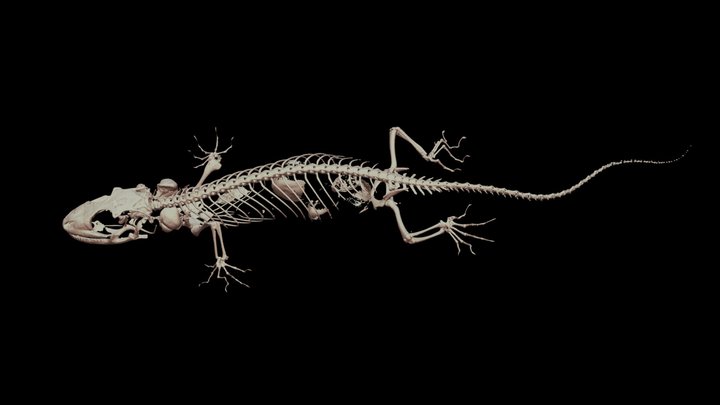
3D model
- Source
- Sketchfab
- Licence
- CC Attribution-NonCommercial-ShareAlike
- Commercial use
- the licence does not allow it
The description on this site
- Source
- Wikipedia, “Gekkonidae”
- Licence
- CC BY-SA 4.0
This is what the site found, which is not the same as what exists.
Keep going
What may have been alongside itGekkota through timeThe world it lived on
Occurrence data from the Paleobiology Database, CC BY 4.0. Gray 1825