Asaphida
Asaphida is a large, morphologically diverse order of trilobites found in marine strata dated from the Middle Cambrian until their extinction during the Silurian. Asaphida contains six superfamilies, but no suborders. Asaphids comprise some 20% of described fossil trilobites.

Uncredited · CC BY-SA 3.0 · via Wikipedia/Commons. May be a photograph of a specimen, or an artist’s reconstruction — an interpretation of a skeleton, since colour and soft tissue are almost never preserved.
On record
Recorded, not inferred- Sits inside
- LibristomaPBDB
- Diet
- carnivorePBDB, for Trilobita
- Life habit
- low-level epifaunalPBDB
- Motility
- fast-movingPBDB
- Environment
- marinePBDB, for Trilobita
Time the record covers
At least 71 million years on record.
The record covers at least 512.1 Mya to 440.5 Mya. No occurrence read is dated outside 538.8 Mya to 432.9 Mya.
9,065 occurrences of Asaphida on record, most of them in the Ordovician. Bar height is expected occurrences, not a count: each fossil is spread across the span it is dated to, so a tall narrow bar means tight dating and a low wide one means loose.
When
9,065 occurrences- Cambrian22%
- Ordovician78%
- Silurianunder 1%
These are dates about fossils, not the animal: the record can only begin after it arose and end before it died out, so either end may reach further. Shares are expected occurrences: a fossil dated to a span is counted partly in each period it straddles. More on what this infers.
Found in
792 formations
- Santa Rosita Formation · Santa Victoria Group225
- Kope Formation187
- Huaqiao Formation171
- Bestogai Formation156
- Zhumabai Formation139
- Holen Formation139
Loading coastlines…
The named rock units Asaphida has been recovered from, largest first. Drawn where the rock is now, not where it formed. 768 further formations hold fewer occurrences each and are not listed. 857 occurrences have no formation on record, which is common for older literature.
Asaphida and its relatives
OrdovicianWhere Asaphida and its relatives were recorded in the Ordovician.
Found in the same rock
1,973 taxa- Isotelus68 sites
- Remopleurides50 sites
- Sowerbyella47 sites
- Strophomena46 sites
- Flexicalymene45 sites
- Lonchodomas37 sites
- Onniella36 sites
- Rafinesquina33 sites
- Lophospira32 sites
- Sinuites32 sites
- Illaenus31 sites
- Platystrophia31 sites
- Zygospira29 sites
- Ctenodonta28 sites
- Hallopora28 sites
- Lingulella28 sites
- Climacograptus27 sites
- Ambonychia25 sites
- Ampyx25 sites
- Crinoidea25 sites
- Escharopora25 sites
- Conularia23 sites
- Modiolopsis23 sites
- Nileus23 sites
The Paleobiology Database records at least 965 sites for Asaphida, and this reads 240 of them. The number is how many of those sites it was catalogued from too. The 24 sharing the most are listed.
This is not a list of everything alive at the time. It is only what has come out of the same ground as this animal and been written down.
Entered from
709 references- Ordovician trilobites of Argentina377
- Gradient ecology of a biotic invasion: biofacies of the type Cincinnatian Series (Upper Ordovician), Cincinnati, Ohio region, USA308
- Cambrian Malyy Karatau Range, Kazakhstan298
- Lower Ordovician trilobites from western Utah and eastern Nevadea163
- The Asaphus Limestone in northernmost Öland147
- Trilobites from the Survey Peak, Outram and Skoki Formations (Upper Cambrian-Lower Ordovician) at Wilcox Pass, Jasper National Park, Alberta)141
- Stratigraphic Summary of the Southwestern Region of China139
- The Middle Ordovician of the Oslo Region, Norway, 32. Trilobites of the family Remopleurididae136
- Ordovician Brachiopods, Trilobites, and Stratigraphy in Eastern and Central Nevada132
- Corynexochida, Lichida and Asaphida128
- Description of the upper portion of the drill-core from Finngrundet in the South Bothnian Bay125
- Analysis of sample-level properties along a paleoenvironmental gradient: the behavior of evenness as a function of sample size123
Each of the 9,065 occurrences read was entered from one of these publications, ordered by how many each accounts for. This is not a search for papers mentioning the name. 697 further references are not listed. Entries link to doi.org where the Paleobiology Database holds an identifier, and to its own record where it does not. Relayed as the Paleobiology Database holds them, not checked against what they resolve to.
Media and terms
Media content2

Picture of Asaphida
- Source
- Wikipedia/Commons
- Credit
- nobody named on the record
- Licence
- CC BY-SA 3.0
- Commercial use
- the licence allows it
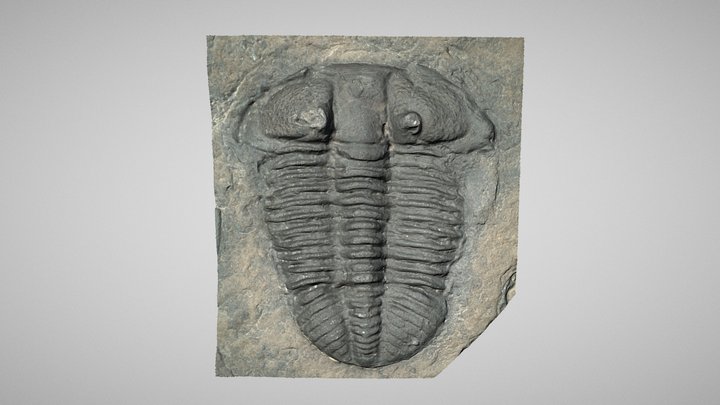
3D model
- Source
- Sketchfab
- Licence
- Free Standard
- Commercial use
- cannot be read from the licence given — check the record
The description on this site
- Source
- Wikipedia, “Asaphida”
- Licence
- CC BY-SA 4.0
This is what the site found, which is not the same as what exists.
Keep going
What may have been alongside itLibristoma through timeFormations of the OrdovicianThe world it lived on
Occurrence data from the Paleobiology Database, CC BY 4.0. Salter 1864