Balaenoptera physalus
The fin whale, also known as the finback whale or common rorqual, is a species of baleen whale and the second-longest cetacean after the blue whale. The biggest individual reportedly measured 26–27.3 m (85–90 ft) in length, with a maximum recorded weight of 65.5 to 120 tonnes. The fin whale's body is long, slender, and brownish-gray in color, with a paler underside to appear less conspicuous from below (countershading).

Aqqa Rosing-Asvid - Visit Greenland · CC BY 2.0 · via Wikipedia/Commons. May be a photograph of a specimen, or an artist’s reconstruction — an interpretation of a skeleton, since colour and soft tissue are almost never preserved.
On record
Recorded, not inferred- Also called
- fin whalePBDB
- Sits inside
- BalaenopteraPBDB
- Diet
- suspension feederPBDB, for Balaenopteridae
- Life habit
- aquaticPBDB, for Mysticeti
- Motility
- actively mobilePBDB, for Cetacea
- Environment
- marinePBDB, for Mysticeti
Time the record covers
At least 762 thousand years on record.
The record covers at least 774 ka to 11.7 ka. No occurrence read is dated outside 2.58 Mya to 0 Mya.
37 occurrences of Balaenoptera physalus on record. The Paleobiology Database records this as a living group. Bar height is expected occurrences, not a count: each fossil is spread across the span it is dated to, so a tall narrow bar means tight dating and a low wide one means loose.
When
37 occurrences- Pleistocene11%
- Holocene89%
These are dates about fossils, not the animal: the record can only begin after it arose and end before it died out, so either end may reach further. Shares are expected occurrences: a fossil dated to a span is counted partly in each period it straddles. More on what this infers.
Found in
2 formations
Loading coastlines…
The named rock units Balaenoptera physalus has been recovered from, largest first. Drawn where the rock is now, not where it formed. 32 occurrences have no formation on record, which is common for older literature.
Found in the same rock
71 taxa- Orcinus orca5 sites
- Balaenoptera musculus3 sites
- Megaptera novaeangliae3 sites
- Physeter macrocephalus3 sites
- Balaena mysticetus2 sites
- Berardius bairdii2 sites
- Cervus elaphus2 sites
- Cetacea2 sites
- Delphinus delphis2 sites
- Eubalaena glacialis2 sites
- Grampus griseus2 sites
- Sus scrofa2 sites
- Ziphius cavirostris2 sites
- Alectoris graeca1 site
- Aptenodytes forsteri1 site
- Astarte1 site
- Balaenidae1 site
- Balaenoptera acutorostrata1 site
- Balaenoptera borealis1 site
- Bos primigenius1 site
- Buccinum undatum1 site
- Capreolus capreolus1 site
- Caretta caretta1 site
- Chondrichthyes1 site
The Paleobiology Database records 37 sites for Balaenoptera physalus, and this reads all of them. The number is how many of those sites it was catalogued from too. The 24 sharing the most are listed.
This is not a list of everything alive at the time. It is only what has come out of the same ground as this animal and been written down.
Entered from
24 references- First confirmed finds of baleen whale from Iron Age Scania, Sweden, and their archaeological implications6
- Determining the ages of sub-fossil cetacean remains, found in the Carse of Stirling, Scotland4
- Ancient whale exploitation in the Mediterranean: the archaeological record3
- Late Pleistocene and Holocene whale remains (Cetacea) from Denmark and adjacent countries: Species, distribution, chronology, and trace element concentrations3
- Two new materials of whale remains from the Holocene (Quaternary) of Osaka, Japan: Filling the age of lacking reports on Holocene baleen whales from Japan2
- Remains of a fin whale from Osaka, Japan, and comparison of baleen whale cases in the past and present of Osaka Bay (the Seto Inland Sea)1
- A fin whale from the Holocene (Quaternary) of Osaka City, Japan1
- Late Pleistocene and Holocene occurrence of bowhead whales (Balaena mysticetus) along the coasts of Norway1
- The earliest-known fin whale, Balaenoptera physalus, from the Early Pleistocene of northern California, U.S.A1
- Climate-driven environmental changes around 8,200 years ago favoured increases in cetacean strandings and Mediterranean hunter-gatherers exploited them1
- Where were the northern elephant seals? Holocene archaeology and biogeography of Mirounga angustirostris1
- Cetacea1
Each of the 37 occurrences read was entered from one of these publications, ordered by how many each accounts for. This is not a search for papers mentioning the name. 12 further references are not listed. Entries link to doi.org where the Paleobiology Database holds an identifier, and to its own record where it does not. Relayed as the Paleobiology Database holds them, not checked against what they resolve to.
Media and terms
Media content3
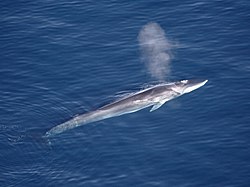
Picture of Balaenoptera physalus
- Source
- Wikipedia/Commons
- Credit
- Aqqa Rosing-Asvid - Visit Greenland
- Licence
- CC BY 2.0
- Commercial use
- the licence allows it
Photogrammetry
- Source
- MorphoSource
- Credit
- MCZ Mammalogy
- Licence
- In Copyright
- Commercial use
- cannot be read from the licence given — check the record
- Specimen
- Balaenoptera physalus · MCZ:Mamm:59505
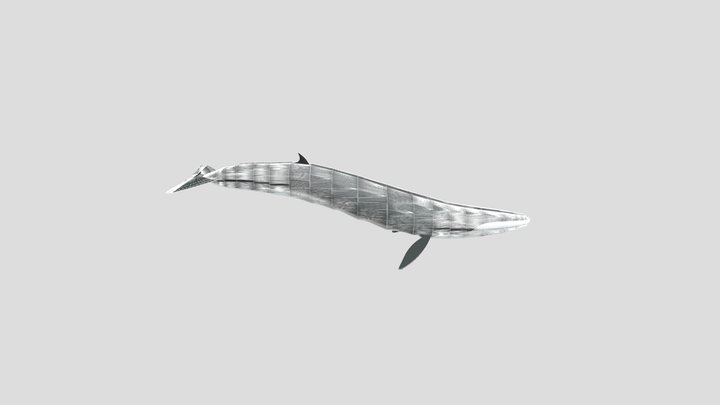
3D model
- Source
- Sketchfab
- Credit
- hunter.4u88
- Licence
- CC Attribution
- Commercial use
- cannot be read from the licence given — check the record
Smithsonian Open Access was not reached for this taxon, so this list is what the others held rather than everything there is.
The description on this site
- Source
- Wikipedia, “Fin whale”
- Licence
- CC BY-SA 4.0
This is what the site found, which is not the same as what exists.
Keep going
What may have been alongside itBalaenoptera through timeThe world it lived on
Occurrence data from the Paleobiology Database, CC BY 4.0. (Linnaeus 1758)