Bolma
Bolma is a genus of medium to large sea snails with a calcareous operculum, marine gastropod molluscs in the family Turbinidae, the turban snails.

Hectonichus · CC BY-SA 3.0 · via Wikipedia/Commons. May be a photograph of a specimen, or an artist’s reconstruction — an interpretation of a skeleton, since colour and soft tissue are almost never preserved.
On record
Recorded, not inferred- Sits inside
- TurbininaePBDB
- Diet
- grazerPBDB, for Turbinidae
- Life habit
- epifaunalPBDB, for Turbinidae
- Motility
- actively mobilePBDB, for Turbinidae
- Vision
- limitedPBDB, for Gastropoda
Time the record covers
At least 33 million years on record.
The record covers at least 33.9 Mya to 11.7 ka. No occurrence read is dated outside 37.71 Mya to 0 Mya.
86 occurrences of Bolma on record, most of them in the Miocene. The Paleobiology Database records this as a living group. Bar height is expected occurrences, not a count: each fossil is spread across the span it is dated to, so a tall narrow bar means tight dating and a low wide one means loose.
When
86 occurrencesThese are dates about fossils, not the animal: the record can only begin after it arose and end before it died out, so either end may reach further. Shares are expected occurrences: a fossil dated to a span is counted partly in each period it straddles. More on what this infers.
Found in
19 formations
- Korytnica Clays Formation5
- Termofourà Formation3
- Shimajiri Formation2
- Naha Formation · Ryukyu Group2
- Deborah Volcanic Formation · Alma Group2
- Gavdos Formation2
Loading coastlines…
The named rock units Bolma has been recovered from, largest first. Drawn where the rock is now, not where it formed. 54 occurrences have no formation on record, which is common for older literature.
Bolma and its relatives
MioceneWhere Bolma and its relatives were recorded in the Miocene.
Found in the same rock
1,498 taxa- Anomia ephippium12 sites
- Chlamys11 sites
- Ostrea edulis11 sites
- Diodora (Diodora) italica10 sites
- Nassarius10 sites
- Scapharca (Scapharca) diluvii10 sites
- Talochlamys multistriata10 sites
- Arca noae9 sites
- Bittium reticulatum9 sites
- Chlamys (Chlamys) varia9 sites
- Spondylus gaederopus9 sites
- Barbatia (Barbatia) barbata8 sites
- Conus8 sites
- Glycymeris8 sites
- Narona8 sites
- Pecten8 sites
- Turritella (Zaria)8 sites
- Vermetus8 sites
- Aequipecten opercularis7 sites
- Aporrhais7 sites
- Cythara (Mangelia)7 sites
- Gibbula7 sites
- Nassarius (Uzita)7 sites
- Petaloconchus intortus7 sites
The Paleobiology Database records 31 sites for Bolma, and this reads all of them. The number is how many of those sites it was catalogued from too. The 24 sharing the most are listed.
This is not a list of everything alive at the time. It is only what has come out of the same ground as this animal and been written down.
Entered from
36 references- The Early Pliocene Gastropoda (Mollusca) of Estepona, Southern Spain. Part 1: Vetigastropoda16
- The paleoenvironment of an early Middle Miocene Paratethys sequence in NE Austria with special emphasis on mollusks and foraminifera8
- Biozonation of the Neogene invertebrate megafauna of the Hellenic area8
- Middle Miocene (Badenian) gastropods from Korytnica, Poland; Part V Addenda et Corrigenda ad Prosobranchia5
- The marine Quaternary of the Canary Islands5
- Tertiary and Quaternary Gastropoda of Okinawa: A comparison of the late Miocene, Pliocene, and Pleistocene Gastropoda of Okinawa with related faunas of East Asia together with a resume of the geological setting of the fossiliferous deposits5
- Lower to Middle Miocene Mollusc assemblages from the Torino Hills (NW Italy): Synthesis of new data and chronostratigraphical arrangement3
- The maximum warmings of the Pleistocene world climate recorded in the Canary Islands3
- Devínska Kobyla- a window into the Middle Miocene shallow-water marine environments of the Central Paratethys (Vienna Basin, Slovakia)2
- Sedimentary evolution of a Late Pleistocene temperate red algal reef (Coralligene) on Rhodes, Greece: correlation with global sea-level fluctuations2
- Lithofazielle Entwicklung und Molluskenfauna des oberen Badeniens (Miozän M4d) in dem Gebiet Bratislava-Devinska Nova Ves [Lithofacies and mollusc fauna of the Upper Badenian in the Bratislava-Devinska Nova Ves area]2
- La fauna tortoniana del T. Stirone (limite Parmense-Piacentino)2
Each of the 86 occurrences read was entered from one of these publications, ordered by how many each accounts for. This is not a search for papers mentioning the name. 24 further references are not listed. Entries link to doi.org where the Paleobiology Database holds an identifier, and to its own record where it does not. Relayed as the Paleobiology Database holds them, not checked against what they resolve to.
Media and terms
Media content2

Picture of Bolma
- Source
- Wikipedia/Commons
- Credit
- Hectonichus
- Licence
- CC BY-SA 3.0
- Commercial use
- the licence allows it
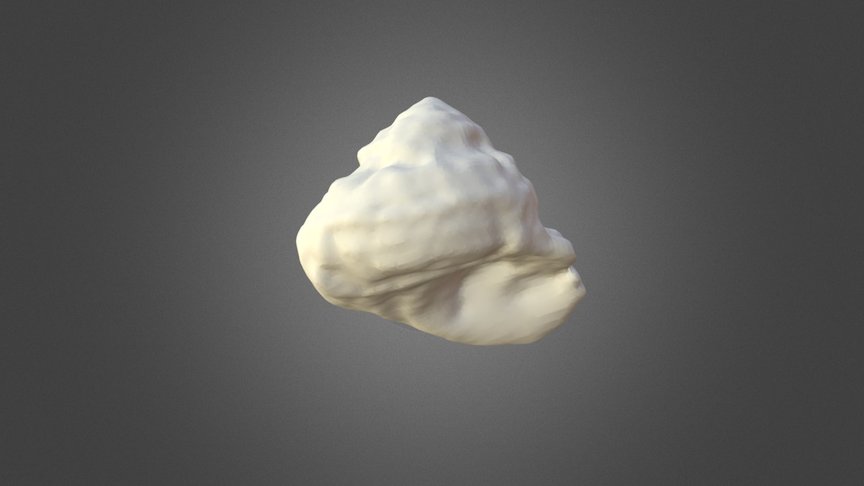
3D model
- Source
- Sketchfab
- Credit
- multimediapackreplicator
- Licence
- CC Attribution
- Commercial use
- cannot be read from the licence given — check the record
Smithsonian Open Access and MorphoSource were not reached for this taxon, so this list is what the others held rather than everything there is.
The description on this site
- Source
- Wikipedia, “Bolma”
- Licence
- CC BY-SA 4.0
This is what the site found, which is not the same as what exists.
Keep going
What may have been alongside itTurbininae through timeFormations of the MioceneThe world it lived on
Occurrence data from the Paleobiology Database, CC BY 4.0. (Risso 1826)