Cassidulina
via iDigBio · CC BY · via iDigBio. May be a photograph of a specimen, or an artist’s reconstruction — an interpretation of a skeleton, since colour and soft tissue are almost never preserved.
On record
Recorded, not inferred- Sits inside
- CassidulinidaePBDB
- Diet
- omnivorePBDB, for Foraminifera
- Life habit
- semi-infaunalPBDB, for Foraminifera
- Motility
- stationaryPBDB, for Rotaliina
- Environment
- outer shelf,marinePBDB, for Rotaliina
Time the record covers
At least 121 million years on record.
The record covers at least 121.4 Mya to 11.7 ka. No occurrence read is dated outside 125.77 Mya to 0 Mya.
1,672 occurrences of Cassidulina on record, most of them in the Pleistocene. The Paleobiology Database records this as a living group. Bar height is expected occurrences, not a count: each fossil is spread across the span it is dated to, so a tall narrow bar means tight dating and a low wide one means loose.
When
1,672 occurrences- Early Cretaceousunder 1%
- Late Cretaceous7%
- Paleoceneunder 1%
- Eocene7%
- Oligocene9%
- Miocene11%
- Pliocene8%
- Pleistocene55%
- Holocene1%
These are dates about fossils, not the animal: the record can only begin after it arose and end before it died out, so either end may reach further. Shares are expected occurrences: a fossil dated to a span is counted partly in each period it straddles. More on what this infers.
Found in
81 formations
- Suwannee Limestone Formation · Vicksburg Group22
- Castle Hayne Formation16
- Pysht Formation16
- Maastricht Formation14
- Maastricht Formation9
- Gulpen Formation6
Loading coastlines…
The named rock units Cassidulina has been recovered from, largest first. Drawn where the rock is now, not where it formed. 57 further formations hold fewer occurrences each and are not listed. 1,432 occurrences have no formation on record, which is common for older literature.
Cassidulina and its relatives
PleistoceneWhere Cassidulina and its relatives were recorded in the Pleistocene.
Found in the same rock
3,307 taxa- Catopygus35 sites
- Echinogalerus35 sites
- Cibicides28 sites
- Bulimina27 sites
- Nucleopygus27 sites
- Uvigerina24 sites
- Hemiaster23 sites
- Bolivina22 sites
- Temnocidaris (Stereocidaris)22 sites
- Tetragramma variolare22 sites
- Lenticulina21 sites
- Rhyncholampas gouldii21 sites
- Elphidium20 sites
- Goniasteridae19 sites
- Astropectinidae17 sites
- Hyposalenia17 sites
- Chlamys16 sites
- Coenholectypus excisus16 sites
- Holaster16 sites
- Rhyncholampas16 sites
- Polydiadema15 sites
- Salenia15 sites
- Caletaster romani14 sites
- Globigerina14 sites
The Paleobiology Database records 1,356 sites for Cassidulina, and this reads 240 of them. The number is how many of those sites it was catalogued from too. The 24 sharing the most are listed.
This is not a list of everything alive at the time. It is only what has come out of the same ground as this animal and been written down.
Entered from
159 references- Site U1427102
- Site U141880
- Site U135268
- Site U150861
- Site U138657
- Site U139157
- Site U139055
- Site U140553
- Site U142148
- Site U141947
- Site U142045
- Upper slope Site U141345
Each of the 1,672 occurrences read was entered from one of these publications, ordered by how many each accounts for. This is not a search for papers mentioning the name. 147 further references are not listed. Entries link to doi.org where the Paleobiology Database holds an identifier, and to its own record where it does not. Relayed as the Paleobiology Database holds them, not checked against what they resolve to.
Media and terms
Media content3
Picture of Cassidulina
- Source
- iDigBio
- Credit
- via iDigBio
- Licence
- CC BY
- Commercial use
- the licence allows it
CT scan
- Source
- MorphoSource
- Licence
- not stated by the source
- Commercial use
- cannot be read from the licence given — check the record
- Specimen
- Cassidulina reniforme · l-cb
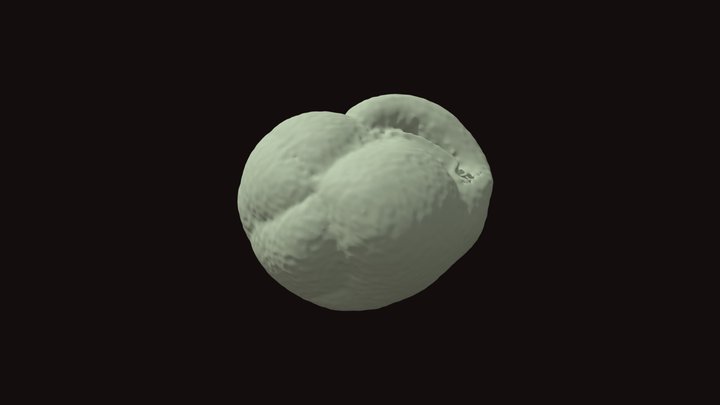
3D model
- Source
- Sketchfab
- Credit
- BelangerForamLab
- Licence
- CC Attribution-NonCommercial
- Commercial use
- the licence does not allow it
This is what the site found, which is not the same as what exists.
Keep going
What may have been alongside itCassidulinidae through timeFormations of the PleistoceneThe world it lived on
Occurrence data from the Paleobiology Database, CC BY 4.0. d'Orbigny 1826