Euclastes
Euclastes is an extinct genus of sea turtles that survived the Cretaceous–Paleogene mass extinction. The genus was first named by Edward Drinker Cope in 1867, and contains three species. E. hutchisoni, was named in 2003 but has since been reassigned to the genus Pacifichelys, while E. coahuilaensis named in 2009 was reassigned as Mexichelys coahuilaensis in 2010.

Macrophyseter · CC BY-SA 4.0 · via Wikipedia/Commons. May be a photograph of a specimen, or an artist’s reconstruction — an interpretation of a skeleton, since colour and soft tissue are almost never preserved.
On record
Recorded, not inferred- Sits inside
- EuclastidaePBDB
- Diet
- omnivorePBDB, for Cryptodira
- Life habit
- aquaticPBDB, for Cryptodira
- Motility
- actively mobilePBDB, for Osteichthyes
- Environment
- marinePBDB, for Chelonioidea
Time the record covers
At least 51 million years on record.
The record covers at least 72.2 Mya to 20.45 Mya. No occurrence read is dated outside 83.6 Mya to 5.333 Mya.
39 occurrences of Euclastes on record, most of them in the Late Cretaceous. Bar height is expected occurrences, not a count: each fossil is spread across the span it is dated to, so a tall narrow bar means tight dating and a low wide one means loose.
When
39 occurrences- Late Cretaceous44%
- Paleocene43%
- Eocene8%
- Oligocene3%
- Miocene3%
These are dates about fossils, not the animal: the record can only begin after it arose and end before it died out, so either end may reach further. Shares are expected occurrences: a fossil dated to a span is counted partly in each period it straddles. More on what this infers.
Found in
22 formations
- Hornerstown Formation · Rancocas Group7
- Aquia Formation · Pamunkey Group5
- Vincentown Formation2
- Quiriquina Formation2
- Cerro del Pueblo Formation · Difunta Group2
- New Egypt Formation · Monmouth Group2
Loading coastlines…
The named rock units Euclastes has been recovered from, largest first. Drawn where the rock is now, not where it formed. 3 occurrences have no formation on record, which is common for older literature.
Euclastes and its relatives
Late CretaceousWhere Euclastes and its relatives were recorded in the Late Cretaceous.
Found in the same rock
476 taxa- Gavialoidea5 sites
- Osteopygis emarginatus5 sites
- Aetomylaeus dixoni4 sites
- Osteichthyes4 sites
- Ostrea4 sites
- Pantrionychidae4 sites
- Plesiosauria4 sites
- Taphrosphys sulcatus4 sites
- Thoracosaurus neocesariensis4 sites
- Adocus beatus3 sites
- Agomphus pectoralis3 sites
- Crassatella vadosa3 sites
- Crocodylia3 sites
- Dasyatis hexagonalis3 sites
- Dyrosauridae3 sites
- Enchodus3 sites
- Eusuchia3 sites
- Hadrosauridae3 sites
- Hexanchus3 sites
- Ixobatis mucronata3 sites
- Mosasauridae3 sites
- Mosasaurus hoffmannii3 sites
- Squalicorax pristodontus3 sites
- Turritella3 sites
The Paleobiology Database records 34 sites for Euclastes, and this reads all of them. The number is how many of those sites it was catalogued from too. The 24 sharing the most are listed.
This is not a list of everything alive at the time. It is only what has come out of the same ground as this animal and been written down.
Entered from
25 references- Paleocene turtles from the Aquia and Brightseat Formations, with a discussion of their bearing on sea turtle evolution and phylogeny4
- The fossil turtles of North America4
- A reassessment of the referral of sea turtle skulls to the genus Osteopygis (Late Cretaceous, New Jersey, USA)3
- Euclastidae n. fam. (Chelonioidea) et première mention d'Euclastes Cope, 1867 dans le Paléocène du bassin de Paris (France)2
- A Late Cretaceous dinosaur and reptile assemblage from South Carolina, USA2
- Paleogene chelonians from Maryland and Virginia2
- Euclastes coahuilaensis sp. nov., a basal cheloniid turtle from the late Campanian Cerro del Pueblo Formation of Coahuila State, Mexico2
- Euclastes meridionalis (DE LA FUENTE & CASADÍO) (Testudines: Pancheloniidae) from Danian levels of the Jagüel Formation at Cerro Azul, Northern Patagonia, Argentina2
- The Cretaceous/Tertiary mass extinction event in the North Atlantic coastal plain2
- More-complete remains of Procolpochelys charlestonensis (Oligocene, South Carolina), an occurrence of Euclastes (upper Eocene, South Carolina), and their bearing on Cenozoic pancheloniid sea turtle distribution and phylogeny1
- A sea turtle skull from the Cretaceous of Chile with comments on the taxonomy and biogeography of Euclastes (formerly Osteopygis)1
- Cretaceous amniotes from Angola: dinosaurs, pterosaurs, mosasaurs, plesiosaurs, turtles1
Each of the 39 occurrences read was entered from one of these publications, ordered by how many each accounts for. This is not a search for papers mentioning the name. 13 further references are not listed. Entries link to doi.org where the Paleobiology Database holds an identifier, and to its own record where it does not. Relayed as the Paleobiology Database holds them, not checked against what they resolve to.
Media and terms
Media content2

Picture of Euclastes
- Source
- Wikipedia/Commons
- Credit
- Macrophyseter
- Licence
- CC BY-SA 4.0
- Commercial use
- the licence allows it
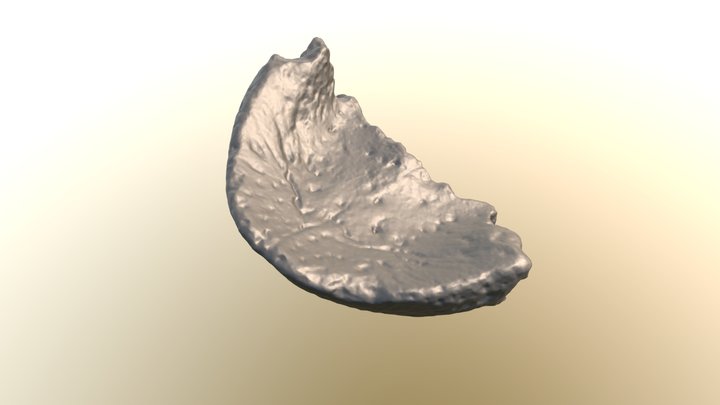
3D model
- Source
- Sketchfab
- Licence
- CC Attribution-NonCommercial-NoDerivs
- Commercial use
- the licence does not allow it
Smithsonian Open Access was not reached for this taxon, so this list is what the others held rather than everything there is.
The description on this site
- Source
- Wikipedia, “Euclastes”
- Licence
- CC BY-SA 4.0
This is what the site found, which is not the same as what exists.
Keep going
What may have been alongside itEuclastidae through timeFormations of the Late CretaceousThe world it lived on
Occurrence data from the Paleobiology Database, CC BY 4.0. Cope 1870