Favistella

via iDigBio · CC0 · via iDigBio. May be a photograph of a specimen, or an artist’s reconstruction — an interpretation of a skeleton, since colour and soft tissue are almost never preserved.
On record
Recorded, not inferred- Sits inside
- StauriidaePBDB
- Diet
- suspension feederPBDB, for Rugosa
- Life habit
- epifaunalPBDB, for Rugosa
- Motility
- stationary, attachedPBDB, for Rugosa
- Vision
- blindPBDB, for Anthozoa
- Environment
- marinePBDB, for Rugosa
Time the record covers
At least 47 million years on record.
The record covers at least 458.2 Mya to 410.62 Mya. No occurrence read is dated outside 471.3 Mya to 393.47 Mya.
55 occurrences of Favistella on record, most of them in the Ordovician. Bar height is expected occurrences, not a count: each fossil is spread across the span it is dated to, so a tall narrow bar means tight dating and a low wide one means loose.
When
55 occurrences- Ordovician96%
- Devonian4%
These are dates about fossils, not the animal: the record can only begin after it arose and end before it died out, so either end may reach further. Shares are expected occurrences: a fossil dated to a span is counted partly in each period it straddles. More on what this infers.
Found in
20 formations
- Waynesville Formation2
- Liberty Formation2
- Whitewater Formation2
- Portage Chute Formation · Bad Cache Rapids Group2
- Chasm Creek Formation · Churchill River Group2
- Baraniy Formation2
Loading coastlines…
The named rock units Favistella has been recovered from, largest first. Drawn where the rock is now, not where it formed. 28 occurrences have no formation on record, which is common for older literature.
Favistella and its relatives
OrdovicianWhere Favistella and its relatives were recorded in the Ordovician.
Found in the same rock
511 taxa- Strophomena planumbona15 sites
- Zygospira15 sites
- Homotrypa14 sites
- Isotelus13 sites
- Lophospira12 sites
- Rafinesquina12 sites
- Favosites10 sites
- Orthoceras9 sites
- Strophomena incurvata9 sites
- Tetradium9 sites
- Anazyga recurvirostra8 sites
- Columnaria8 sites
- Helopora8 sites
- Michelinoceras8 sites
- Rostricellula8 sites
- Sowerbyella8 sites
- Strophomena8 sites
- Zygospira modesta8 sites
- Leperditia7 sites
- Platystrophia7 sites
- Rhipidomena tennesseensis7 sites
- Streptelasma7 sites
- Aulacera6 sites
- Homotrypella6 sites
The Paleobiology Database records 46 sites for Favistella, and this reads all of them. The number is how many of those sites it was catalogued from too. The 24 sharing the most are listed.
This is not a list of everything alive at the time. It is only what has come out of the same ground as this animal and been written down.
Entered from
16 references- Zonation of the Middle and Upper Ordovician strata in northwestern Georgia27
- Regional stratigraphic tables of the north western China region: Volume of NinXia Province4
- Ordovician paleontology of the Northern Hudson Bay lowland4
- The fossil fauna of the Ordovician in the Cincinnati Region4
- The coral horizons and stratigraphy of the upper Richmond Group in Kentucky west of the Cincinnati Arch3
- Oporniih razrez reki Moiero silura Sibirskoi platformih -The Silurian composit section of the Moiero River (Sibirian platform)2
- Ordovik i silur Yuzhnogo Verkhoyanya (biostratigrafiya i paleontologiya) [The Ordovician and Silurian of the southern Verkhoyansk Range (biostratigraphy and paleontology)]2
- Ordovician of the siberian Platform: Key section on the Kulumbe River1
- Stratigraphic Group of GanSu, QingHai, and Tibet Provinces, 19801
- Regional stratigraphic table of Eastern China, Zhejiang Province1
- Patch reefs in the Carters Limestone (Middle Ordovician) in Tennessee, and vertical zonation in Ordovician reefs1
- Korallen aus dem Unterdevon der karnischen Alpen1
Each of the 55 occurrences read was entered from one of these publications, ordered by how many each accounts for. This is not a search for papers mentioning the name. 4 further references are not listed. Entries link to doi.org where the Paleobiology Database holds an identifier, and to its own record where it does not. Relayed as the Paleobiology Database holds them, not checked against what they resolve to.
Media and terms
Media content2
Picture of Favistella
- Source
- iDigBio
- Credit
- via iDigBio
- Licence
- CC0
- Commercial use
- the licence allows it
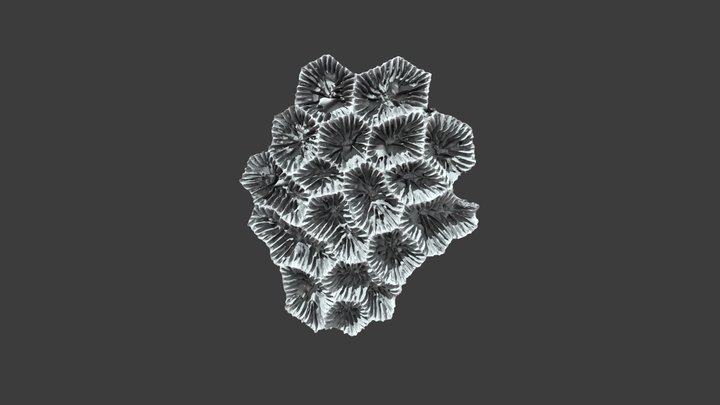
3D model
- Source
- Sketchfab
- Licence
- CC0 Public Domain
- Commercial use
- the licence allows it
Smithsonian Open Access was not reached for this taxon, so this list is what the others held rather than everything there is.
This is what the site found, which is not the same as what exists.
Keep going
What may have been alongside itStauriidae through timeFormations of the OrdovicianThe world it lived on
Occurrence data from the Paleobiology Database, CC BY 4.0. Dana 1846