Fragum
Fragum is a genus of cockles, marine bivalve molluscs in the family Cardiidae. Members of the genus have characteristic thick, sculptured shells and live buried in sand, extending their siphons to the surface to feed and breathe. They are found in the Indo-Pacific region and the Red Sea.

Richard Parker · CC BY 2.0 · via Wikipedia/Commons. May be a photograph of a specimen, or an artist’s reconstruction — an interpretation of a skeleton, since colour and soft tissue are almost never preserved.
On record
Recorded, not inferred- Sits inside
- FraginaePBDB
- Diet
- suspension feederPBDB
- Life habit
- infaunalPBDB
- Motility
- facultatively mobilePBDB
- Vision
- blindPBDB, for Bivalvia
Time the record covers
At least 85 million years on record.
The record covers at least 85.7 Mya to 11.7 ka. No occurrence read is dated outside 89.8 Mya to 0 Mya.
69 occurrences of Fragum on record, most of them in the Pleistocene. The Paleobiology Database records this as a living group. Bar height is expected occurrences, not a count: each fossil is spread across the span it is dated to, so a tall narrow bar means tight dating and a low wide one means loose.
When
69 occurrences- Late Cretaceous12%
- Eocene4%
- Oligocene7%
- Miocene26%
- Pliocene4%
- Pleistocene43%
- Holocene3%
These are dates about fossils, not the animal: the record can only begin after it arose and end before it died out, so either end may reach further. Shares are expected occurrences: a fossil dated to a span is counted partly in each period it straddles. More on what this infers.
Found in
21 formations
- Oak Grove Formation · Alum Bluff Group6
- Tamala Limestone Formation6
- Pirabas Formation5
- Falun de Pierrefitte Formation4
- Dampier Limestone Formation4
- Chipola Formation · Alum Bluff Group2
Loading coastlines…
The named rock units Fragum has been recovered from, largest first. Drawn where the rock is now, not where it formed. 22 occurrences have no formation on record, which is common for older literature.
Fragum and its relatives
PleistoceneWhere Fragum and its relatives were recorded in the Pleistocene.
Found in the same rock
1,040 taxa- Parvilucina14 sites
- Acteocina12 sites
- Anadara12 sites
- Diplodonta11 sites
- Glycymeris11 sites
- Turritella11 sites
- Lucina10 sites
- Cancellaria9 sites
- Conus9 sites
- Corbula (Caryocorbula)9 sites
- Neverita9 sites
- Venericardia9 sites
- Anomia8 sites
- Calyptraea centralis8 sites
- Cylichna8 sites
- Ervilia chipolana8 sites
- Nassarius (Uzita)8 sites
- Pseudochama8 sites
- Semele8 sites
- Uromitra8 sites
- Alaba7 sites
- Anadara (Diluvarca) santarosana7 sites
- Architectonica nobilis7 sites
- Chama7 sites
The Paleobiology Database records 47 sites for Fragum, and this reads all of them. The number is how many of those sites it was catalogued from too. The 24 sharing the most are listed.
This is not a list of everything alive at the time. It is only what has come out of the same ground as this animal and been written down.
Entered from
26 references- The Molluscan Fauna of the Alum Bluff Group of Florida9
- Cenozoic Molluscs and Echinoids of Barrow Island, Western Australia8
- Biogeography of the Saharan Cretaceous and Paleocene epicontinental transgressions6
- Biostratigraphie et paleoecologie des gisements types du Stampian de la region d''Etampes (Essonne)5
- Pliocene-Pleistocene coastal events and history along the western margin of Australia4
- A Pleistocene molluscan fauna with Anadara trapezia (Deshayes) (Bivalvia: Arcoida) from the Dampier Limestone of Shark Bay, Western Australia4
- The fossil Mollusca of the Peppermint Grove Limestone, Swan River district or Western Australia4
- Localidades fossiliferas da Formacao Pirabas (Mioceno Inferior)3
- Faunal response to the instability of reef habitats: Pleistocene molluscan assemblages of Aldabra Atoll3
- Late Cretaceous (Maastrichtian) echinoid-mollusc-coral assemblages and palaeoenvironments from a Tethyan carbonate platform succession, northern Oman Mountains2
- Guidebook to the geology of Rottnest Island2
- Late Pleistocene molluscan assemblages from the coral reefs of the Kenya coast2
Each of the 69 occurrences read was entered from one of these publications, ordered by how many each accounts for. This is not a search for papers mentioning the name. 14 further references are not listed. Entries link to doi.org where the Paleobiology Database holds an identifier, and to its own record where it does not. Relayed as the Paleobiology Database holds them, not checked against what they resolve to.
Media and terms
Media content2

Picture of Fragum
- Source
- Wikipedia/Commons
- Credit
- Richard Parker
- Licence
- CC BY 2.0
- Commercial use
- the licence allows it
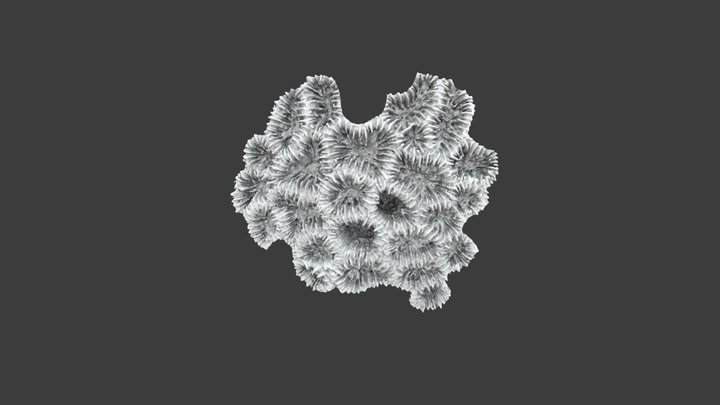
3D model
- Source
- Sketchfab
- Licence
- CC0 Public Domain
- Commercial use
- the licence allows it
Smithsonian Open Access and MorphoSource were not reached for this taxon, so this list is what the others held rather than everything there is.
The description on this site
- Source
- Wikipedia, “Fragum”
- Licence
- CC BY-SA 4.0
This is what the site found, which is not the same as what exists.
Keep going
What may have been alongside itFraginae through timeFormations of the PleistoceneThe world it lived on
Occurrence data from the Paleobiology Database, CC BY 4.0. (Ršding 1798)