Glaucomys sabrinus
The northern flying squirrel is one of three species of the genus Glaucomys, the only flying squirrels found in North America. They are found in coniferous and mixed coniferous forests across much of Canada, from Alaska to Nova Scotia, and south to the mountains of North Carolina and west to Utah in the United States. They are light brown with pale underparts and grow to a length of 25 to 37 cm. They are proficient gliders but uncoordinated walkers on the ground. They feed on a variety of plant material as well as tree sap, fungi, insects, carrion, bird eggs and nestlings. They mostly breed once a year in a cavity lined with lichen or other soft material. Except when they have young, they change nests frequently, and in winter a number of individuals may huddle together in a shared nest. Unlike most members of their family, flying squirrels are strictly nocturnal.

(c) Louis Imbeau, some rights reserved (CC BY) · CC BY 4.0 · via Wikipedia/Commons. May be a photograph of a specimen, or an artist’s reconstruction — an interpretation of a skeleton, since colour and soft tissue are almost never preserved.
On record
Recorded, not inferred- Also called
- northern flying squirrelPBDB
- Sits inside
- GlaucomysPBDB
- Diet
- granivore, frugivorePBDB, for Sciuridae
- Life habit
- glidingPBDB, for Glaucomys
- Motility
- actively mobilePBDB, for Osteichthyes
- Environment
- terrestrialPBDB, for Eutheria
- Mass
- 5.5 gWikidata
Time the record covers
At most 2.6 million years on record.
Every occurrence read is dated to somewhere between 2.58 Mya and 0 Mya, and nothing in the dating separates them, so that window is what the record shows rather than a span.
11 occurrences of Glaucomys sabrinus on record, most of them in the Pleistocene. The Paleobiology Database records this as a living group. Bar height is expected occurrences, not a count: each fossil is spread across the span it is dated to, so a tall narrow bar means tight dating and a low wide one means loose.
When
11 occurrences- Pleistocene98%
- Holocene2%
These are dates about fossils, not the animal: the record can only begin after it arose and end before it died out, so either end may reach further. Shares are expected occurrences: a fossil dated to a span is counted partly in each period it straddles. More on what this infers.
Glaucomys sabrinus and its relatives
PleistoceneWhere Glaucomys sabrinus and its relatives were recorded in the Pleistocene.
Found in the same rock
318 taxa- Spermophilus tridecemlineatus10 sites
- Clethrionomys gapperi9 sites
- Marmota monax9 sites
- Microtus chrotorrhinus9 sites
- Microtus pennsylvanicus9 sites
- Neotoma floridana9 sites
- Phenacomys intermedius9 sites
- Tamiasciurus hudsonicus9 sites
- Glaucomys volans8 sites
- Microtus pinetorum8 sites
- Mictomys borealis8 sites
- Synaptomys cooperi8 sites
- Tamias striatus8 sites
- Eptesicus fuscus7 sites
- Erethizon dorsatum7 sites
- Myotis7 sites
- Peromyscus7 sites
- Sorex arcticus7 sites
- Sorex fumeus7 sites
- Blarina brevicauda6 sites
- Microtus6 sites
- Odocoileus virginianus6 sites
- Ondatra zibethicus6 sites
- Parascalops breweri6 sites
The Paleobiology Database records 11 sites for Glaucomys sabrinus, and this reads all of them. The number is how many of those sites it was catalogued from too. The 24 sharing the most are listed.
This is not a list of everything alive at the time. It is only what has come out of the same ground as this animal and been written down.
Entered from
7 references- Quaternary vertebrate localities of Virginia and their avian and mammalian fauna3
- Ecological Significance of Displaced Boreal Mammals in West Virginia Caves3
- Paleontology and historic field trip of the John Guilday Cave Preserve (Trout Rock)1
- Mitochondrial DNA Phylogeography of the New World Flying Squirrels (Glaucomys): Implications for Pleistocene Biogeography1
- Remains of the wood turtle Clemmys insculpta (Le Conte) from a late Pleistocene deposit in Middle Tennessee1
- The Clark's Cave bone deposit and the Late Pleistocene paleoecology of the central Appalachian Mountains of Virginia1
- The Pleistocene local fauna of the Natural Chimneys, Augusta County, Virginia1
Each of the 11 occurrences read was entered from one of these publications, ordered by how many each accounts for. This is not a search for papers mentioning the name. Entries link to doi.org where the Paleobiology Database holds an identifier, and to its own record where it does not. Relayed as the Paleobiology Database holds them, not checked against what they resolve to.
Media and terms
Media content2

Picture of Glaucomys sabrinus
- Source
- Wikipedia/Commons
- Credit
- (c) Louis Imbeau, some rights reserved (CC BY)
- Licence
- CC BY 4.0
- Commercial use
- the licence allows it
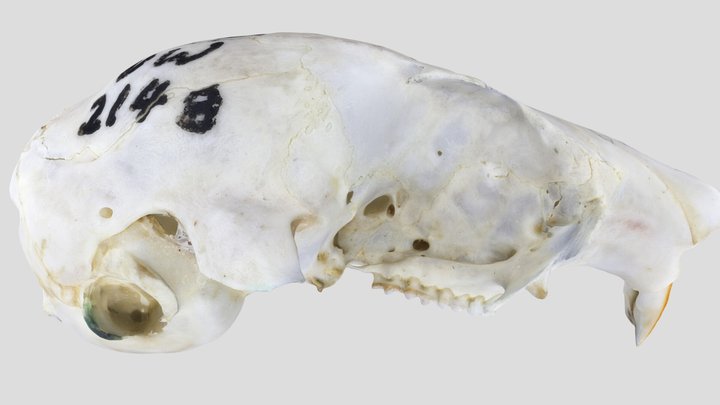
3D model
- Source
- Sketchfab
- Licence
- CC Attribution
- Commercial use
- cannot be read from the licence given — check the record
Smithsonian Open Access and MorphoSource were not reached for this taxon, so this list is what the others held rather than everything there is.
The description on this site
- Licence
- CC BY-SA 4.0
This is what the site found, which is not the same as what exists.
Keep going
What may have been alongside itGlaucomys through timeFormations of the PleistoceneThe world it lived on
Occurrence data from the Paleobiology Database, CC BY 4.0. (Shaw 1801)