Glycymeris glycymeris
The dog cockle or European bittersweet is a species of marine clam, a coastal bivalve mollusc of European waters.

Hans Hillewaert · CC BY-SA 4.0 · via Wikipedia/Commons. May be a photograph of a specimen, or an artist’s reconstruction — an interpretation of a skeleton, since colour and soft tissue are almost never preserved.
On record
Recorded, not inferred- Sits inside
- GlycymerisPBDB
- Diet
- suspension feederPBDB, for Glycymeris
- Life habit
- infaunalPBDB, for Glycymeris
- Motility
- facultatively mobilePBDB, for Glycymeris
- Vision
- blindPBDB, for Bivalvia
- Environment
- coastal,inner shelf,outer shelf,oceanicPBDB, for Glycymerididae
Time the record covers
At least 5.2 million years on record.
The record covers at least 5.333 Mya to 129 ka. No occurrence read is dated outside 11.63 Mya to 11.7 ka.
18 occurrences of Glycymeris glycymeris on record, most of them in the Pleistocene. The Paleobiology Database records this as a living group. Bar height is expected occurrences, not a count: each fossil is spread across the span it is dated to, so a tall narrow bar means tight dating and a low wide one means loose.
When
18 occurrences- Miocene6%
- Pliocene44%
- Pleistocene50%
These are dates about fossils, not the animal: the record can only begin after it arose and end before it died out, so either end may reach further. Shares are expected occurrences: a fossil dated to a span is counted partly in each period it straddles. More on what this infers.
Found in
5 formations
- Red Crag Formation2
- Mammaliferous Crag Formation2
- Panchina Formation1
- Monte Giogo Formation1
- Wexford Gravels Formation1
Loading coastlines…
The named rock units Glycymeris glycymeris has been recovered from, largest first. Drawn where the rock is now, not where it formed. 11 occurrences have no formation on record, which is common for older literature.
Glycymeris glycymeris and its relatives
PleistoceneWhere Glycymeris glycymeris and its relatives were recorded in the Pleistocene.
Found in the same rock
504 taxa- Aequipecten opercularis7 sites
- Striarca7 sites
- Barbatia (Barbatia) barbata6 sites
- Anomia ephippium5 sites
- Arca noae4 sites
- Clausinella fasciata4 sites
- Gibbula4 sites
- Glycymeris (Glycymeris)4 sites
- Glycymeris (Glycymeris) bimaculata bimaculata4 sites
- Gouldia (Gouldia) minima4 sites
- Limopsis (Limopsis) aurita4 sites
- Mytilus edulis4 sites
- Nassarius4 sites
- Natica4 sites
- Nucula (Nucula) nucleus4 sites
- Ocenebra erinaceus4 sites
- Pitar (Pitar) rudis4 sites
- Scapharca (Scapharca) diluvii4 sites
- Venus4 sites
- Acila (Truncacila) cobboldae3 sites
- Alvania3 sites
- Aporrhais pespelecani3 sites
- Arca (Arca) tetragona3 sites
- Astarte sulcata3 sites
The Paleobiology Database records 14 sites for Glycymeris glycymeris, and this reads all of them. The number is how many of those sites it was catalogued from too. The 24 sharing the most are listed.
This is not a list of everything alive at the time. It is only what has come out of the same ground as this animal and been written down.
Entered from
13 references- Arcoida (Mollusca, Bivalvia) del Plioceno de la provincia de Malaga, Espana [Pliocene Arcoida from Malaga, Spain]4
- Wood, 18503
- Paleoecology and dynamics of coralline dominated facies during a Pleistocene transgressive–regressive cycle (Capo Colonna marine terrace, Southern Italy)1
- The marine fossils malacofauna in a Plio-Pleistocene section from Vallin Buio (Livorno, Italy)1
- Nuove specie di Gasteropodi del Piacenziano di rio Crevalese, Castell’Arquato (Piacenza, Italia)1
- Isotope palaeotemperatures from the Tjornes Beds in Iceland; evidence of Pliocene cooling1
- The maximum warmings of the Pleistocene world climate recorded in the Canary Islands1
- Pleistocene raised marine terraces of the Spanish Mediterranean and Atlantic coasts: Records of coastal uplift, sea-level highstands and climate changes1
- The bivalvia (Mollusca) from the Upper Miocene of the Sais Basin (Southern Rifian Corridor, Morocco). Palaeobiogeography and paleoecology1
- Presenza di «Ospiti boreali» (Mollusca, Gastropoda) nel Pleistocene di Contrada Case Alte (Villa S. Giovanni)1
- The Neogene of East Anglia - a field excursion report1
- The marine Quaternary of the Canary Islands1
Each of the 18 occurrences read was entered from one of these publications, ordered by how many each accounts for. This is not a search for papers mentioning the name. 1 further reference is not listed. Entries link to doi.org where the Paleobiology Database holds an identifier, and to its own record where it does not. Relayed as the Paleobiology Database holds them, not checked against what they resolve to.
Media and terms
Media content2

Picture of Glycymeris glycymeris
- Source
- Wikipedia/Commons
- Credit
- Hans Hillewaert
- Licence
- CC BY-SA 4.0
- Commercial use
- the licence allows it
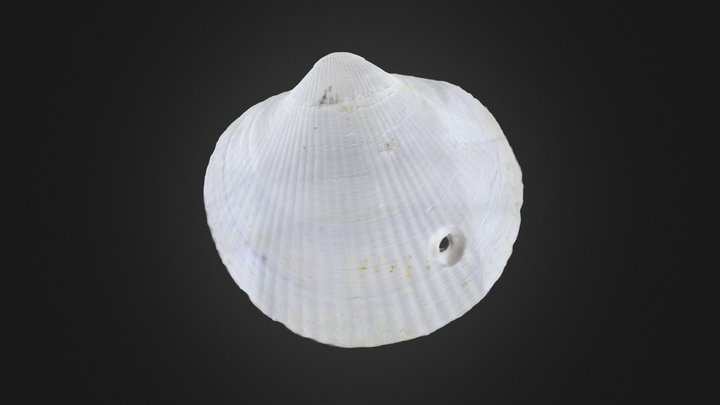
3D model
- Source
- Sketchfab
- Licence
- CC0 Public Domain
- Commercial use
- the licence allows it
Smithsonian Open Access and MorphoSource were not reached for this taxon, so this list is what the others held rather than everything there is.
The description on this site
- Source
- Wikipedia, “Dog cockle”
- Licence
- CC BY-SA 4.0
This is what the site found, which is not the same as what exists.
Keep going
What may have been alongside itGlycymeris through timeFormations of the PleistoceneThe world it lived on
Occurrence data from the Paleobiology Database, CC BY 4.0. (Linnaeus 1758)